
Subscribe to continue reading
Subscribe to get access to the rest of this post and other subscriber-only content.
Subscribe to get access to the rest of this post and other subscriber-only content.
Subscribe to get access to the rest of this post and other subscriber-only content.
Subscribe to get access to the rest of this post and other subscriber-only content.
Subscribe to get access to the rest of this post and other subscriber-only content.
I wanted to go somewhere warm in the middle of the winter. Jaguar Lodge in Belize combined adventure in the form of a dozen day trips to Mayan ruins and interesting hikes with beach time, was perfect.
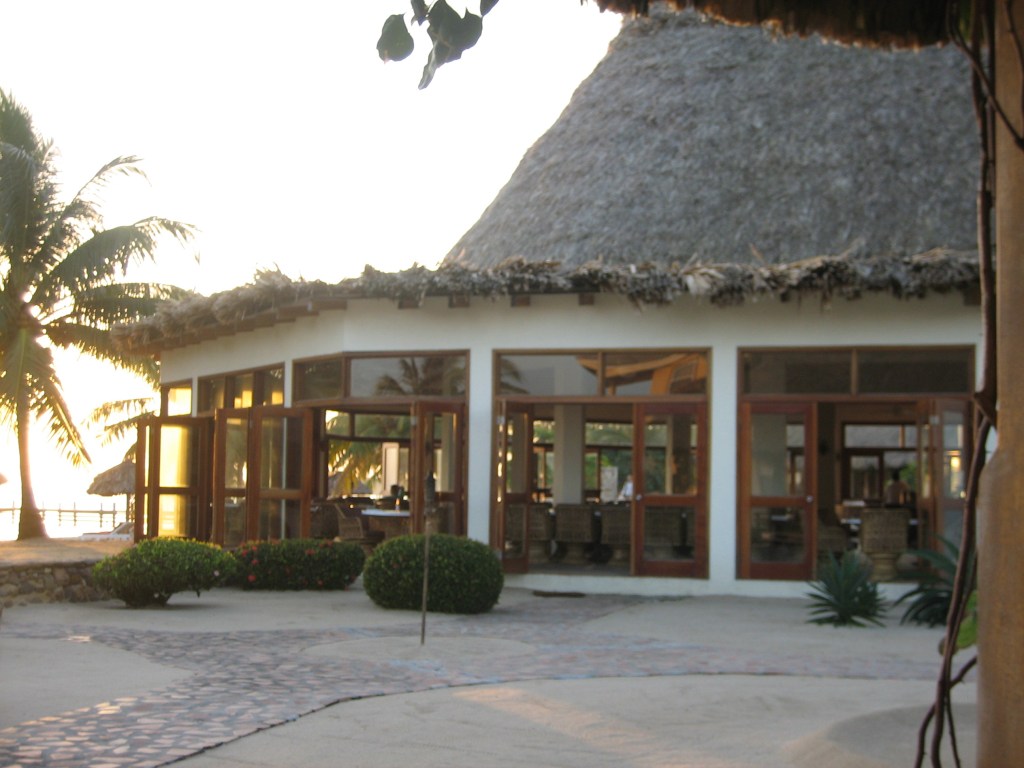
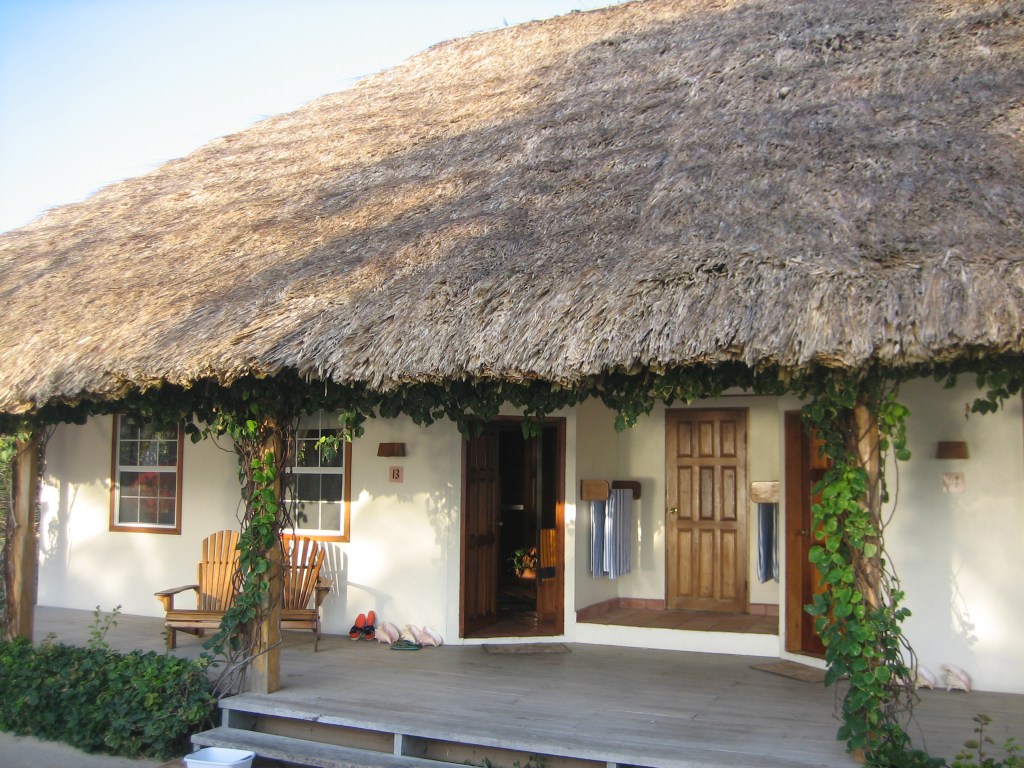
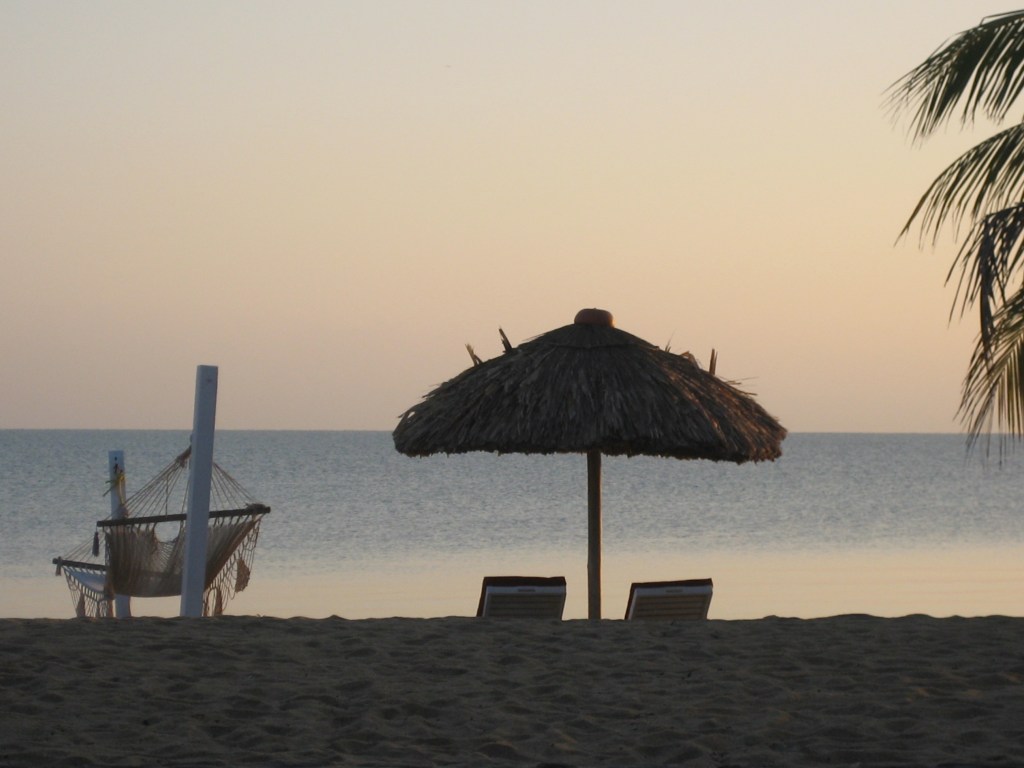
The resort was wonderful. The dining room was large and airy. The patio doors were open and it was warm and lovely. While eating I felt like I was still on the beach. On the sand there were comfortable beach chairs and hammocks available. The cabins were comfortable and right on the beach.
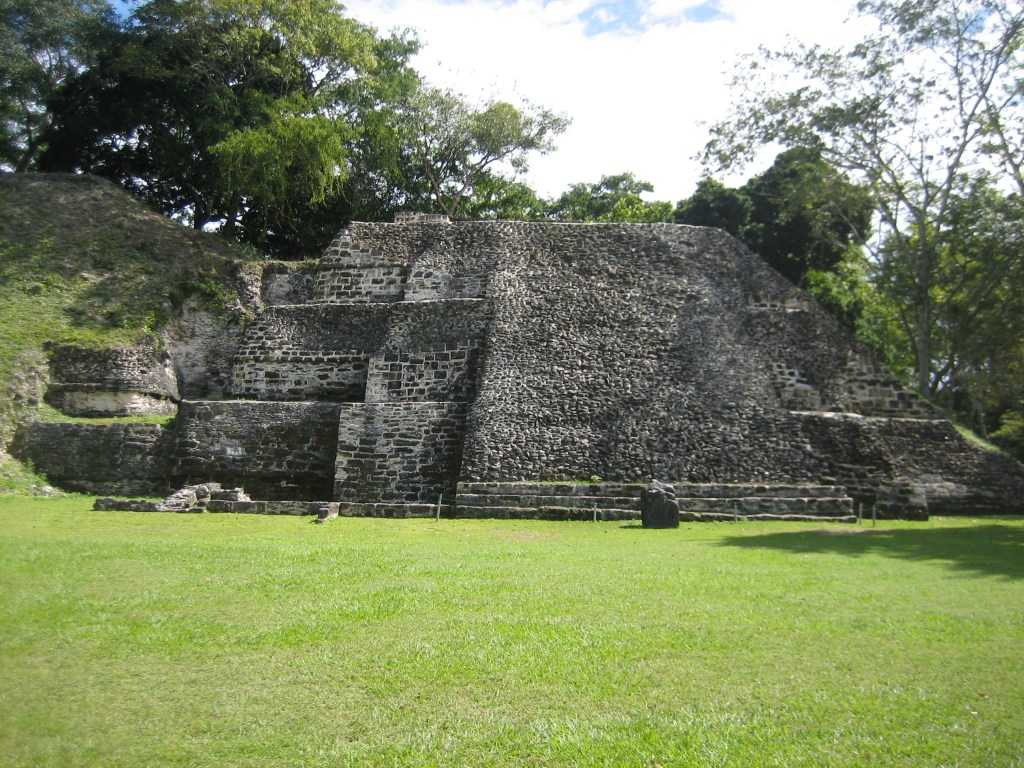
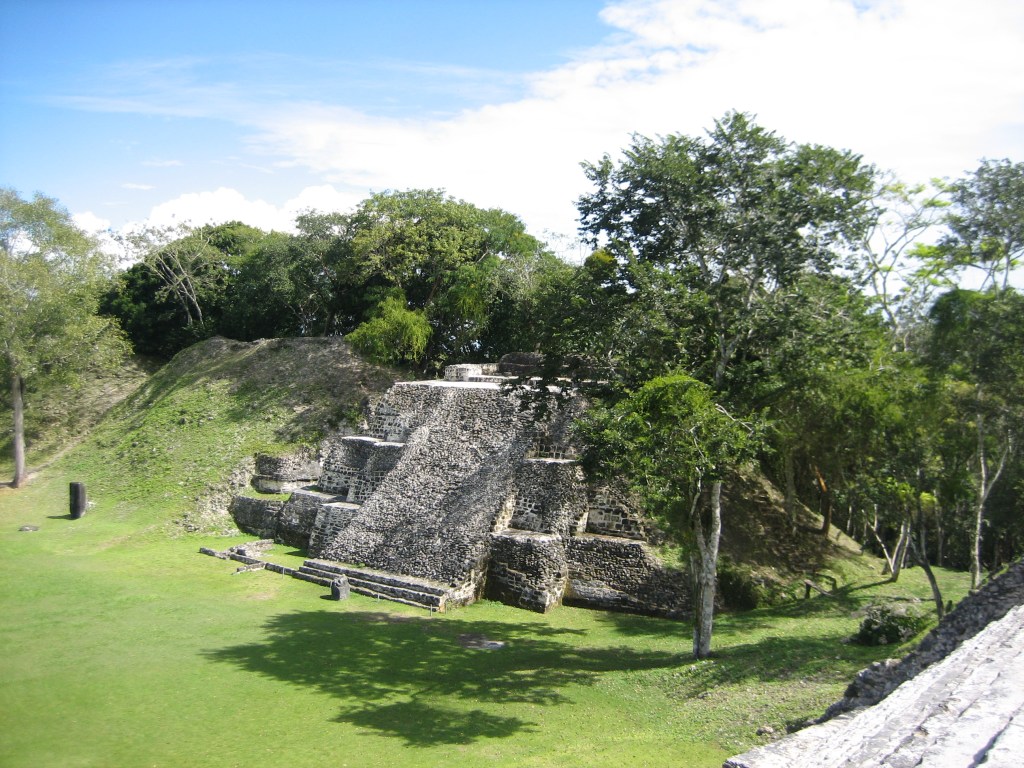
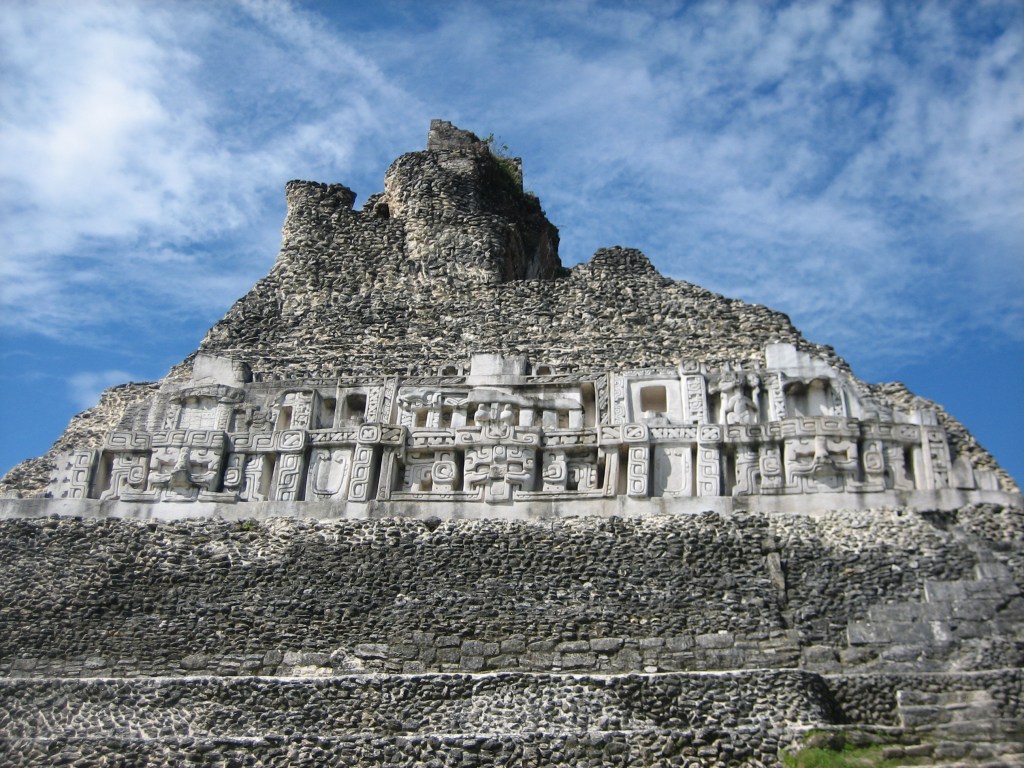
My first excursion was to Mayan ruins in Xunantunich and Cahal Pech. At Xunantunich, which means Stone Lady, I climbed up (5 minutes) to a large grassy area. There, in front of me, were the ruins of an old palace, an alter and the religious temple which is a step pyramid. This pyramid is amazingly high – yes I climbed it. From the top I got a fabulous view of the area as far out as Guatemala. The pyramid had carvings on it, however, the ones I saw were fiberglass replicas. The real ones are behind them. Obviously visitors have been destroying the real ones so now they are preserved behind the fiberglass.
The Mayans lived in this area 400-200 BCE then when they depleted the land, they moved to another area. Then around 800 AD they returned and built these structures.
Cahal Pech is not as high, but it is more extensive than Xunantunich.
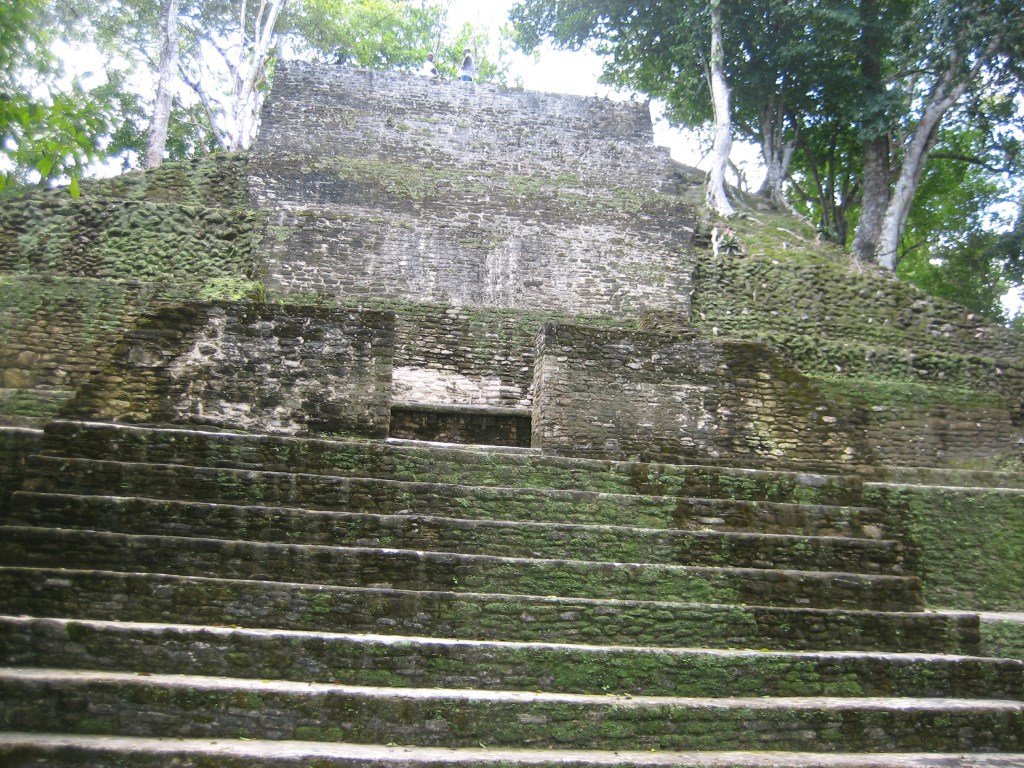
It was wonderful to walk around the compound and see the route that the king would take before addressing his people.
He would zig-zag and go in and out for safety. This settlement also died out when the forests were cut and the land overused.
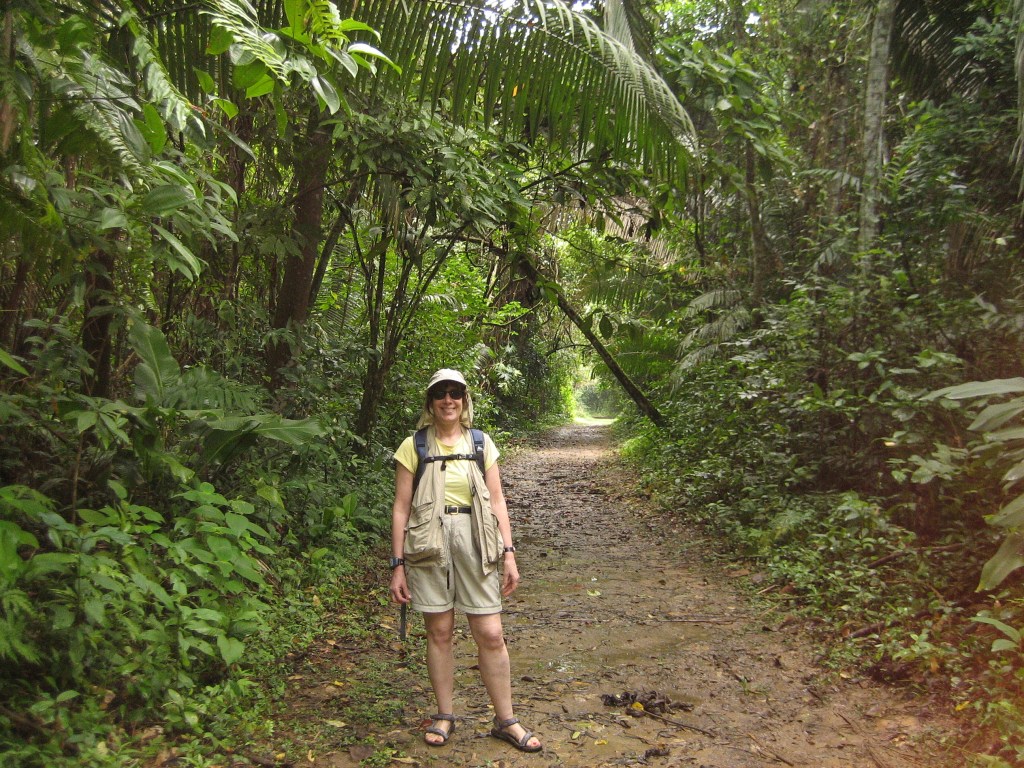
The next excursion was to the Jaguar Preserve. It was fabulous. I hiked in the jungle to a waterfall. Didn’t see any Jaguars – didn’t expect to see any, but I saw lots of birds. The waterfall wasn’t very large but there was a pool at the bottom and I went swimming, which felt wonderful. There were 15 people on the hike – which was probably 10 too many.
The Scarlet Macau hike was my next adventure. The group drove for an hour then climbed at a 45-degree angle for 550 ft. The reward was seeing dozens of the Scarlet Macau when we got to the top. What magnificent red, blue and yellow birds. They glide so gracefully but they also make a racket. We watched them for about an hour. Then we had to climb down the 45-degree angle. At the end of the hike we swam in the river for a bit. I was really hot so it was great.
Snorkeling may not be my favorite activity but I am always glad when I push myself to do it. Many years-ago, my daughter, Maggie talked me into going snorkeling with her. It was an act of love to snorkel with her because I am afraid of putting my face in the water – or more accurately, I feel like I am drowning when my face is in the water. I now know that I can do it, but I always hyperventilate at first.
Luckily that day the seas were as calm as could be and the boat was never far away. I also wore a life jacket. The fish were lovely but the corals were even lovelier.
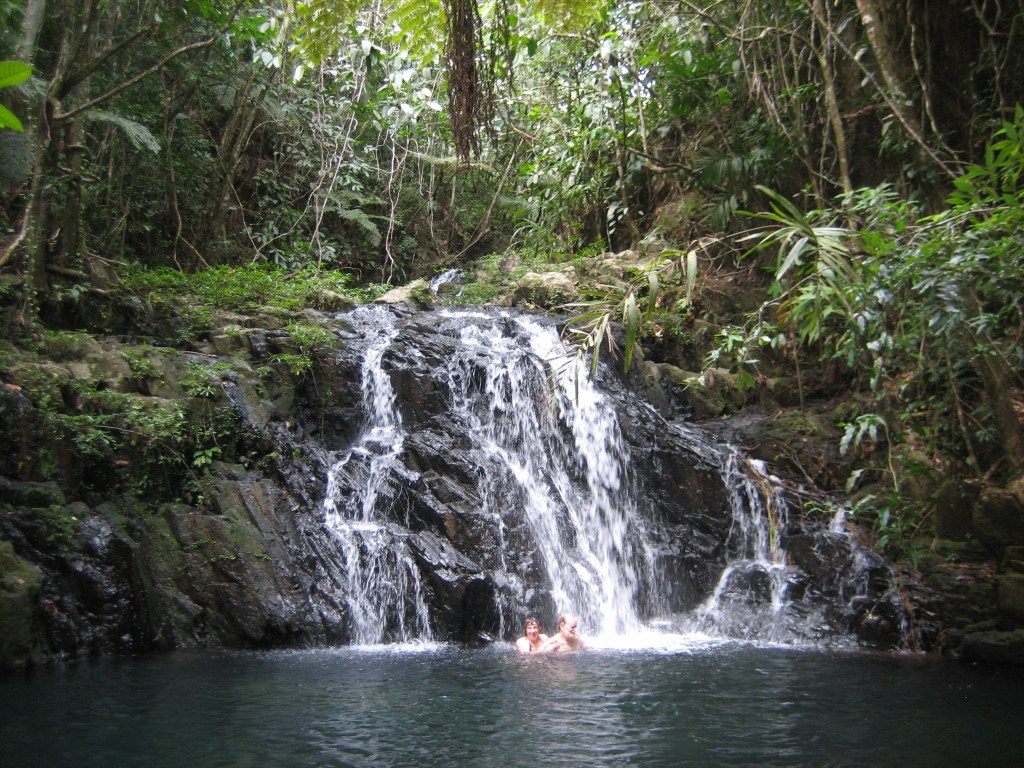
The Mayflower Waterfall hike is rated difficult. I almost didn’t get to do that hike because we needed 4 people and we only had 3 sign up. Maybe it would have been better if I hadn’t gotten to go. Wow. This one was tough.
I was warned so I had my hikers and sticks. It was a very steep climb and I used ropes to pull myself up some of the time. It was also hot. I had my long sleeve bug shirt on and long pants. But at the top, there was a beautiful waterfall and a lovely pool to swim in. There were also wonderful views. On the way up I saw un-excavated Mayan ruins. This was definitely a stretch hike.
The guide, a Mayan, was a very interesting man. He said that he learned English while working with archaeologists. He left home when he was 14 and worked for the forest department. He was great about helping me down the mountain.
The zip-line and tube trip.
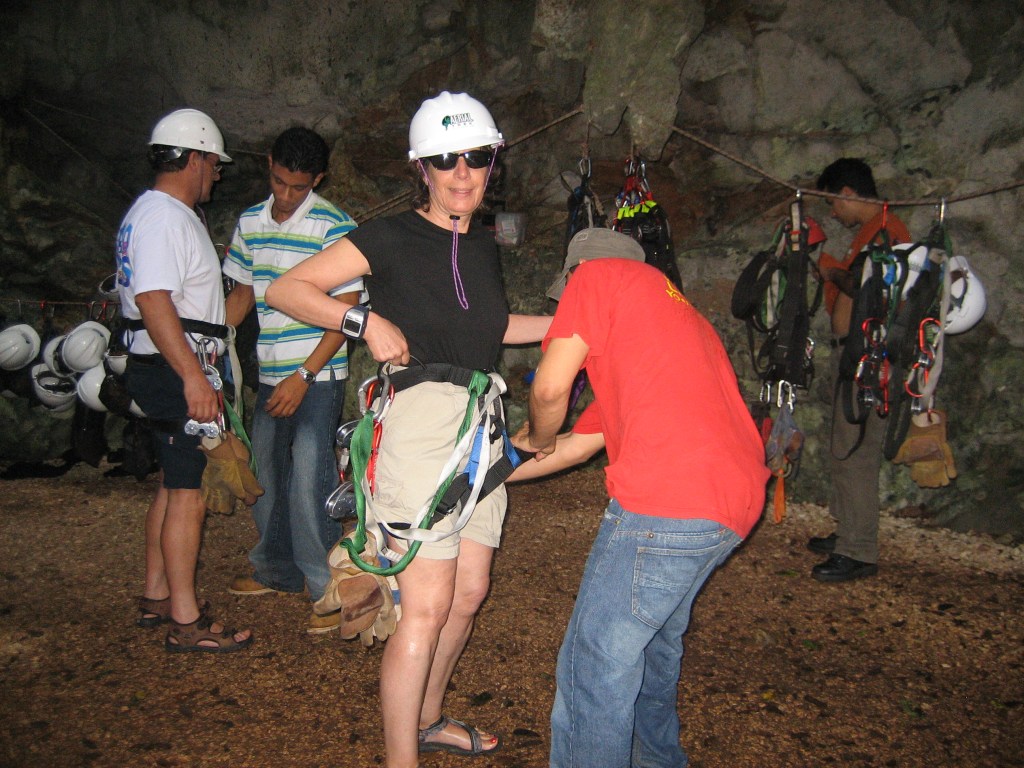
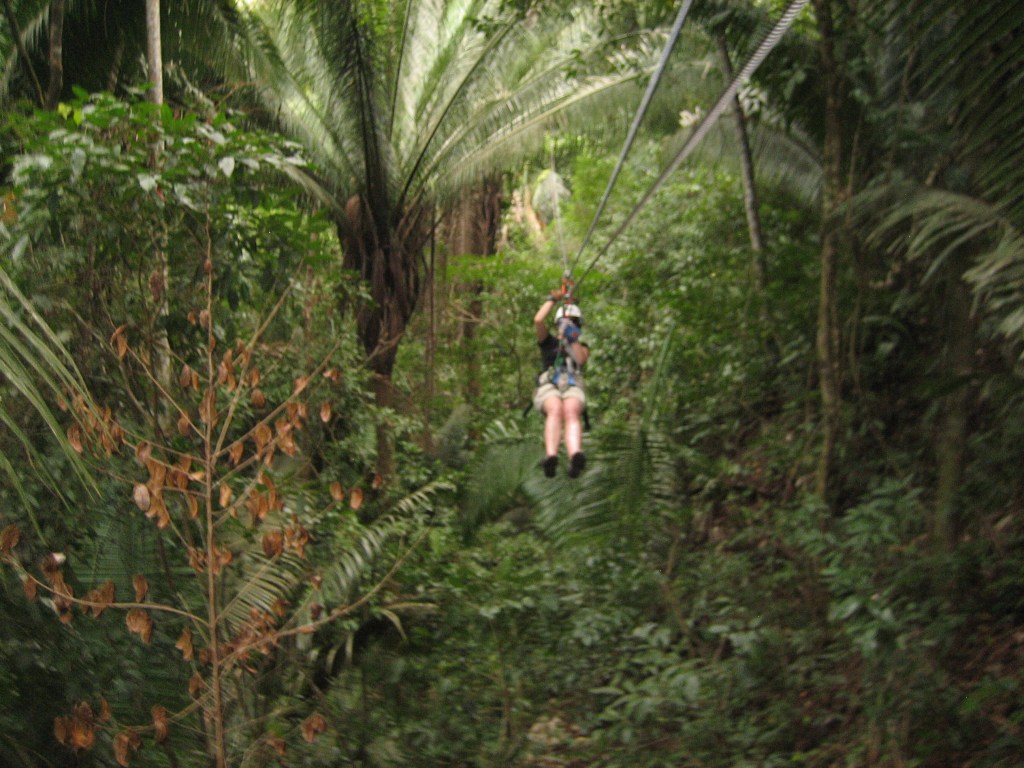
I had never done zip lining and rappelling and I decided that this was a good place to try it. There were 6 stations. I was pretty scared but still felt very safe. The first one was pretty easy. I followed instructions and got to the other side easily. The important thing is to keep the hand on the wire, open, or you break too early. That’s what happened on the second run. It was a long run and even though I didn’t break – I stopped short of the platform. I had to turn myself around and go hand over hand backwards the couple of feet. After that I went as fast as possible to get to the other side. In fact, one time I didn’t slow down in time and almost knocked the guide over, getting on the platform. All in all, it was really fun zipping. The rappelling was not too far down and not scary.
Anyone who had ever gone tubing with me, knows that I am pretty hopeless on tubes – I can’t seem to go forward. My tube wanted to go to the right or left – it isn’t the tube’s fault – I must paddle unevenly. The guide came to my aid a few times.
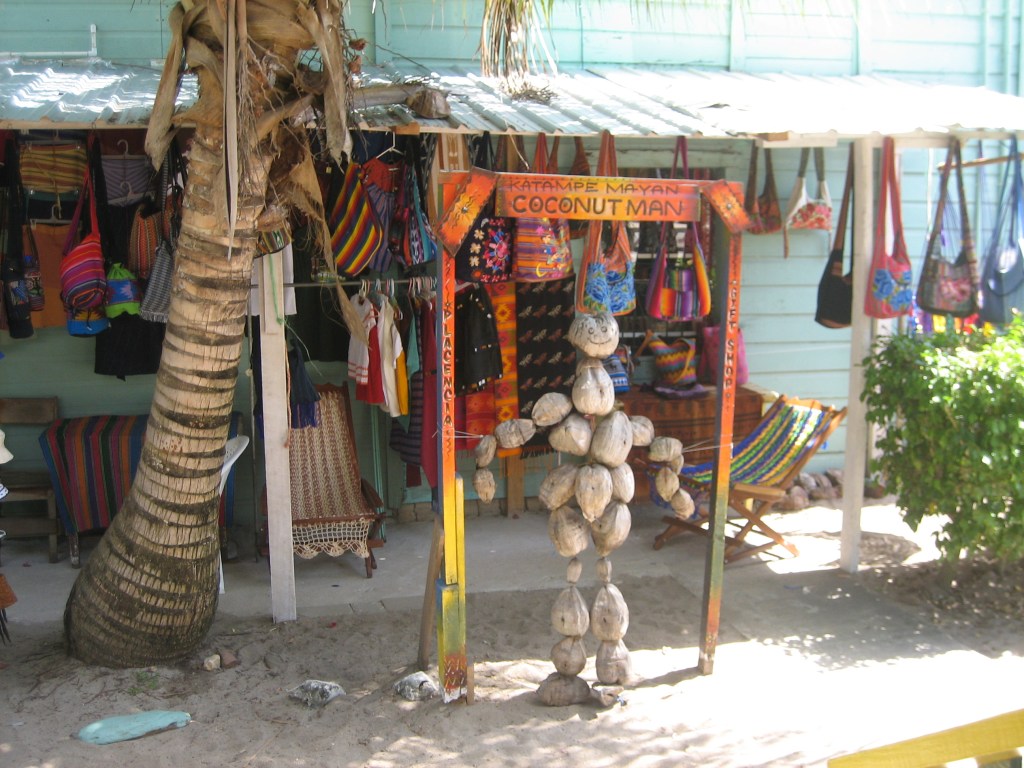
My last adventure was taking a small boat to a town called Placencia. I booked a boat with another couple, but we should have looked at the boat before we booked it. It was too tiny (about 6 by 20 feet) to feel safe on the open sea. It was calm going over but really rough coming back. I sat in the bottom of the boat in order not to fall out. We bumped along and made it to the resort back safely.
Placencia was larger than the town by our Lodge, and had a lovely walkway along the beach. But it wasn’t really worth the bother to go there.
Final Thoughts:
Jews had been in Morocco for centuries. Many arrived with the Roman conquests of Northern Africa. Some Berber tribes had converted to Judaism and intermingled with the Hebrews. But the largest influx came during the Spanish and Portuguese inquisition. Recently, most of the Jews in Morocco have emigrated to Israel.
In Morocco, like in Portugal, was Jewish heritage. Since I had 18 days I did not limit myself to just the main tourist sites: the Rabat, Fez, Marrakesh. I could go farther and take my time in each place.
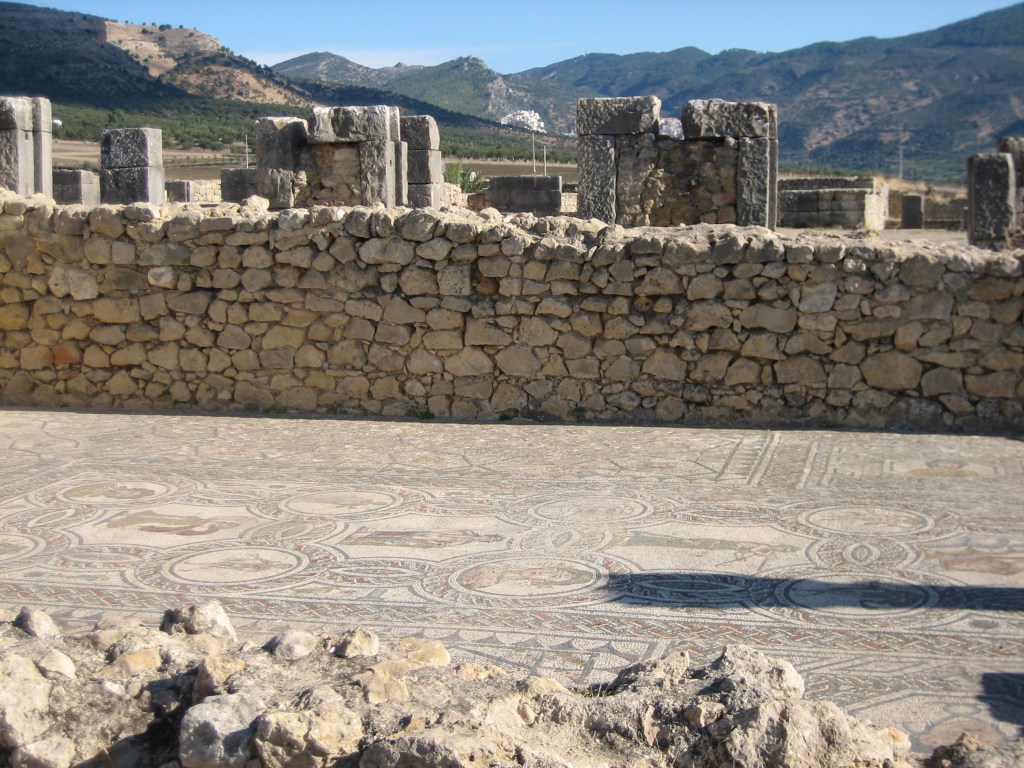
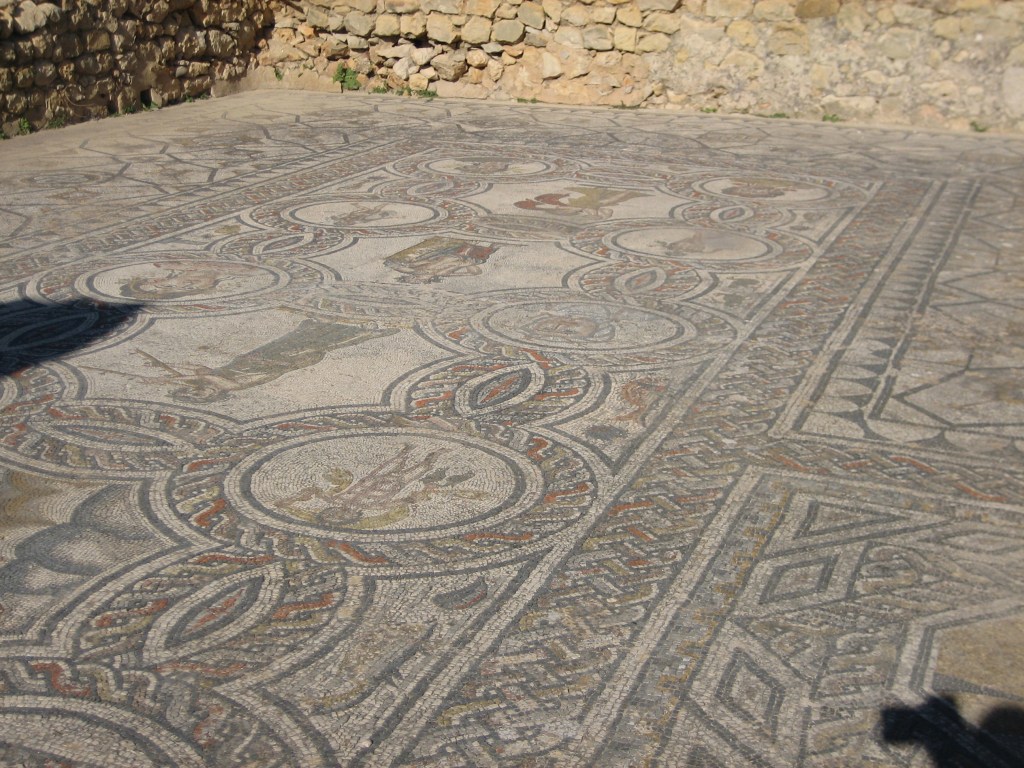
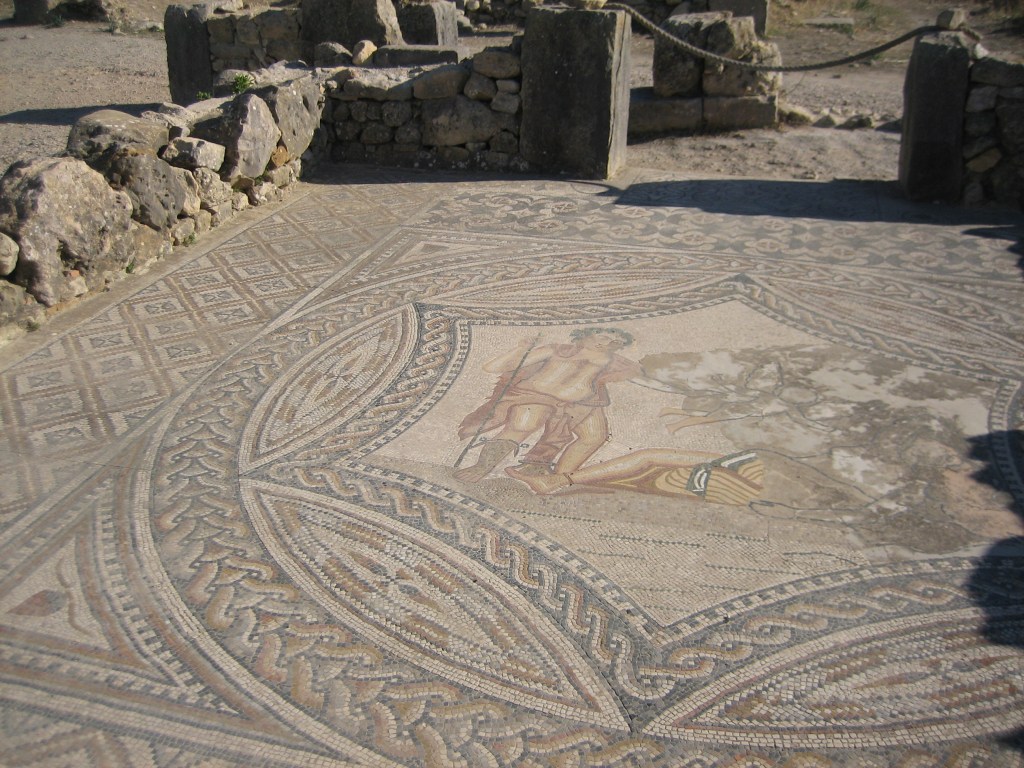
For instance, driving between Rabat and Fez I stopped at Volubilis, an ancient Roman town with amazing mosaics on the floors. My favorite mosaics were: the god Jupiter, a four seasons mosaic and one with an acrobat doing his tricks. 15,000 people lived here, including Jews, in Roman times,(2,200 years ago). It was a fascinating place that is usually skipped by those with limited time
Next to Volubilis is the town of Meknes. At one point, 27,000 Jews had lived in this city – now there are just 50 families left.
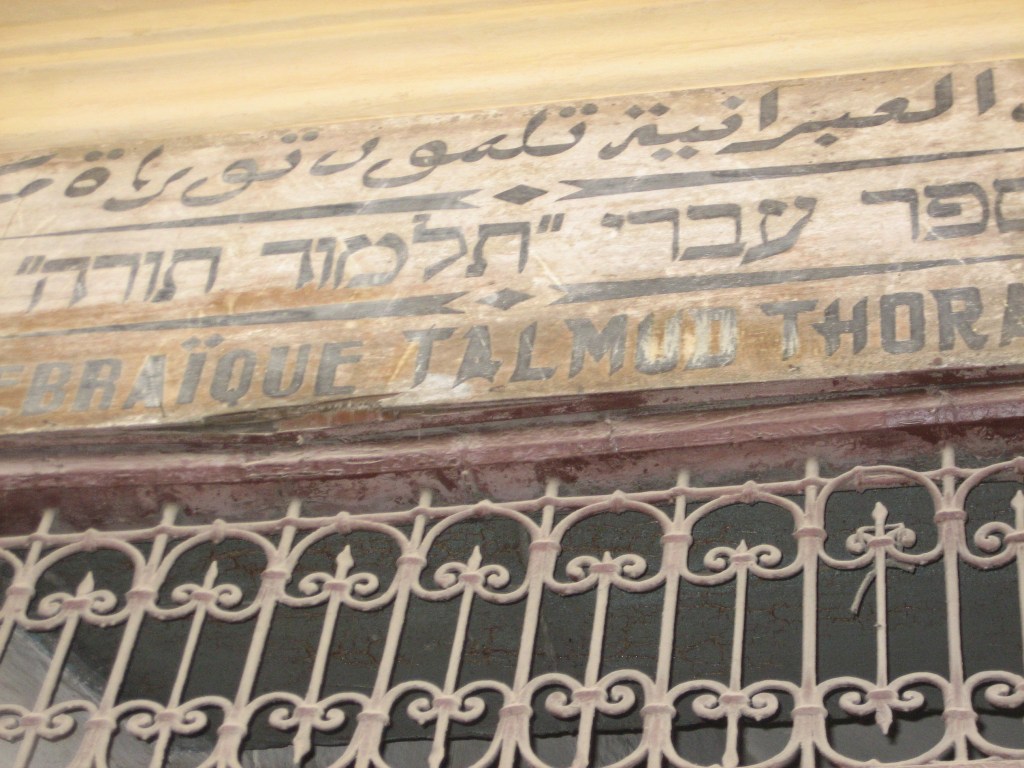
I visited a Jewish Hebrew School. The caretakers spoke beautiful Hebrew that they learned at the school and told me about life in Meknes before everyone left.
I asked how the Jews fared during WWII, since Morocco was under Hitler’s control some of the time – at least under Vichy France. The caretakers said that the Jews were fine because the King of Morocco would not give up the Jews to the Nazis. He said everyone in the country is Moroccan.
Meknes has a wonderful Suq with fruits, olives and spices beautifully displayed. It was a feast for the eyes as well as for the stomach.
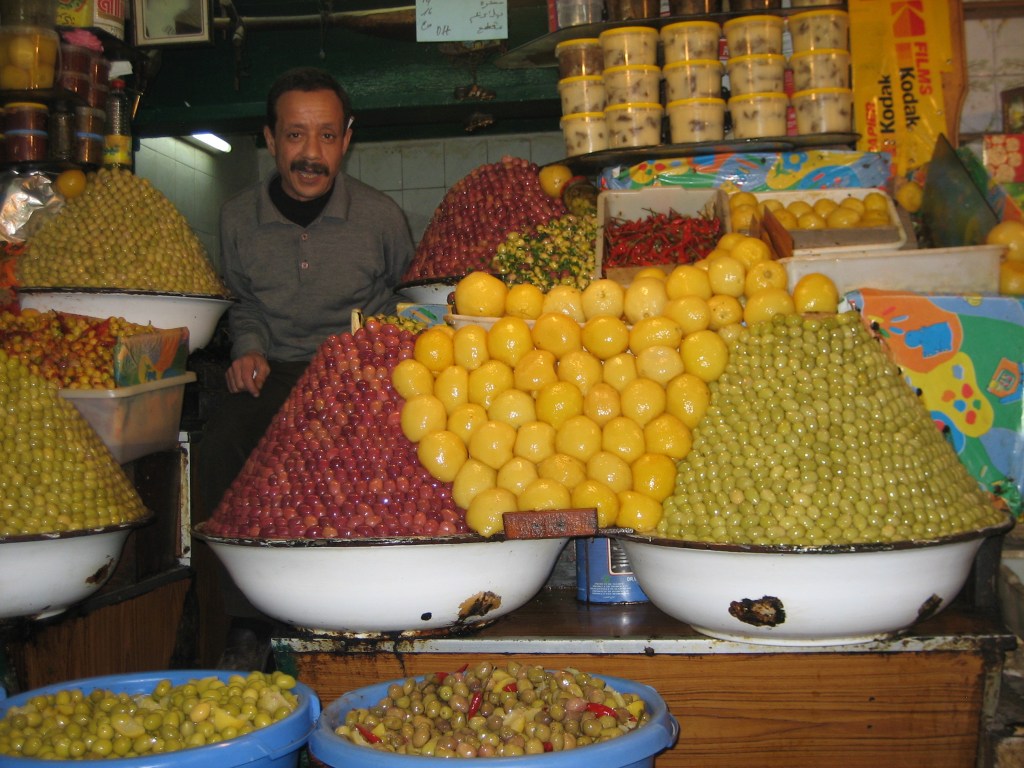
Fez was amazing.
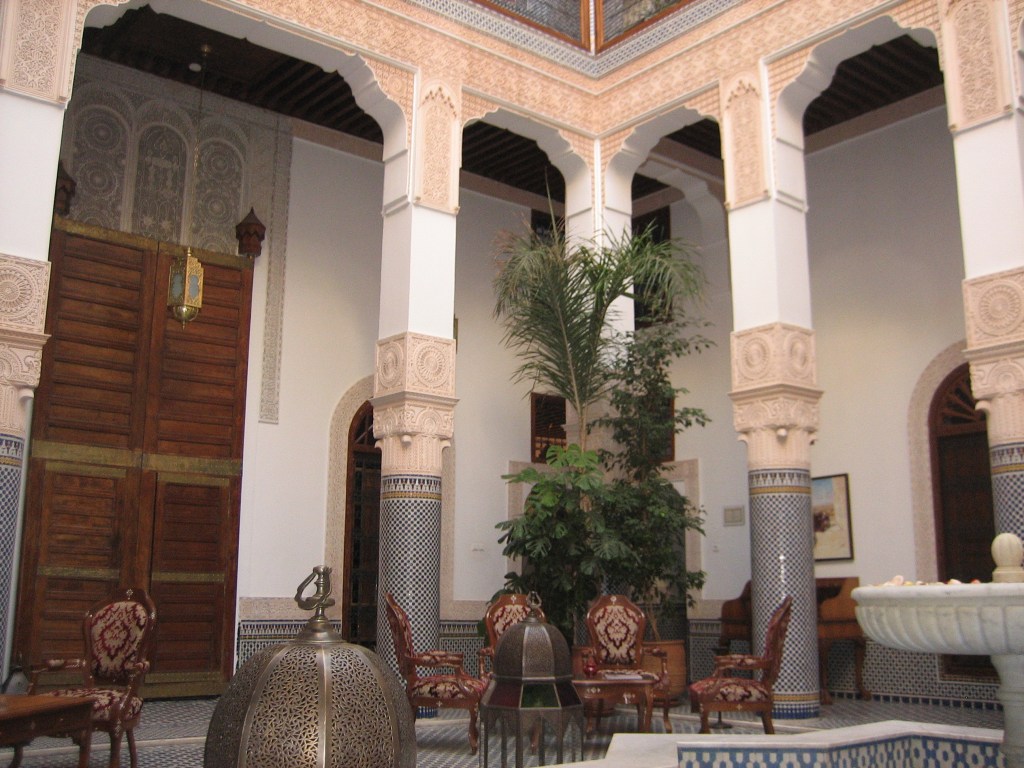
I stayed at the beautiful Riad Myra. Riads are private homes turned into hotels or B&Bs. From the outside it looked like an uninteresting building, but inside, it is magnificent. There were 12 rooms around a beautifully tiled and decorated courtyard that had tables and chairs.
I thoroughly enjoyed the beauty of the Riad but I had two unpleasant experiences there. The first night I was tired and only wanted soup, and the guide explained this to the owner. Nevertheless, she tried to charge me for a full meal. The guide straightened her out. Also, my nightlight went missing. They returned it, saying it was in the garbage, right!! It really helped to have my guide.
The obvious attraction in Fez is the 9th century Medina (old city). It is a real labyrinth with so many wonderful things to see. I don’t think I could have found my way out without the guide. It is meant to be confusing, because it was built by the son of a king who had been murdered by enemies. The son, now the new king lived in the Medina, and built the suq so that if anyone tried to kill him, the murderer would never get out alive – he would be found. It is still fully lived in – it is not just a tourist place.
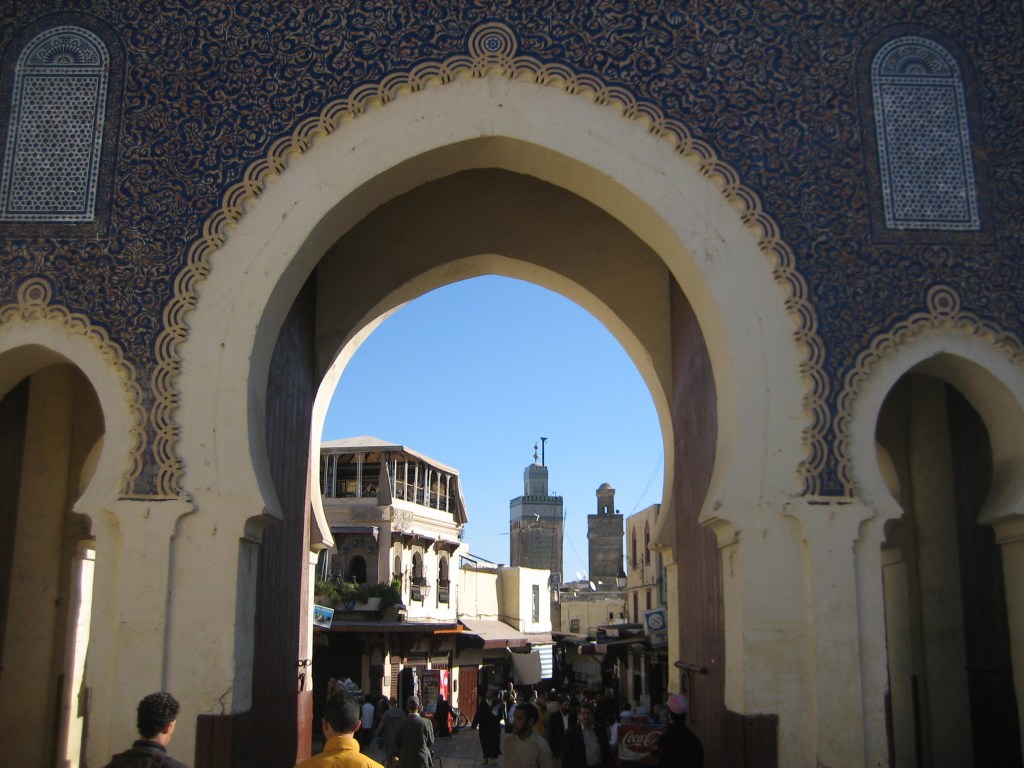
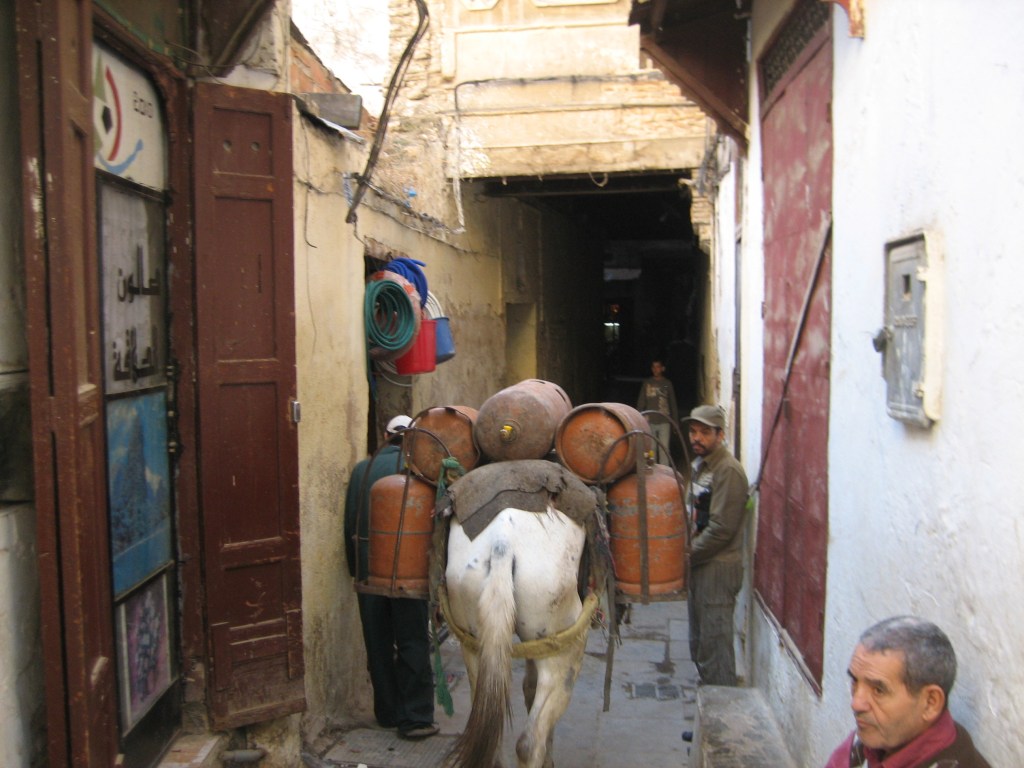
The streets are too narrow for cars so there are donkeys and carts doing the deliveries. (See above) Every once in a while I had to step aside to make room for a donkey or mule. There are lots of shops and interesting food displays.
I went to the roof of a leather shop to see the leather tanning. It is still being done the old way. The gov’t subsidizes it to keep it profitable. There were lots of vats to cure the leather and it takes days to get the process done. Then they dry the skins on the roofs and later dye the skins. The tannery had sheep, goat, cattle and camel skins.
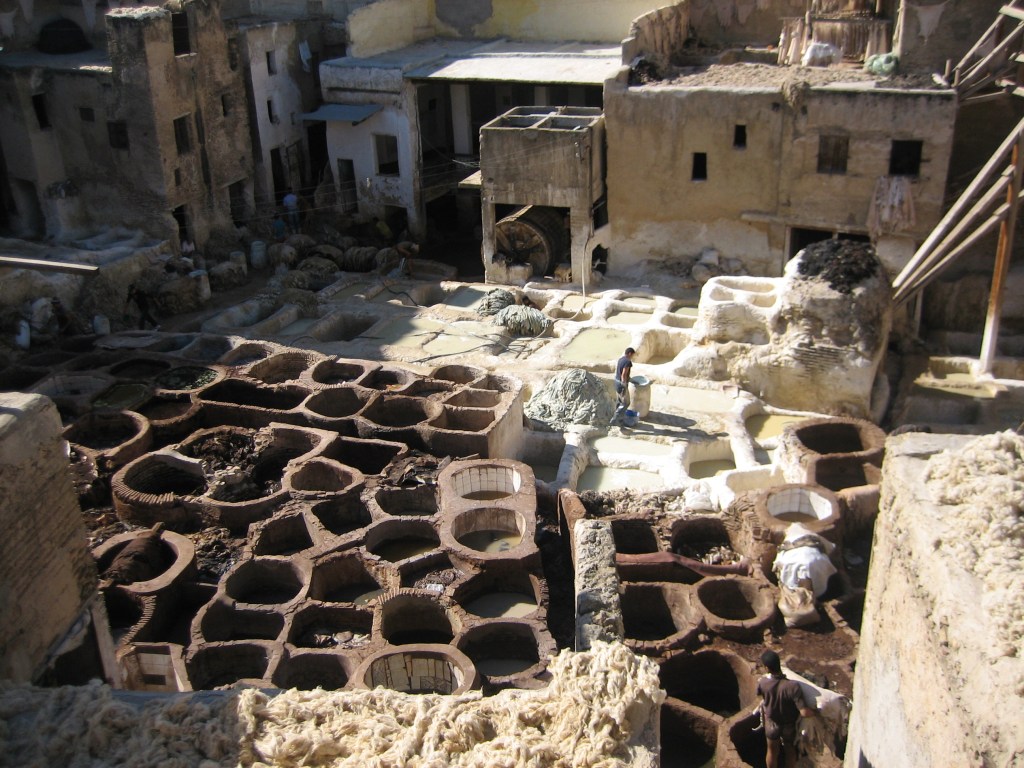
One square in the Medina had huge cooking pots on the ground. The locals rent these pots when they have lots of company. What a great idea! Then they bring them back to be cleaned.
In addition to the 9th C Medina, there is a newer 15th C Medina. This is where the Jews, who were expelled from Spain and Portugal, settled. The Jewish quarter in the Medina is called the Mellah because these Jews were salt (Mellah in Hebrew) merchants. Salt was very expensive. The houses here had balconies, and are reminiscent of the houses the Jews had in Spain. They built their houses next to the King’s palace to have his protection.
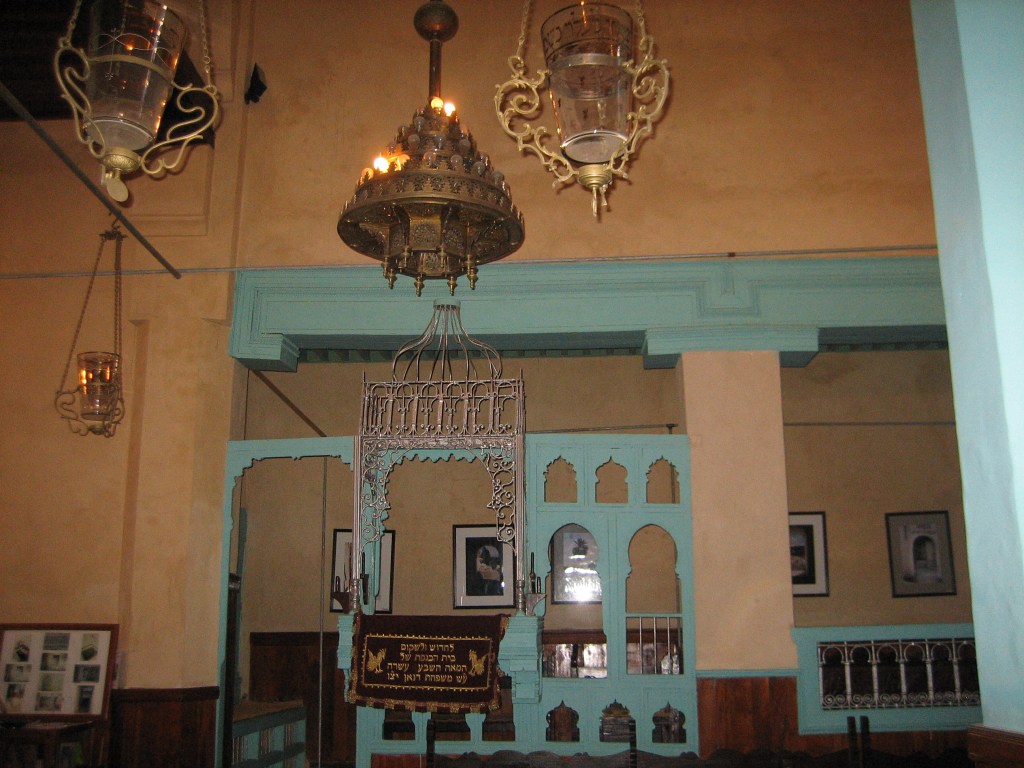
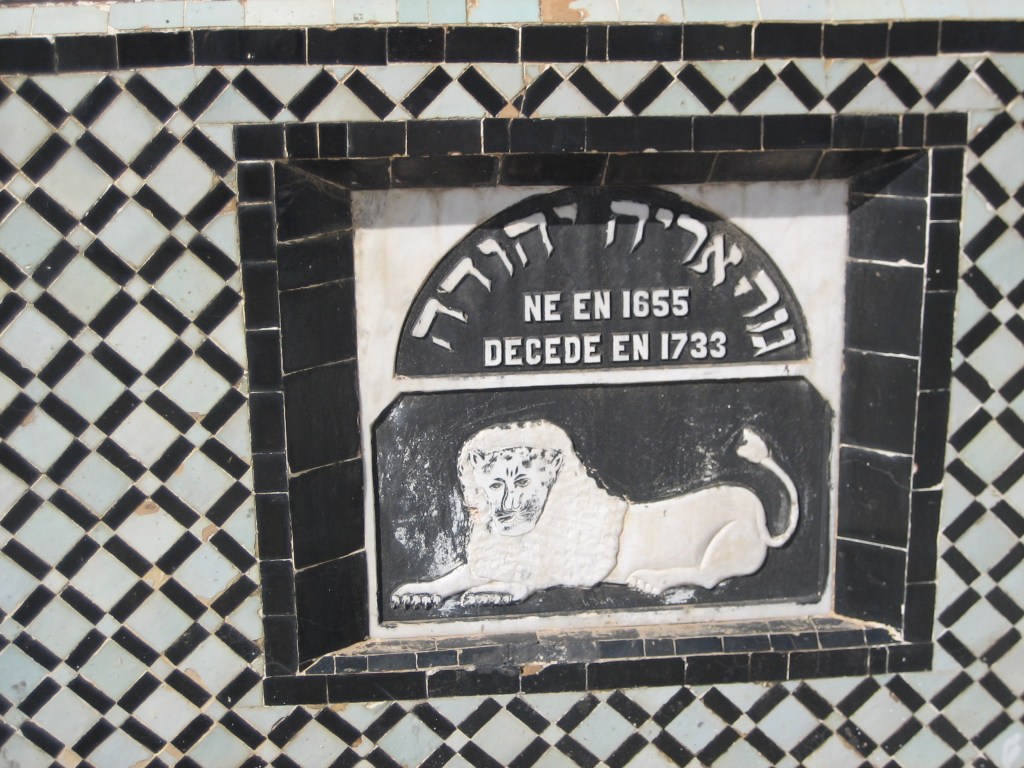
I visited the 17th C Aben Danun Synagogue. I also saw the cemetery dating back from the 16th century. I was surprised to see the large monuments, each with an opening for burning candles.
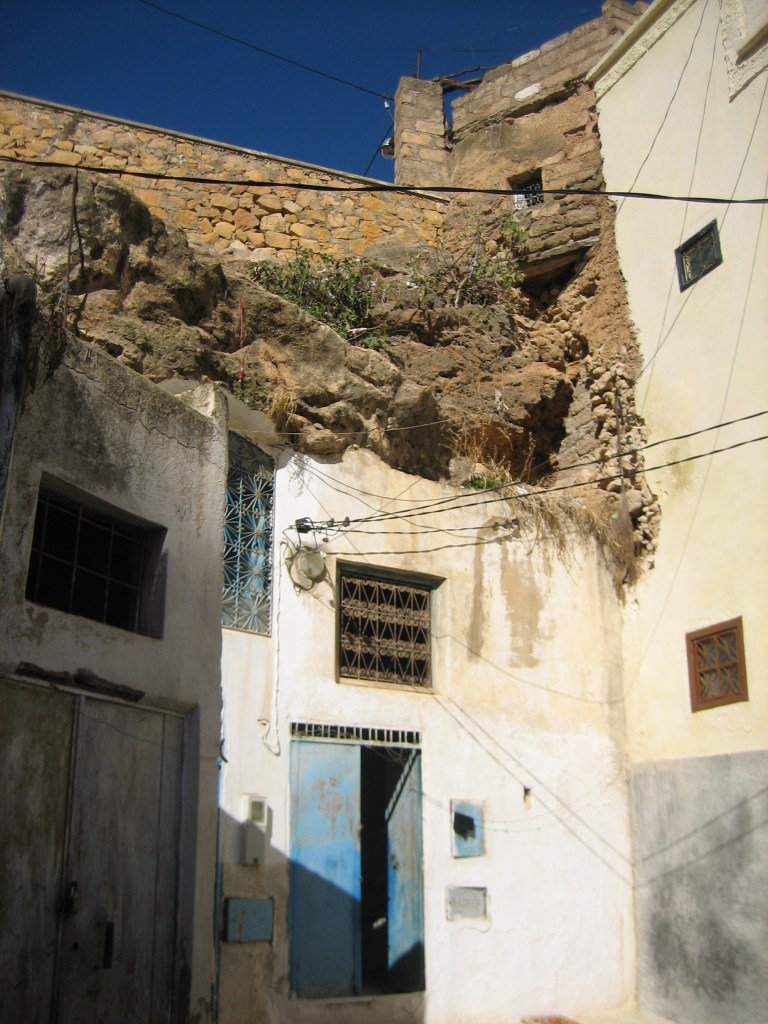
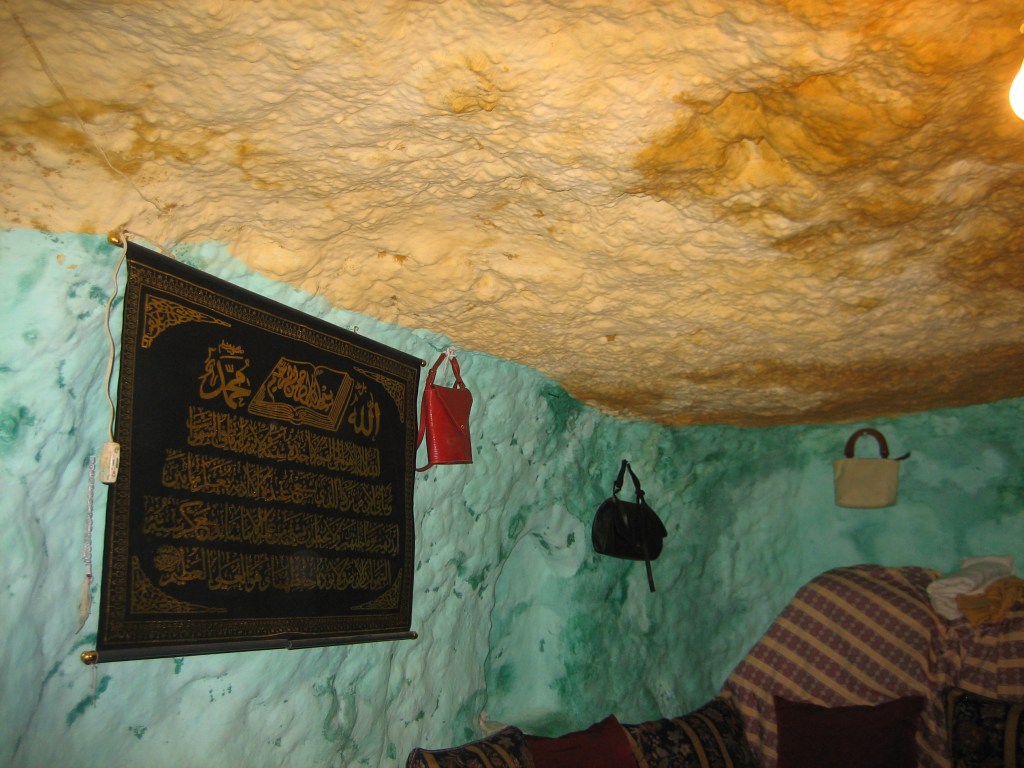
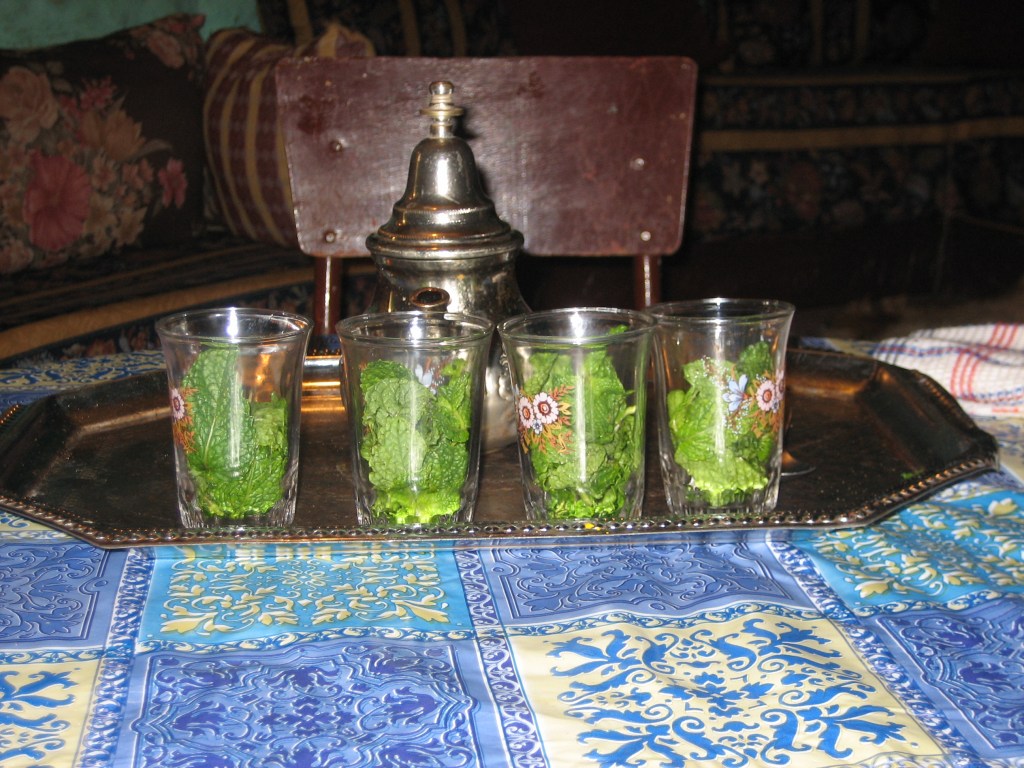
Since I had three full days in Fez, I had time to take a side trip to Bahalil to see the houses built in the caves into the mountains. The guide made arrangements for me to visit one of the houses. It was a one-room cave with a small extension out of the mountain for the kitchen. My hostess invited me to drink tea with her and through my guide told me a bit about her life. She was a widow, living with a grown- up daughter. They make buttons from silk threads to sell. She insisted I take a couple of buttons home with me. They do have electricity and water. The inhabitants of Bahalil are Berber, many of whom are descended from the Romans and therefore have blue eyes and light brown hair. Again, being on a solo trip with a guide allowed me to dig deeper into the culture.
Erfoud: I headed south east to the mountains and desert terrain of Erfoud. The next morning at 4:45am I began a wonderful expedition.
I rode 1/2 hour in a jeep then another half hour on a camel to reach the dunes.
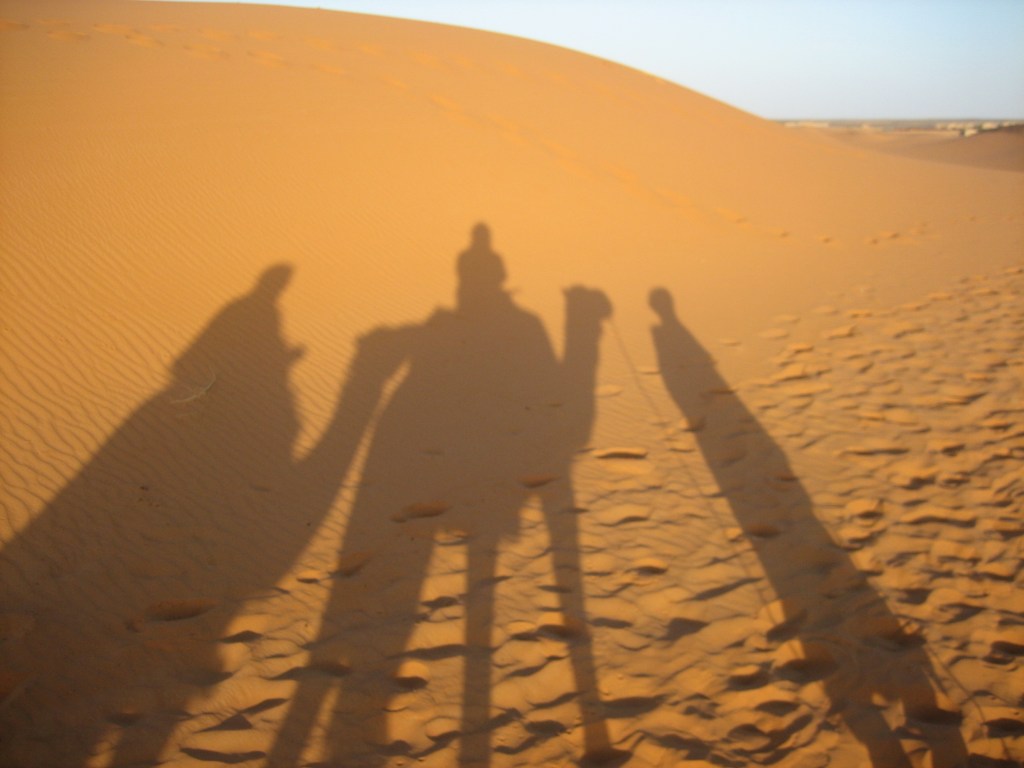
It was still dark and very still. The only sound was the swish of the guide’s flip flops. We left the camels and climbed the dunes on foot (I slid as I went).
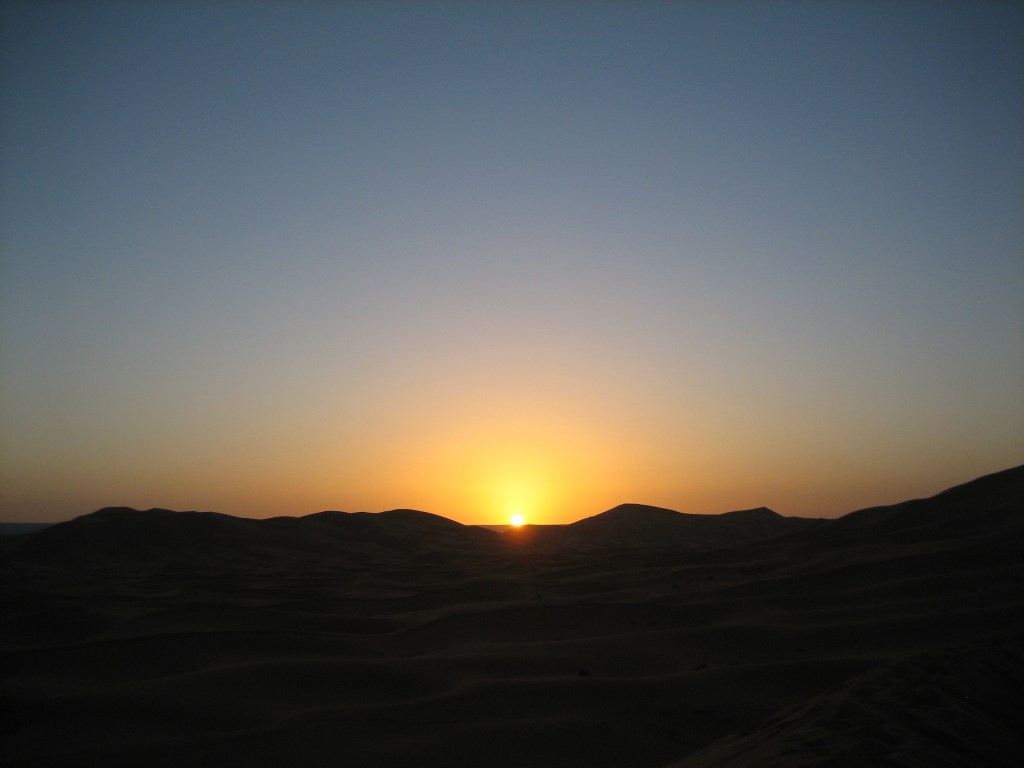
At the top, the guide spread a blanket for me to sit and wait for sunrise. He picked a spot where the sun would come up between 2 mountains.
At first the sky was full of stars, then the stars began to fade and the sun started coming up. It was a magnificent sight.
From Erfoud I went west toward the Atlantic. I stayed at the Kasbah Ben Morah, which is a real Kasbah (fortified house), from the 17th century, beautifully restored. The Kasbah has a lovely veranda for the guests to sit and watch the evening come. I had dinner at the Kasbah Ben Morah and since it has only a few rooms, it has a small dining room with only one menu. As soon one table ordered; the menu was given to the next table. The menu was limited but the food was delicious.
Nearby is another 17th century Kasbah, pictured on the 50 D bill. It is in the early stages of restoration.
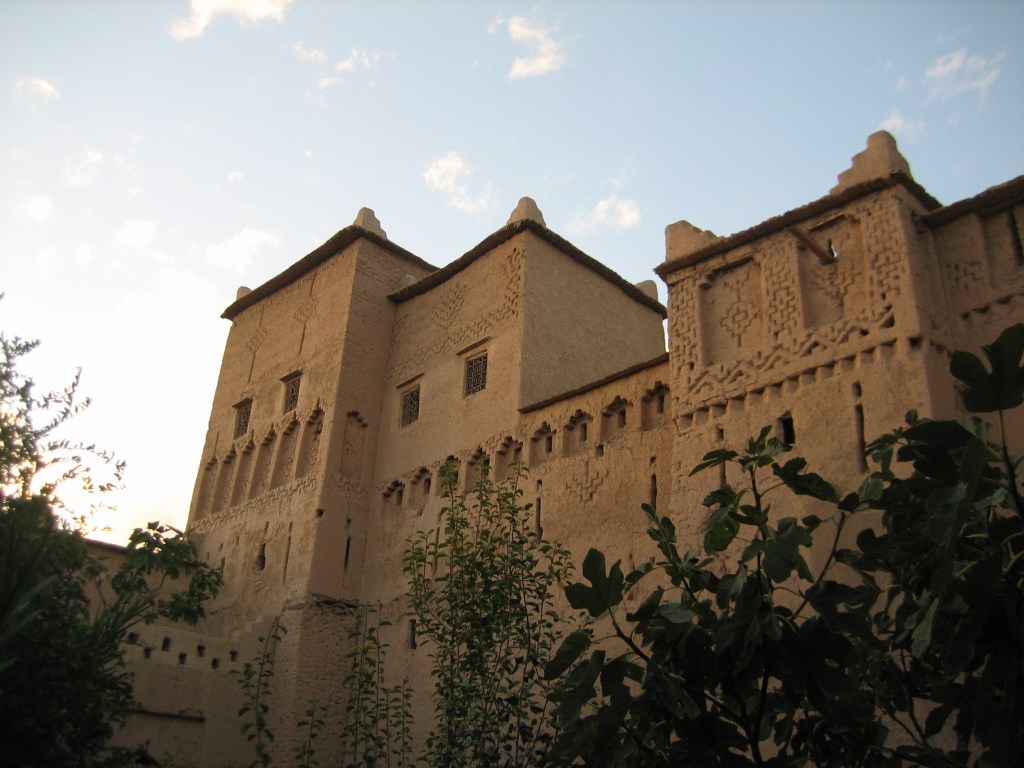
The next Jewish heritage stop was the town of Arazan near Taroundant, to see a tiny adobe 14th century synagogue.
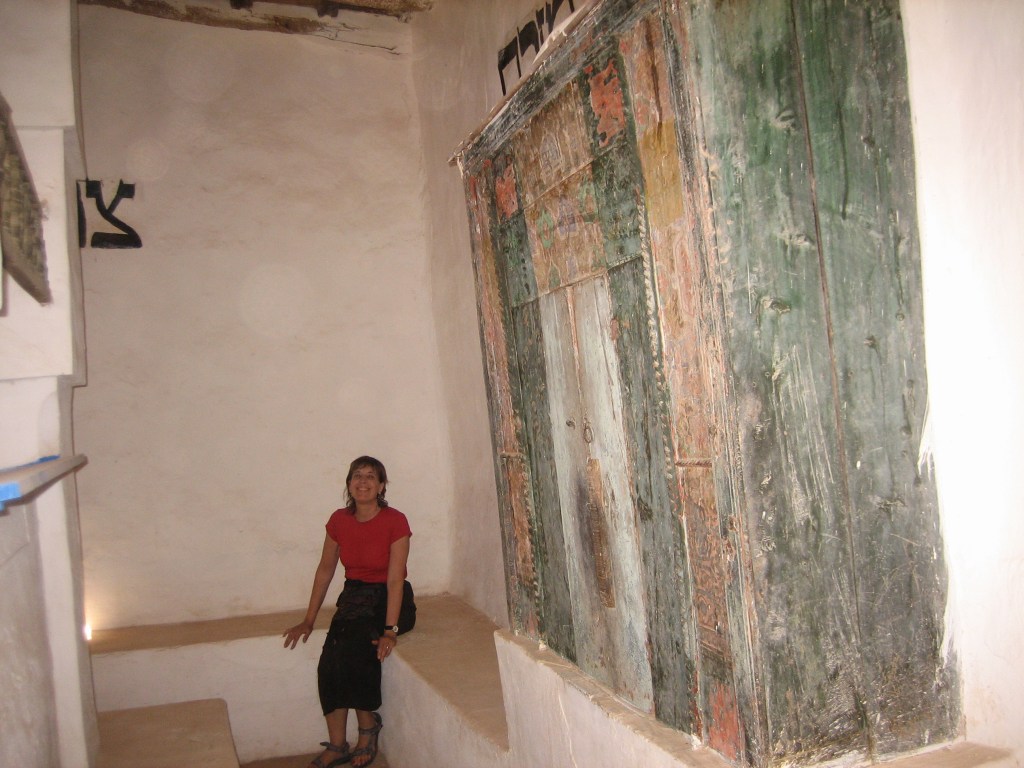
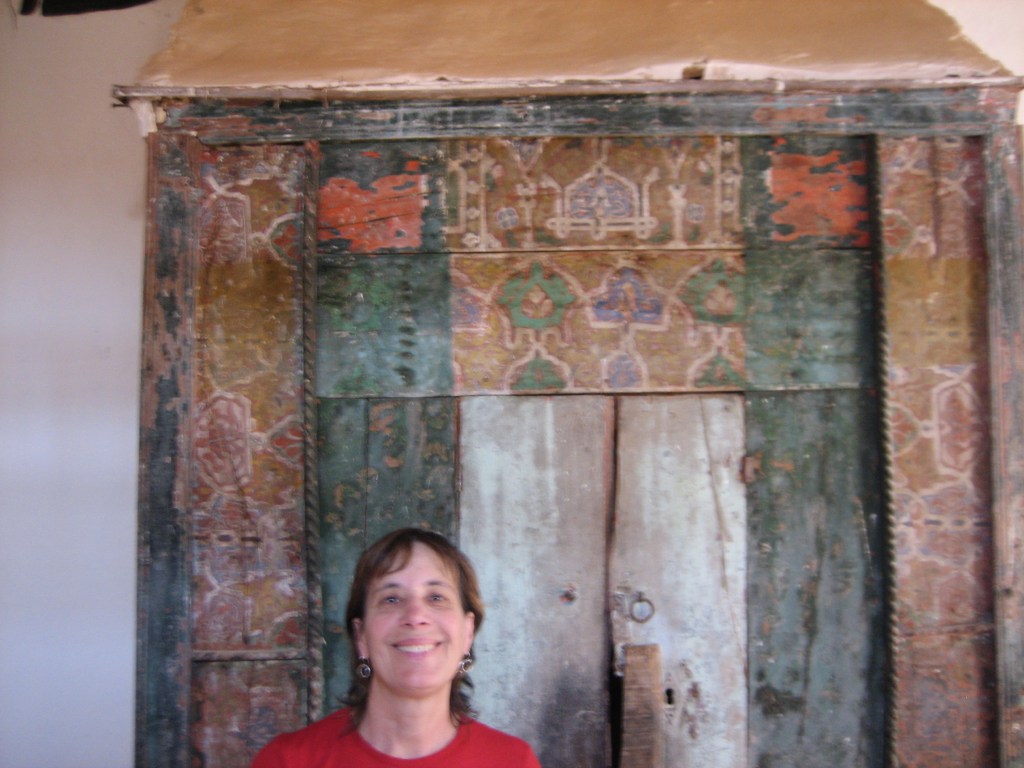
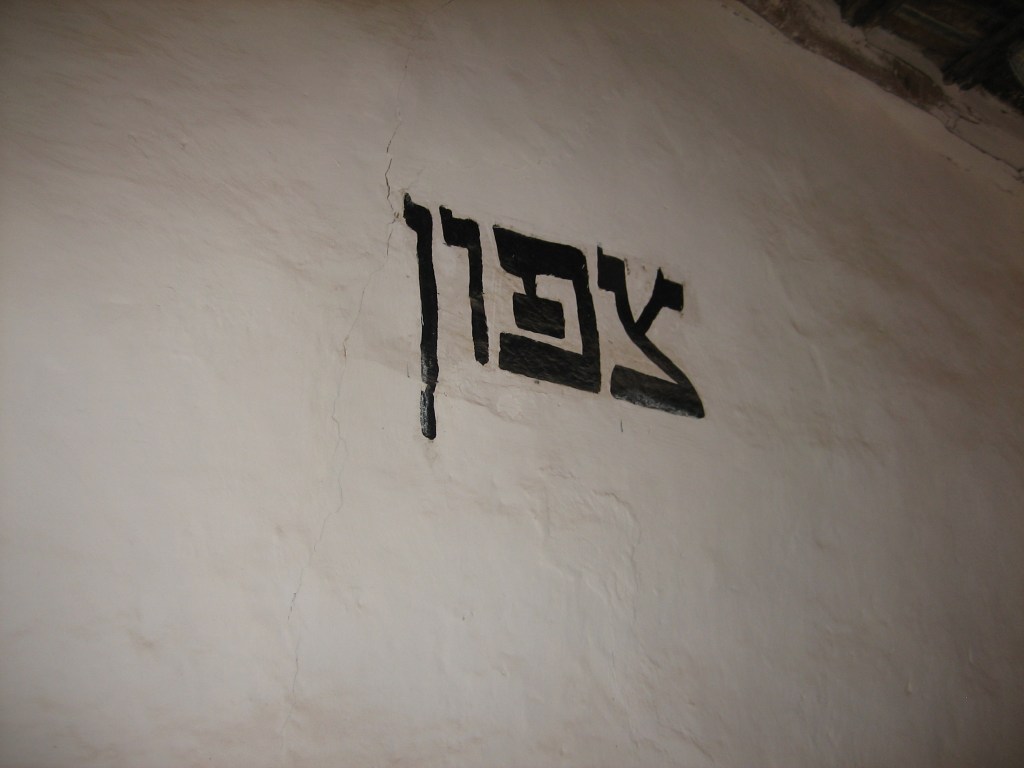
My guide had not been there for a long time, and he was not exactly sure how to get there. We stopped at a gas station to ask for directions and a man on a bicycle offered to show us the way. We snaked through the tiny streets of this hamlet following the biker and then came to the synagogue. It is only about 14 by 20 feet. It still had a beautiful wooden Berber arc and Hebrew words written on the wall. There are no Jews left in the town.
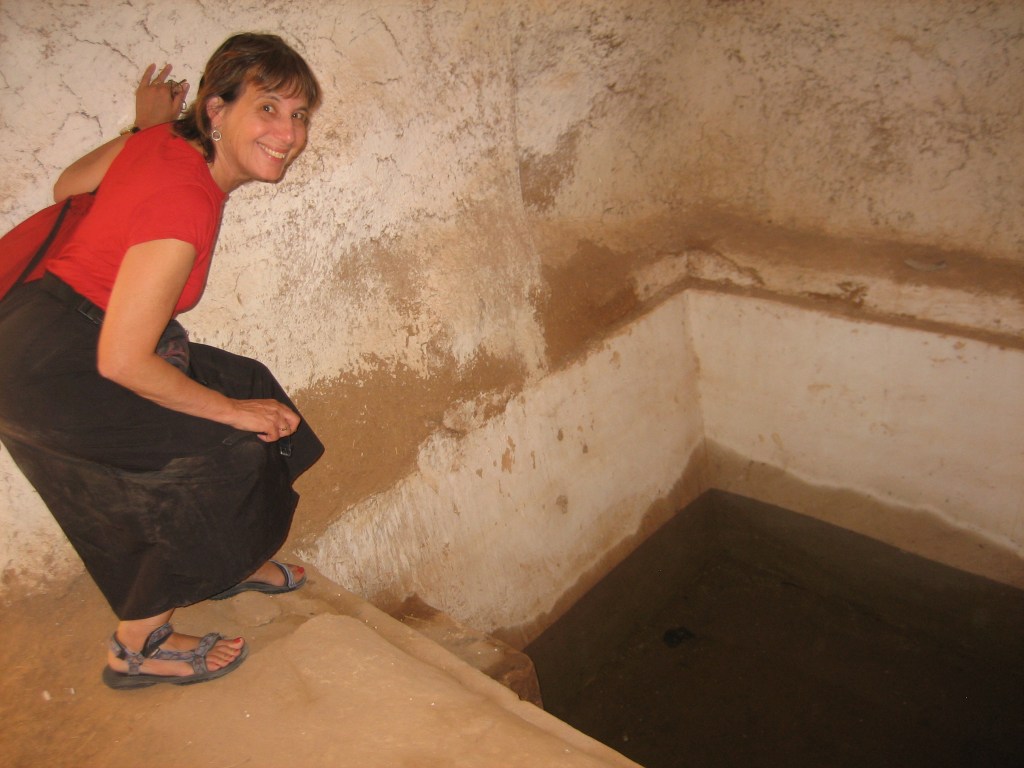
Next to the synagogue was a ritual bath (Mikvah). It was amazing to just be able to open the door and go in.
Obviously we were the only tourists.
I continued east, to the Atlantic coast town of the old Portuguese port of Essaouira. This is an old walled city and the Riad Watier (my hotel) was inside the Medina.
As part of the Jewish Heritage tour, I was scheduled to go to the grave and house of the Rabbi Chaim Pinto (1748-1845), who had been revered as a wise man in both Morocco and Israel.
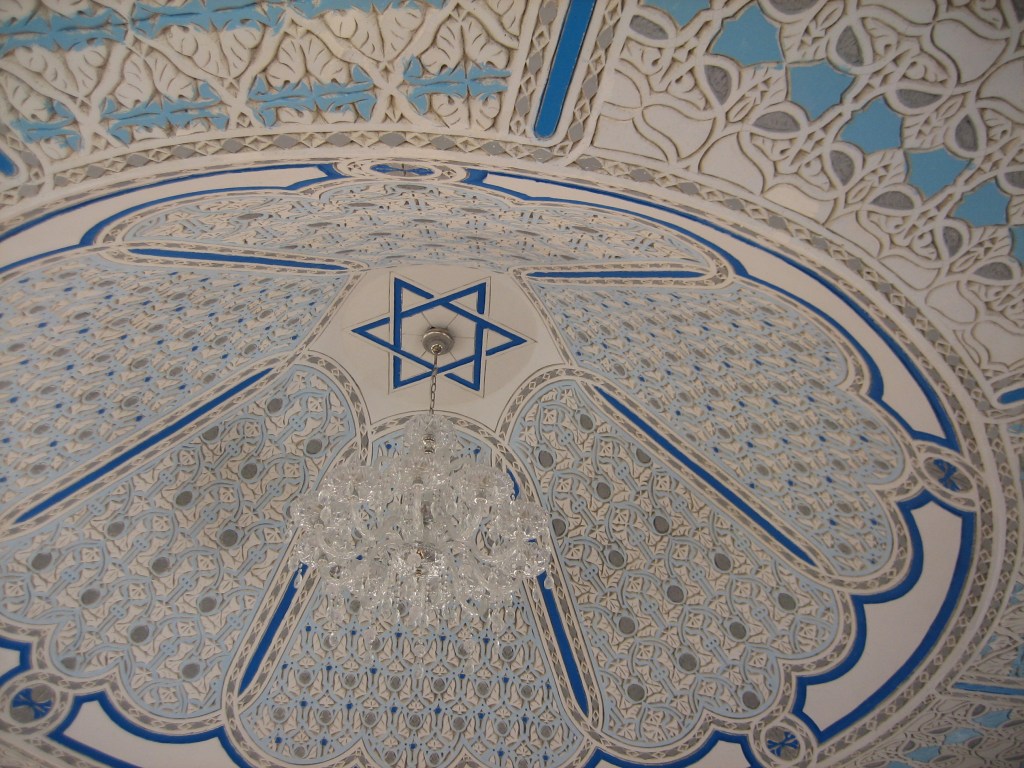
The Pinto house was locked, but a neighbor called the caretaker who said she would meet me at the cemetery. In the meantime, the neighbor took me to the old school where the Jewish children had studied and lived. The house is crumbling because it has been standing empty since 1960 when most Jews left. Squatters had moved in and they were happy to show me the students’ entrance cards and the books in the cabinets. It is as if the school just closed for the day instead of for 50 years. The squatters actually take good care of the artifacts because when tour groups come through, they receive tips.
The cemetery houses a beautiful monument to Rabbi Pinto and has his grave. This grave yard and the Pinto family house are beautifully maintained. There is an impressive synagogue in the house itself.
The last stop was Marrakech. There is much to see and do in this city, including a huge Suq, which is much easier to navigate than the one in Fez. I even managed it on my own when the guide left me on my last day. It was especially lively in the evening with lots of open air restaurants in the area surrounding the Suq.
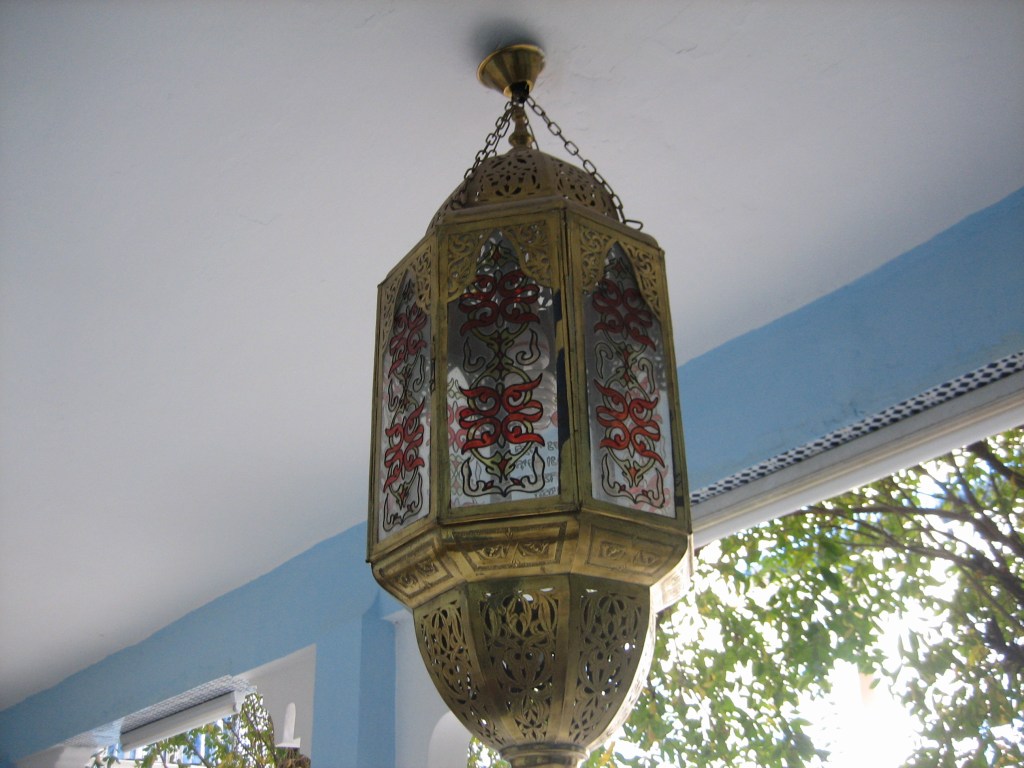
I visited a very beautiful synagogue, which was well hidden inside what looked like a typical house. The space was lit by the magnificent lamps that I had seen in all the synagogues.
I was dying to purchase one that I saw in the Suq but it was $3,000. The memory will have to do.
Final comments:
Subscribe to get access to the rest of this post and other subscriber-only content.
Subscribe to get access to the rest of this post and other subscriber-only content.
Subscribe to get access to the rest of this post and other subscriber-only content.

Canyonland National Park
Moab was home base for Canyonland and Arches national parks. I took a beautiful 6-mile hike to look at red and white spires that are artistically placed in the mountains. Cactus flowers were blooming and added to the beauty of the surroundings.
It was hot – 95 and very, very sunny during the hike. When I returned to the motel – I went into the whirlpool to loosen up. It felt great.
Arches National Park
It was Memorial Day weekend and since I expected a crowd, I started early – 7:45 AM. The park was crowded but fabulous with its amazing arches.
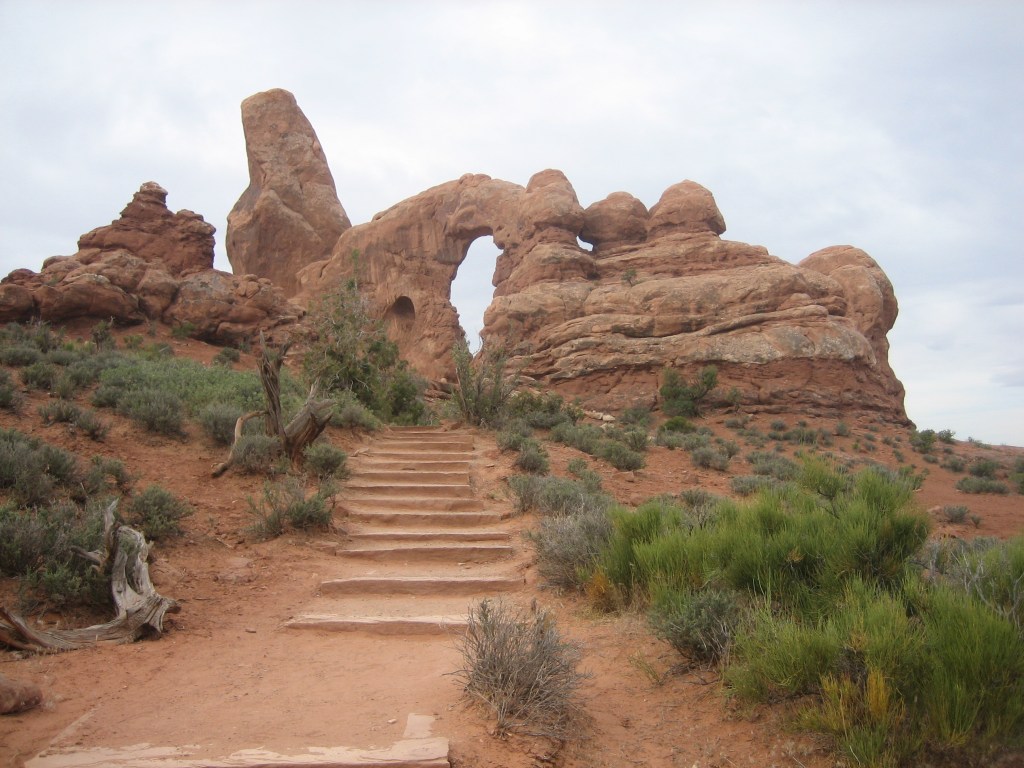
Each was formed by erosion and is different and interesting. One arch had expended in 1940 and the part that fell was at the bottom of the canyon. In others, I could see cracks that in some indeterminate time would enlarge the arch.
To reach most of the arches, I had to walk about 1 mile from the parking lots. Obviously, the arches nearest to the parking lots were the most crowded. I stayed at the park for 5 hours and I believe saw all of the arches.
Drive from Moab to Boulder, Utah
The 200-mile drive from Moab to Boulder, Utah was through beautifully carved hills in red and gray. I went over a mountain with evergreens at the sides and white birches at the top. When I stopped at the lookout point – I almost got swept away by the wind. I had to look at the view from the car.
Toward the end of the trip I stopped to see some petroglyphs.
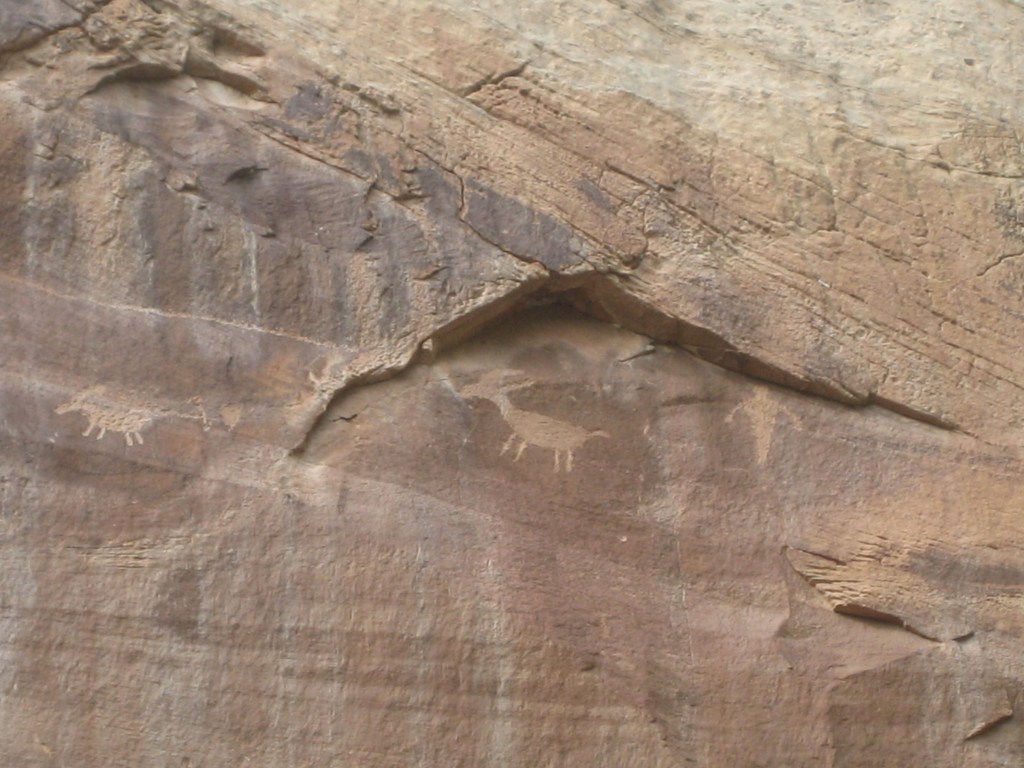
Escalante National Park
Boulder, Utah was the jumping off town for my 5 day/4-night Escalante camping/hiking trip. It was amazing, fabulous, interesting, instructional, scary, difficult, and satisfying. The park is huge with lots of canyons, rivers, slick rock hills and beautiful views. The group of 5 were led by Sue and Grant, our guides, cooks, and drivers. From town, our campsite was 40 minutes by car and a 3-hour hike to the camp site.
The hike was not too bad, mostly on sandy soil with a light downhill until the very last when we had to go down steeply on slick rock. The gale force winds of the night before had calmed down quite a bit but it was still windy and it was cool.

We used the camp for all 4 nights and did day hikes. The camp was near the river under an overhang so we had some nice shade (which we appreciated when it warmed up after the first day). There was a bathroom tent about a block away, which consisted of a hole in the ground and a seat. There were lots of comfortable chairs for sitting and relaxing. The food was excellent.
The weather, after the first chilly day – and very cold night, moderated each day – so that by the last day it was very warm climbing up to the trail head.
Each day we hiked about 7 hours. We would start in the morning going up from camp to hike up on to the slick rock. The hiking was often challenging with slippery ups and downs on the rocks. But the views from the top of hills were wonderful.


In the afternoon we usually went down to the rivers and waded in if the river wasn’t too deep, fast running or too rocky. Otherwise, we would cross from side to side and bushwhack along the banks. I was pretty scratched up from walking into the bushes, but I loved walking through the rivers.
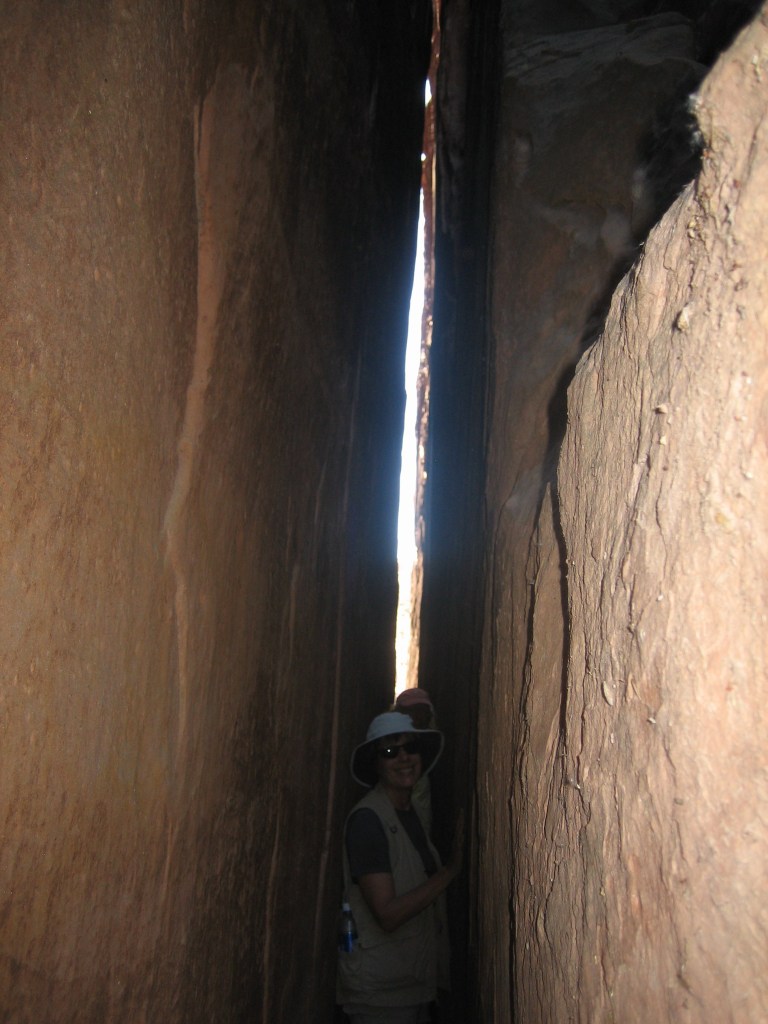
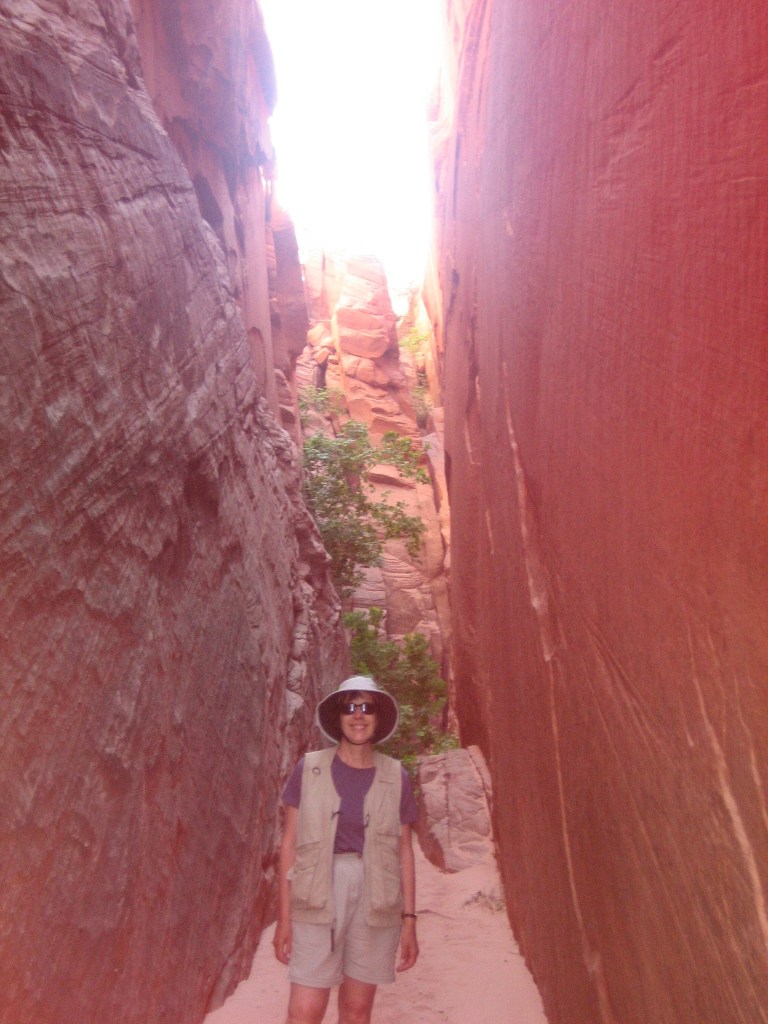
On two of the days, we went through very narrow slits. One was basically level once we were helped into it but so narrow that I had to take the pack off and walk sideways through it. The other was wider but went down, down, down and it was a bit scary doing it. I had to hold on to ledges to get down. At the bottom of the slit we had to wade through waist high water. The last day I took the option of doing a shorter (5 hours) hike with Sue (rather than continuing with Grant) and was back in camp by 2 PM to rest and read. It was delightful.
When the weather warmed up enough (the third day on) we bathed in the river – chilly but ok. The food was fabulous. Each evening we had another type of dish (chicken, beef, fish etc.). For lunch we made sandwiches and carried them with us. Breakfast was a hot cooked breakfast such as eggs or French toast.
I saw the most beautiful starlit sky when leaving the tent when nature called in the middle of the night. It made up for sleeping on a less comfortable “bed” than at home. We saw lots of fabulous Petroglyphs, including some lovely ones right at our camp. We also hiked to an old cabin that a hermit built about 100 years ago. On the last day, we hiked up out of camp and back to the trail head. I spent another night in Boulder, UT at the Boulder Mountain Lodge. It was great to sleep in a bed and take a real shower as well as to have a toilet just a few steps away.
Bryce Canyon

Bryce is a delight. The red hoodoos are magnificent. A hoodoo is a rock shaped like a pillar that has been worn down by the elements. On one of my hikes, I saw one that looked like Queen Victoria. It was mostly sunny both days at Bryce with highs in the 80s. Although cars are allowed in Bryce, it also has a very nice shuttle that runs every 15 minutes through the main part of the park. My hotel was one of its stops which gave me the option to drive or take the shuttle. I did both. The shuttle makes about 10 stops along the way. This makes it possible to hike from view point 1 to view point 2 and then just get on the shuttle and not worry about the car being in the wrong place.
An easy hike: I took the shuttle to the furthest point then hiked the rim trail to the next viewpoint. I had decided to give my body a rest after the vigorous hiking of the previous days, but I couldn’t resist taking an easy hike.
The hike at Sunrise Point: I drove into the furthest point of the park and then stopped at various lookout points. Then, I parked at Sunrise Point and began a wonderful 4+ miles hike. Since Bryce is at the top of the hills, all walks require going down first then back up. I had a fabulous time getting into the rock formations rather than just seeing them from the top. I saw many “window” arches, and walked through many that intersected the trail. The formations were fabulous.
The Navaho Loop: This hike took me about 600 feet down for .6 of a mile through perfectly fabulous scenery. Then I walked somewhat flat for .4 miles to see the rock slide that happened a week earlier and had closed the loop – I had to do an out and back. It was an amazing hike and not too hot because I started at 8 AM and therefore, was in shade for most of it.
Sunset Point: One late afternoon I sat at Sunset Point for about an hour watching the light change on the hoodoos until the sun went down. It was so relaxing.

I was able to get away from people while hiking. Most people only get as far as the vista points and some even find the few stairs to the railing a challenge and look at the scenery from their tour bus or car.
Zion National Park
I entered Zion from the East entrance through an amazing zig zag road and a-mile long tunnel that was really creepy. They had to blast the mountain (1930) to build the tunnel. I was in Zion over 30 years ago and at that time cars were allowed in the entire park. But today, because so many people come, you can only drive to the Visitor Center (if you are early enough or late enough to find parking). Otherwise, there is a shuttle from the town and then a shuttle in the park. The shuttles run very frequently and start at 5:30 am and run to about 11:30 PM.
Zion is at the bottom of the canyon (as opposed to Bryce which is on top of the canyon). It is made up of huge boulder like mountains – very impressive. There are many wonderful trails which I hiked. But the mid day temperatures were near 100 degrees, therefore I made sure to hike early in the day.
Three Emerald Pool hike: It was a fairly easy hike with lovely views of the huge boulders. As the name implies, there were three pools to view during the hike and some lovely waterfalls. Then I hiked to the Weeping Rock waterfall (just a 1 mile round trip on paved walk). The water comes through the rock and it looks like it’s weeping. It was nice and cool under the waterfall.
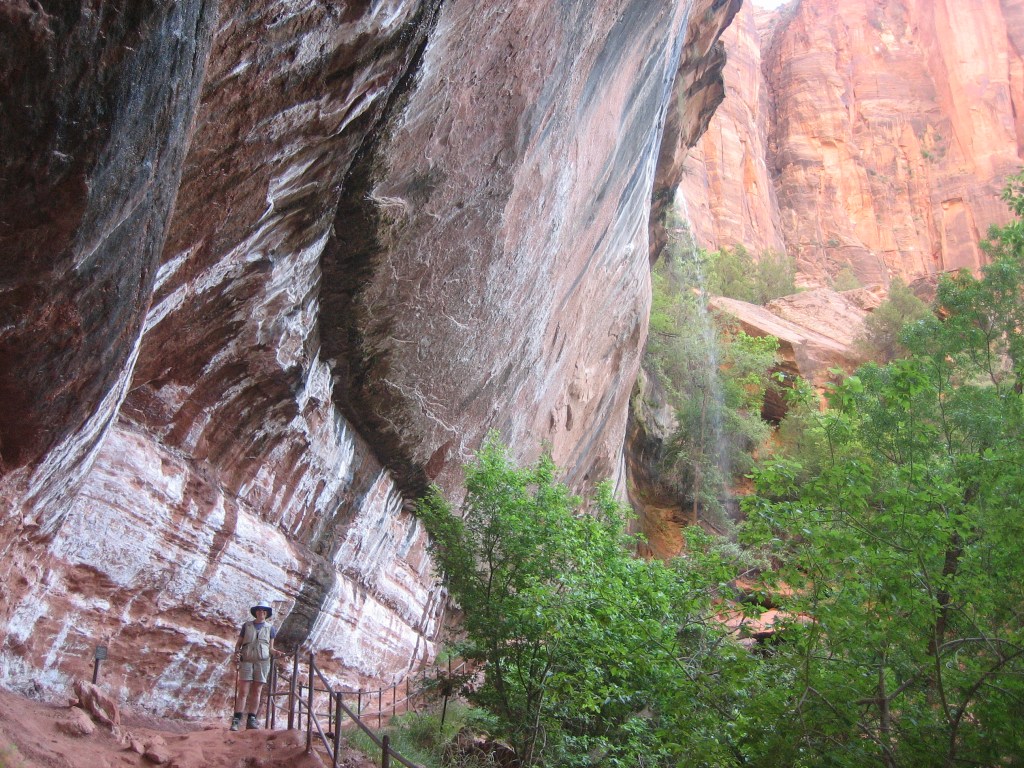
The next morning I did two hikes – both listed as strenuous (more than I had bargained for). This is how it happened.
Hidden Canyon hike: The brochure description listed it as an 850 ft climb for 1 mile and then back down, strenuous with long drop offs – not for anyone fearful of heights. I am fearful of heights but I decided to do the hike anyway. I started about 8 AM and had full shade for the whole hike and stayed cool.
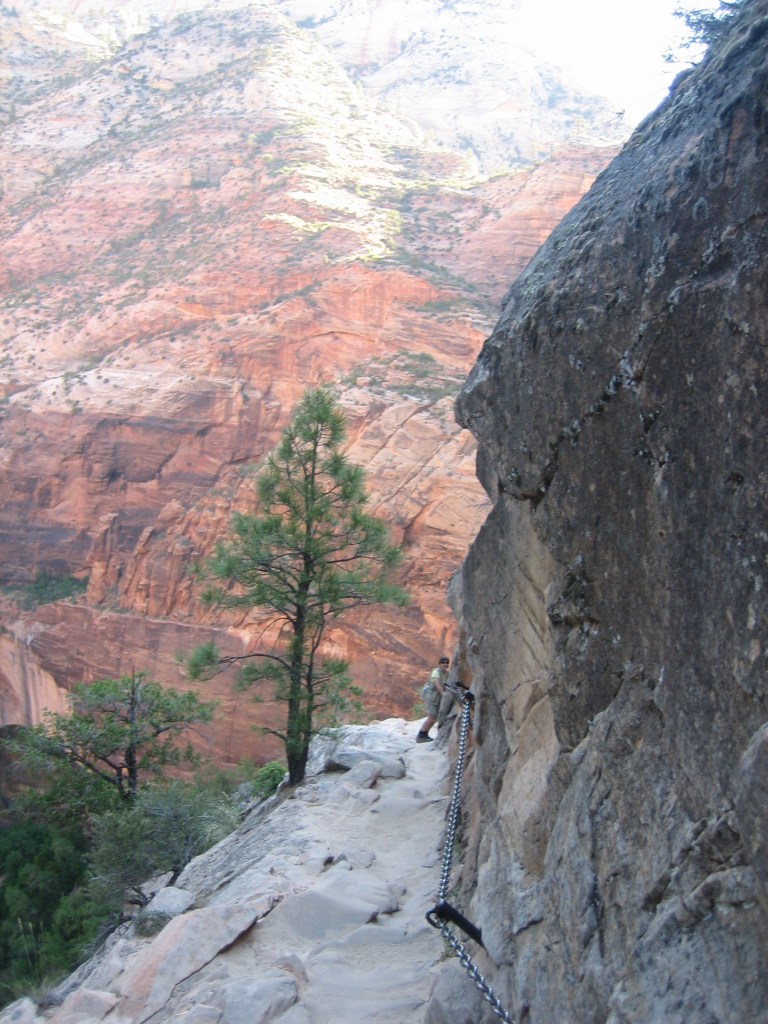
The 850 ft climb was pretty steady and never too steep. The trail was on the side of the cliff with a steep drop off but I didn’t feel uncomfortable because the trail was wide and I could hug the mountain. The last third was a bit dicey – the trail narrowed but there were chains to hold on to therefore, I was not scared (that is me on the left). The views were magnificent and I were well rewarded.
It was early and I still felt like hiking.
Angel’s Landing is described as a 1488 ft climb, 5 mile round trip hike.This would have been a stretch, especially the last 1/2 mile bit at the top.
However, I decided to just start the Angel’s Landing hike till the first set of switch backs. I kept reminding myself that there is no way I could do this hike as I went up first set of switch backs. They were mostly in the shade so I kept going till I reached Refrigerator Canyon. This was a very pleasant walk that led to the second set of switch backs. They were in the shade also so I kept going.

But enough is enough and I did not walk the last 1/2 mile on the ridge. I had a wonderful time doing the hike and the views were unbelievable.
Final Words:
 MomTrips