
Subscribe to continue reading
Subscribe to get access to the rest of this post and other subscriber-only content.
Subscribe to get access to the rest of this post and other subscriber-only content.
Subscribe to get access to the rest of this post and other subscriber-only content.
Subscribe to get access to the rest of this post and other subscriber-only content.
Subscribe to get access to the rest of this post and other subscriber-only content.
At my travel agent’s suggestion I decided to take Amadeus Cruise Line 11-day, 1200 miles Danube cruise from Bucharest, Romania to Vienna, Austria. I would get to visit countries that I knew very little about.

Vienna
I decided to start (and end) the trip in Vienna instead of Bucharest for three reasons: 1. Round trip tickets to Vienna and then a short flight to Bucharest were about 1/3 of the cost of Florida/Bucharest/Vienna/Florida. 2. I wanted a couple of days in Europe to get accustomed to the time change before the cruise and 3. Vienna is a lovely city to visit.
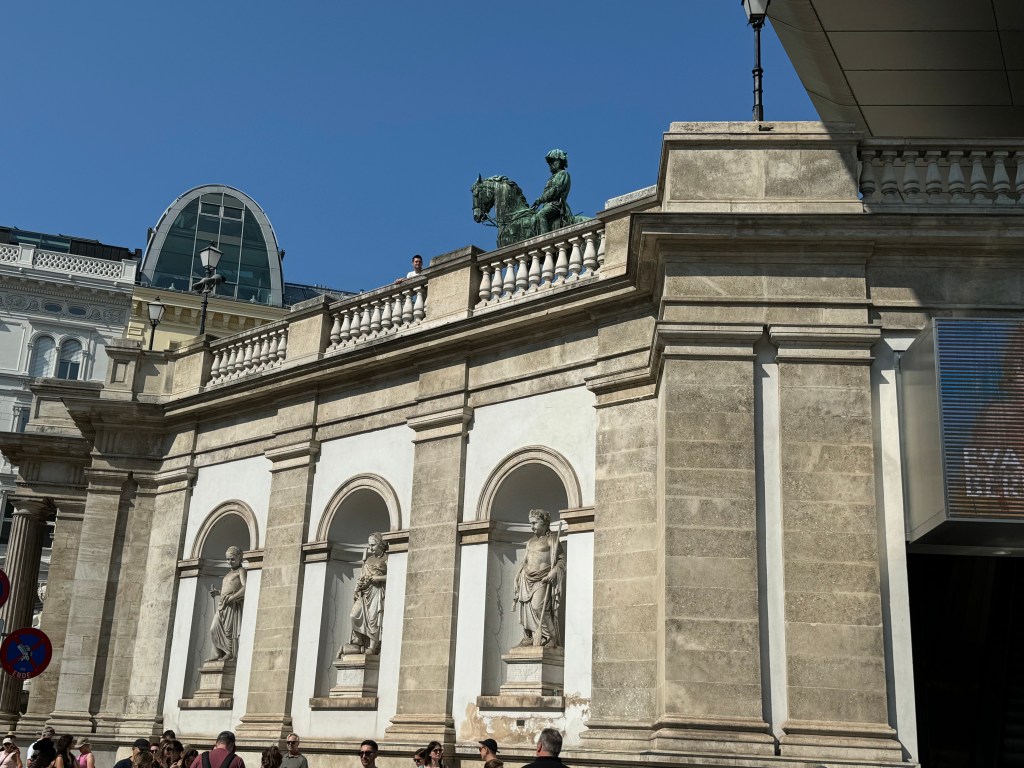
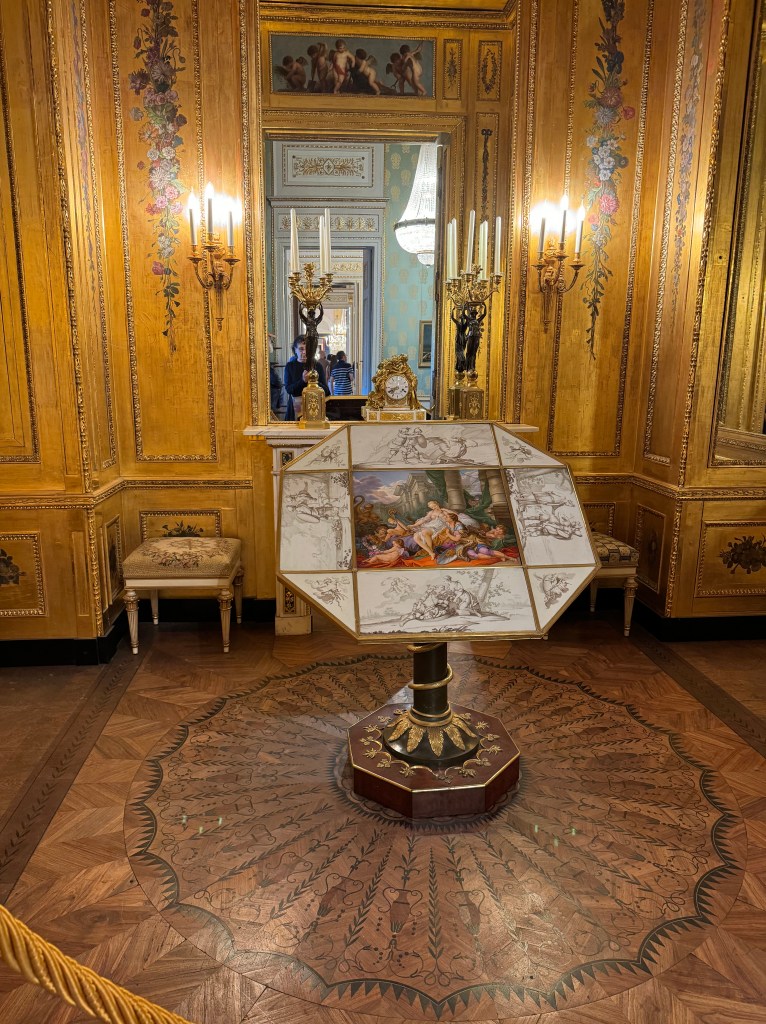
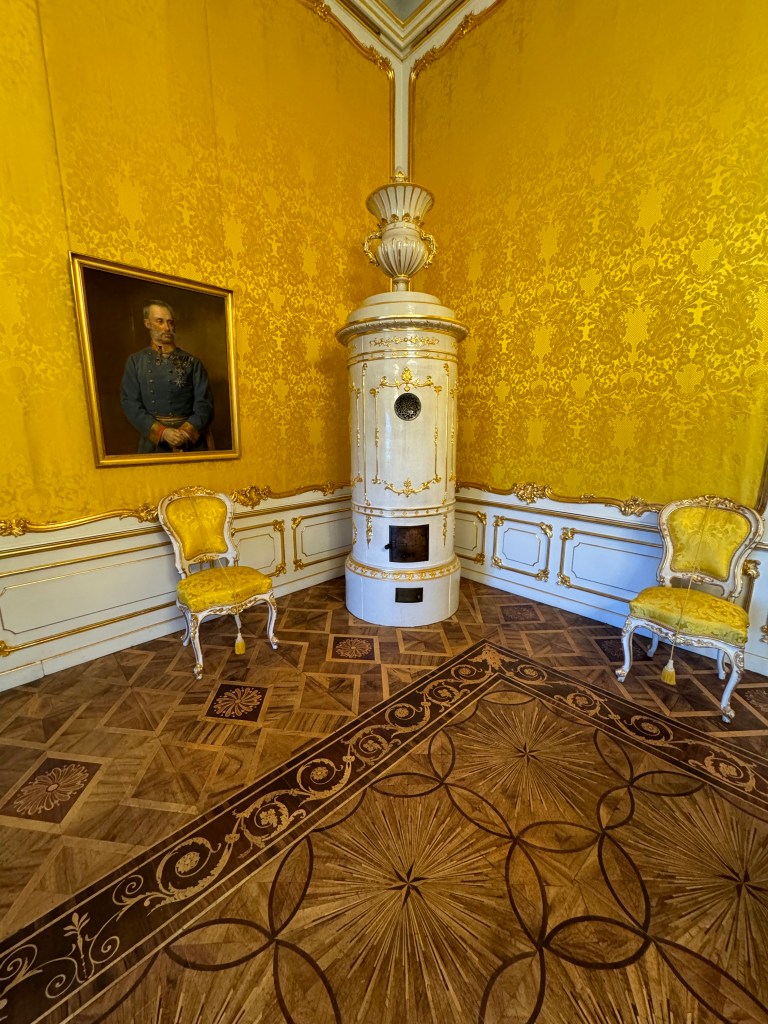
I made good use of my time in Vienna (both before and after the cruise) by visiting the Leopold Museum and the Albertina. I had not seen either of them during my previous visit.
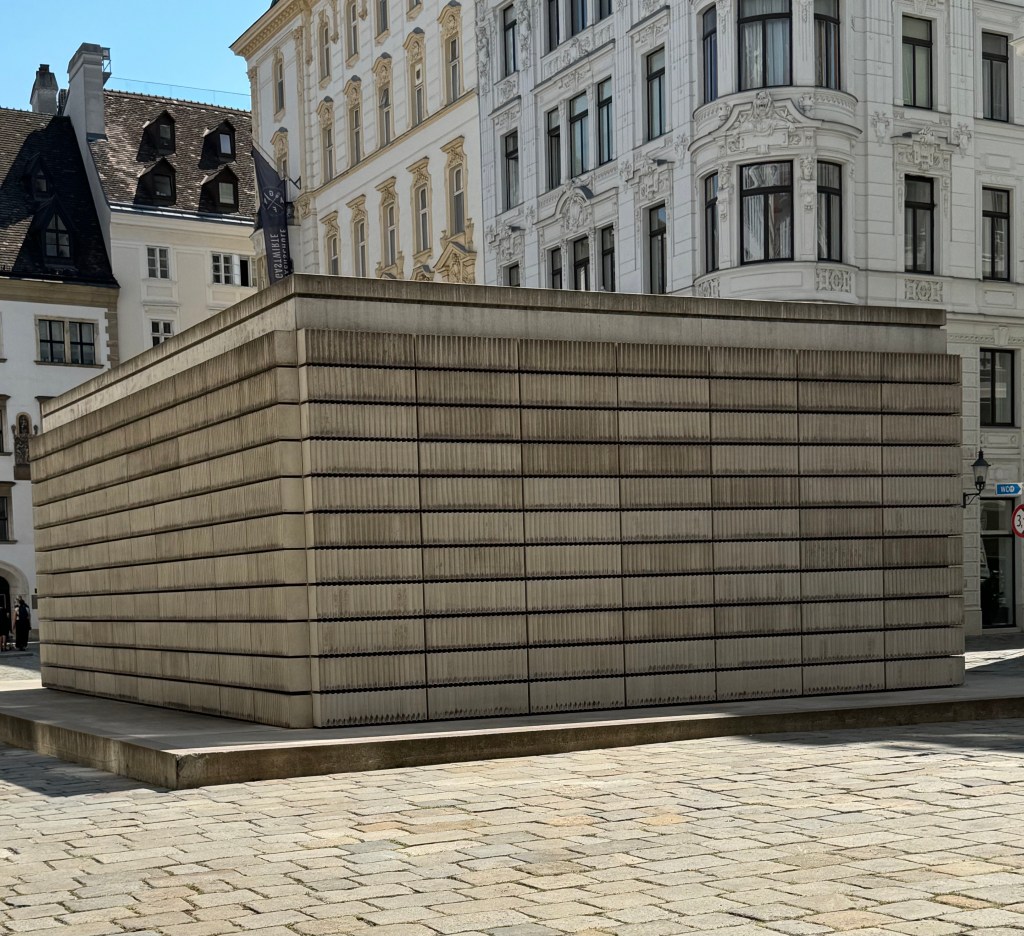
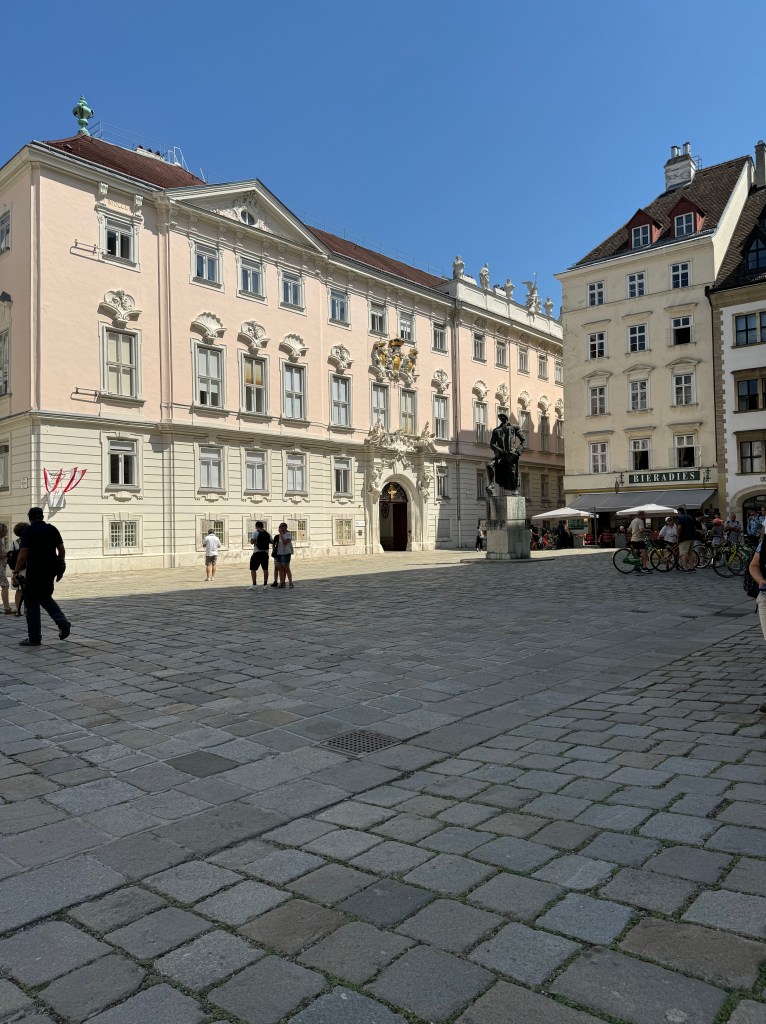
On my return, I went to the two Jewish museums in town. The one on Dorotheergasse has a wonderful Israeli café. The one on Judenplatz is built over the remains of the synagogue that was destroyed in 1421 CE. I was able to go down to the excavations. Also on Judenplatz is the Holocaust Memorial, a block of books that were not read by those who died.
In addition, I booked two concerts and spent a great deal of time walking in the pedestrian street between the Opera House and St. Stephen’s Church. Vienna is well a known city, therefore I will not give details of the visit except to say that it was wonderful.
Romania
Amadeus Cruise company had arranged for an overnight stay, the night before the cruise, at the Intercontinental Athenee Palace in Bucharest, located just across from the National Museum.
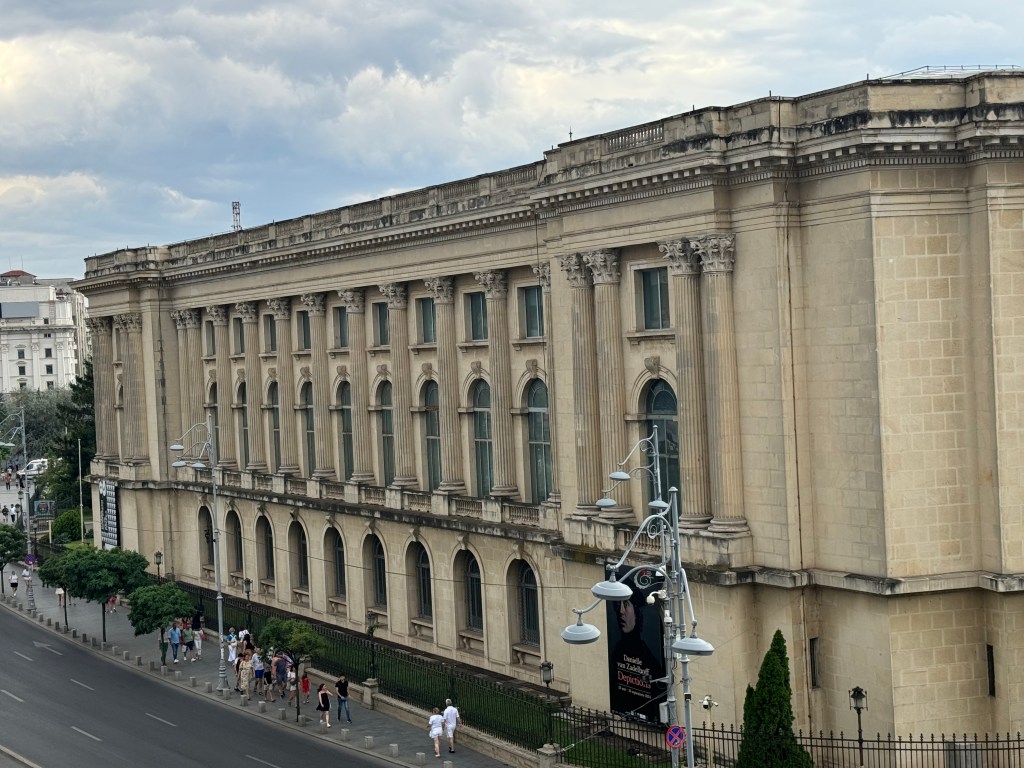
I used my free afternoon to see the beautiful museum building and its collection, especially the El Grecos.
After the museum I stopped at a cafe for a bite to eat. My server said that I was the first American that she ever served. Not many Americans come to Bucharest.
The next day, Amadeus provided a bus tour of Bucharest and a walking tour of the Old Town on our way to the boat. There were three buses: German, Spanish and English. For some reason, 2 German speakers joined our bus!
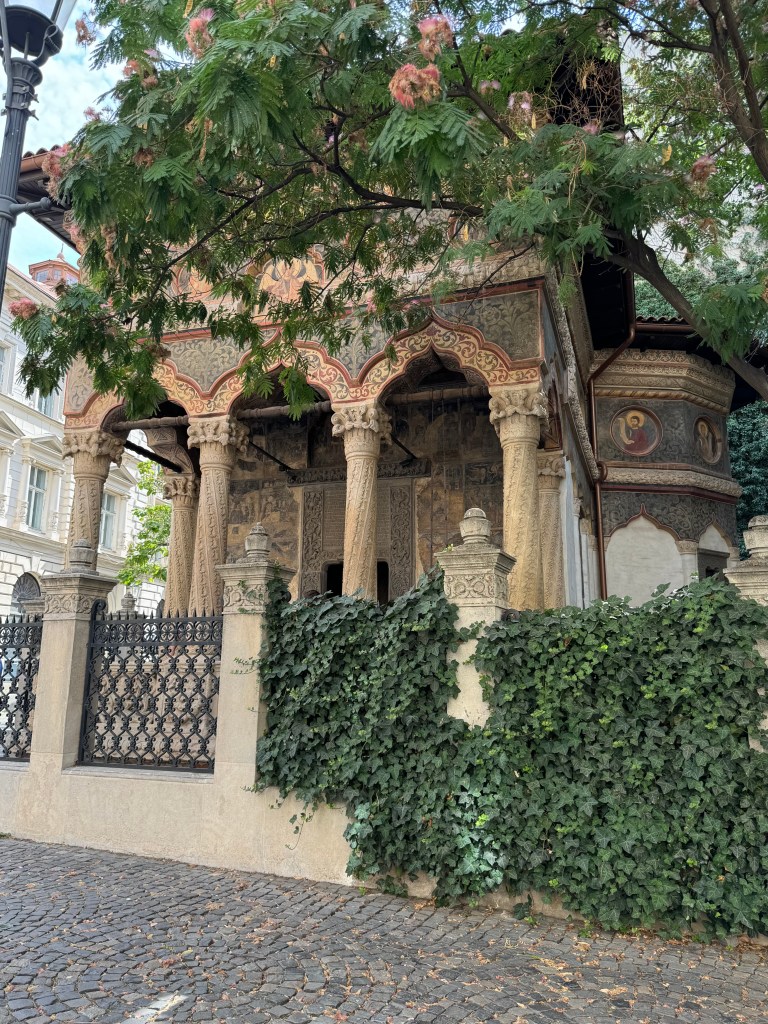
I saw the 1724 CE Stavropoleos Monastery, which is now a nunnery. On my free time I went to the 5-story book store. Our group lunch in the Old Town was lots of fun. I sat with a couple from London, a couple from Sweden, a Belgium and a German.
The Cruise
The boat was a long narrow river boat, narrow to be able to fit into the locks. It had 4 levels. The top deck was open with lots of shady and sunny places to sit. There was a small pool, which I did not use. The deck was my favorite hangout place.
Dinner tables were assigned for the entire cruise. Luckily, I liked Diana and Geoff. They were from Australia and liked opera and classical music; therefore, we had much in common. There were many nationalities represented on the boat: Israelis, Maltese, Italians, Swedes, Norwegians, Brits, Canadians, German, Spanish and more.
The cruise was special in that it covered many more miles of the Danube than the regular route. We started by going East in Romania to the Danube Delta, where the Danube flows into the Black Sea.
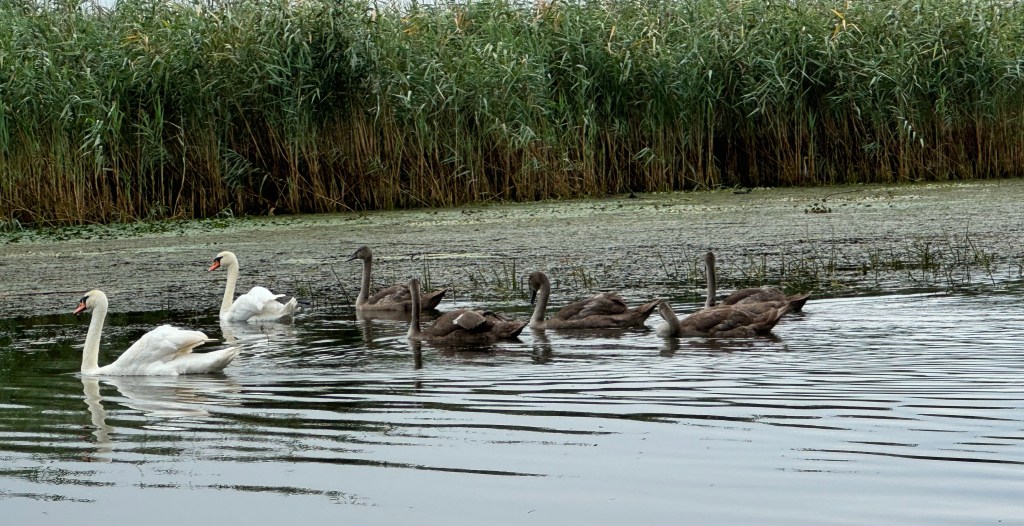
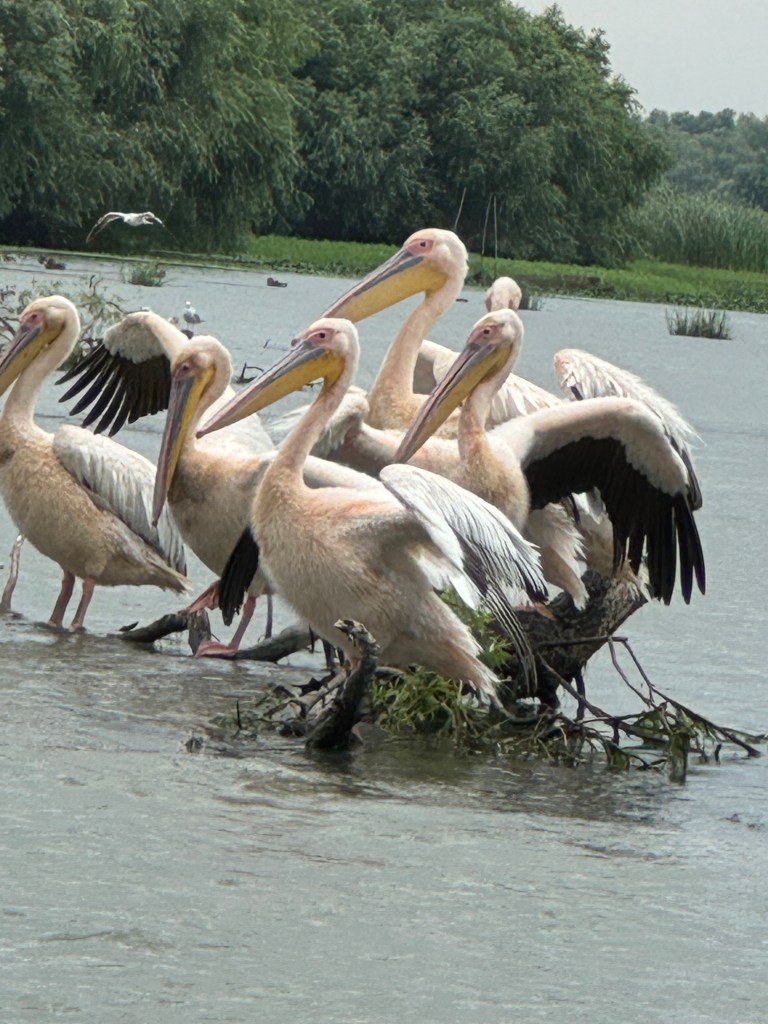
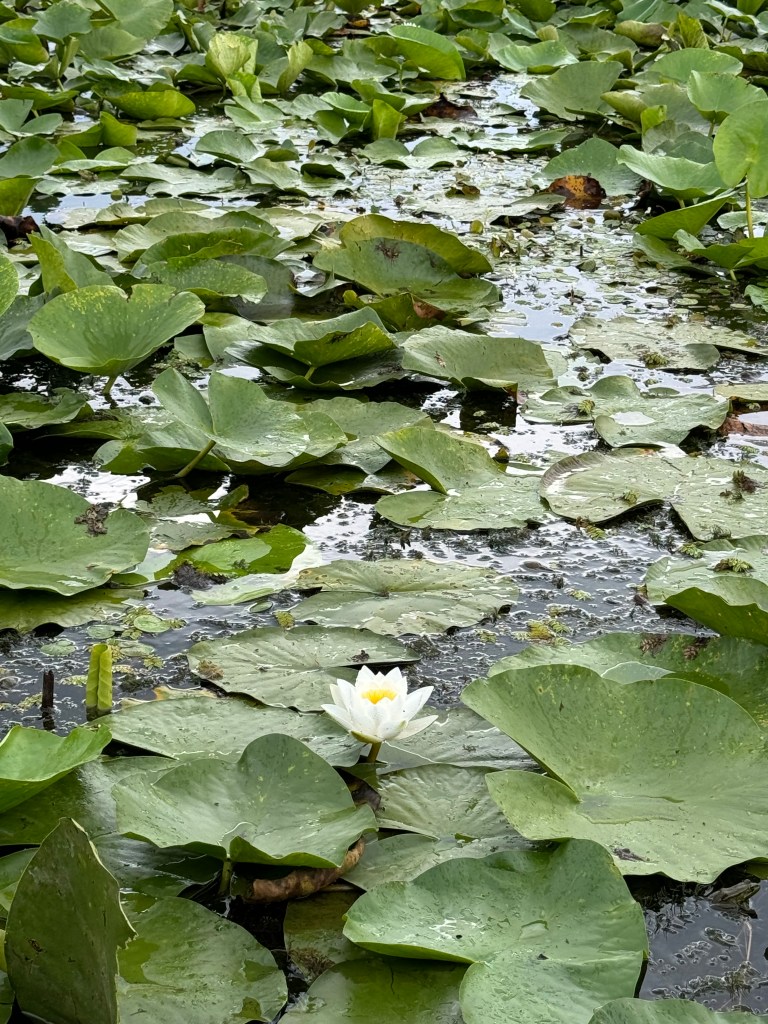
By power boat we meandered on the many tributaries, seeing many birds such as herons, ibises, Egrets, and an eagle. But the most special were the large white pelicans and a family of swans. I live near the Gulf of Mexico, and am familiar with pelicans, but these birds were special.
Our next stop was the city of Constanta, still in Romania, on the Black Sea. It is the oldest city in this country, and has been a port city since Greek times. It was called Tomis by the Greeks but the Romans changed the name to Constanta.
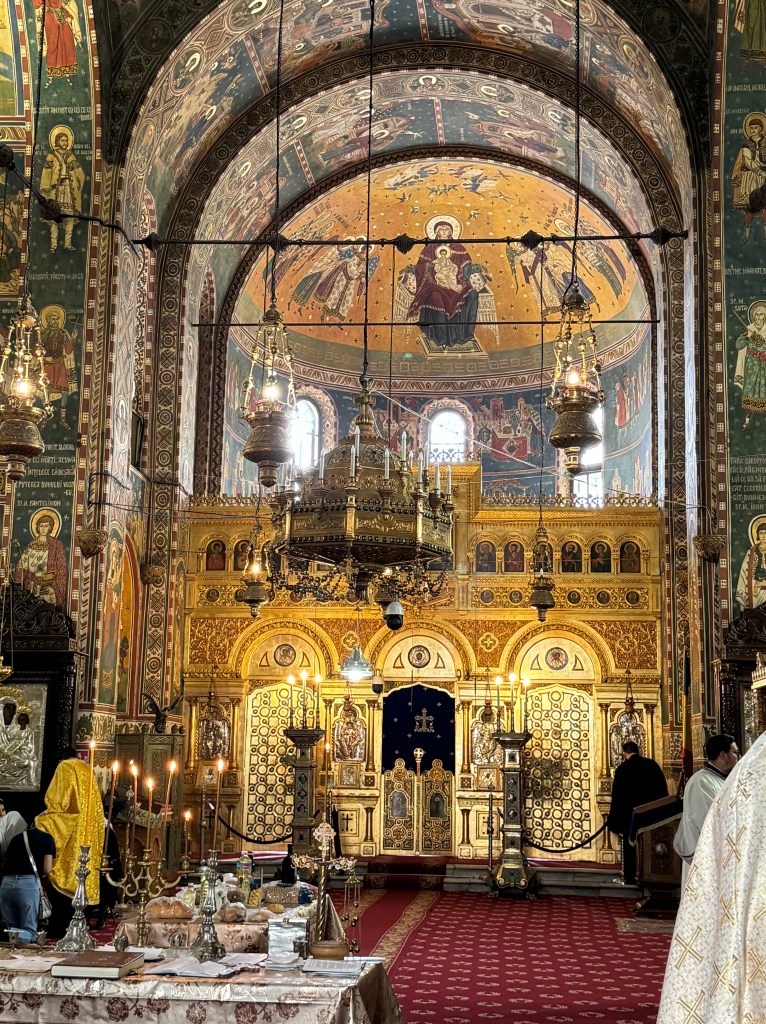
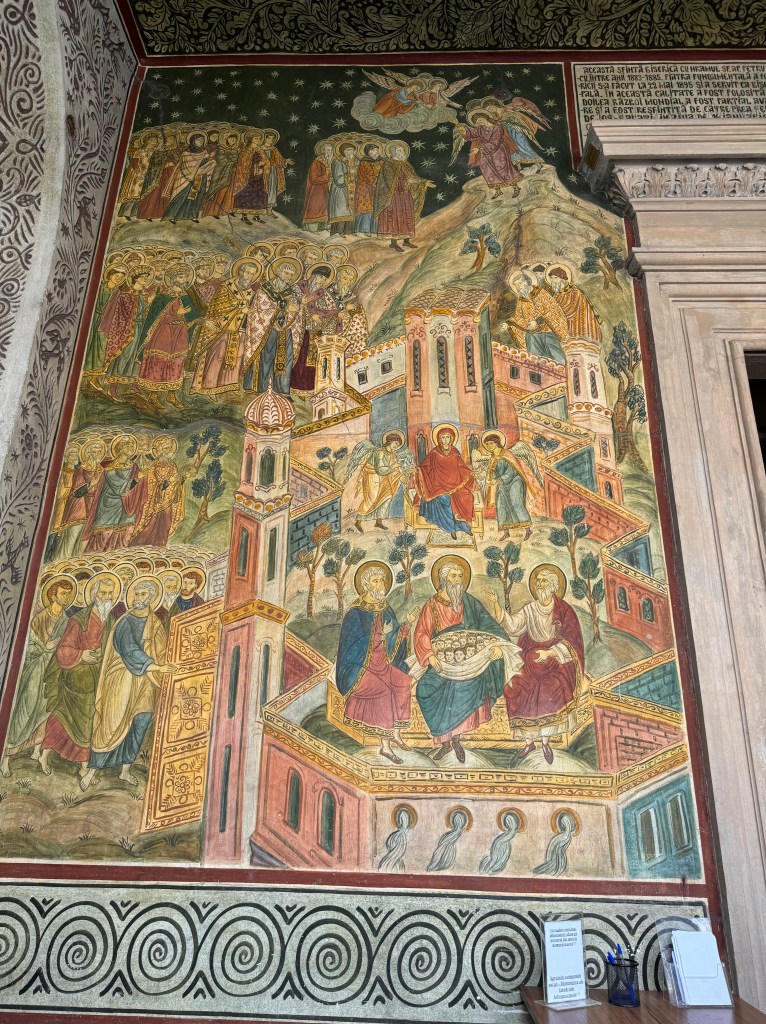
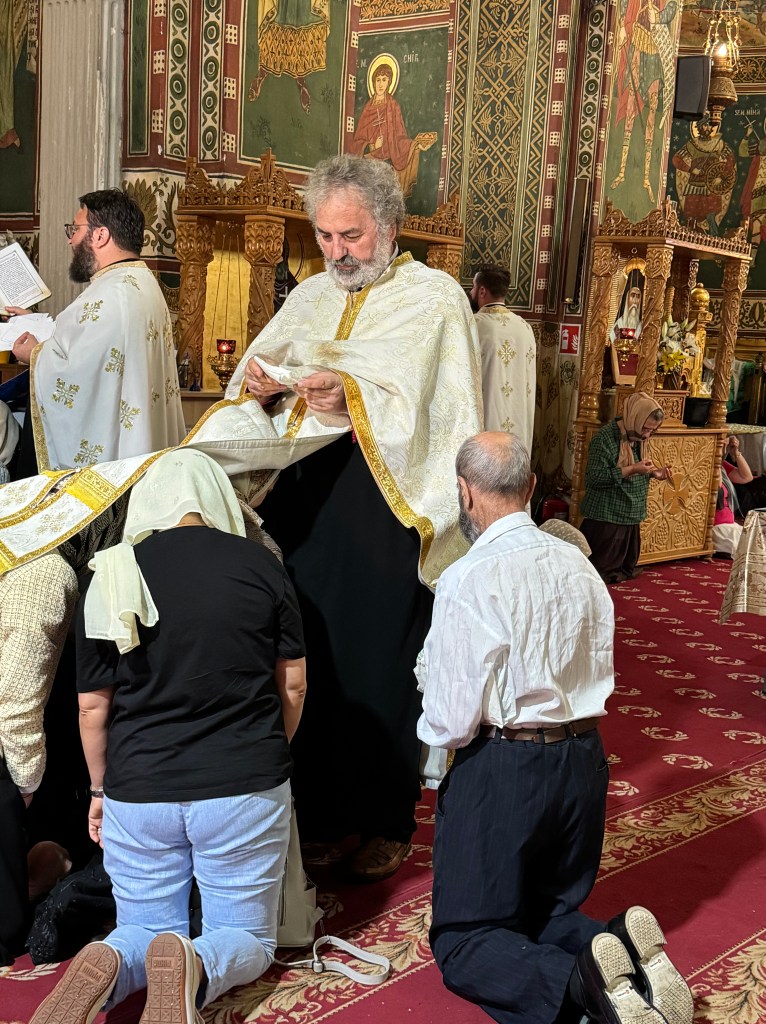
The highlight of my walk in the town, was visiting the Romanian Orthodox church during one of its services and watching/listening to the praying (above). The city also has a Greek Orthodox church, 2 mosques and a synagogue (which is in disrepair because all the Jews were deported in WWII).
The boat then began heading west, and visited Bulgaria, Serbia, Hungary, and Slovakia ending up in Vienna. Romania, Bulgaria and Serbia are Eastern Orthodox countries, but each have their own patriarchs (as do the Greeks and the Russians). Hungary, Slovakia and Austria are catholic countries. Romania, Bulgaria and Hungary are part of the European Union, but still have their own currency. Slovakia and Austria are full members of the European Union with the Euro as their currency. Serbia is not in the European Union.
Bulgaria
Arbanassi is a museum town because its houses date from medieval times and are used to educate the public about life at that time.
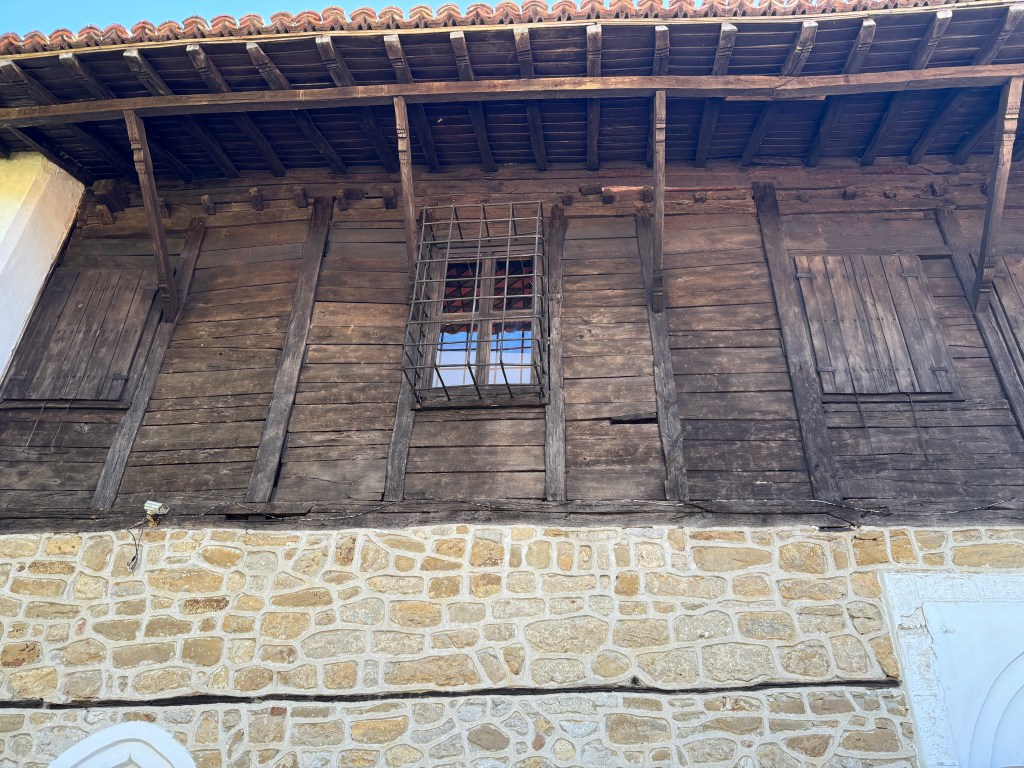
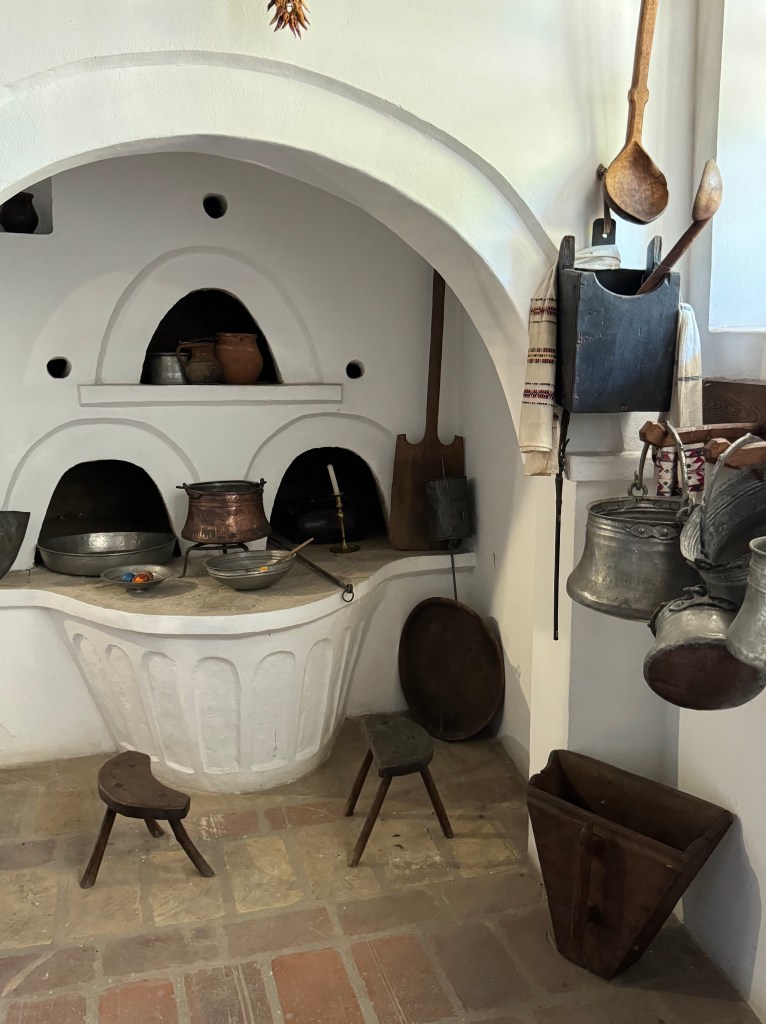
We stopped at a house that belonged to a Christian family. It is a 400-year-old brick and wood house, built during Ottoman times, when Christians were second class citizens. The Christians were needed by the Ottomans for trade because Christian countries would only trade with the Christians. However, they were taxed excessively.
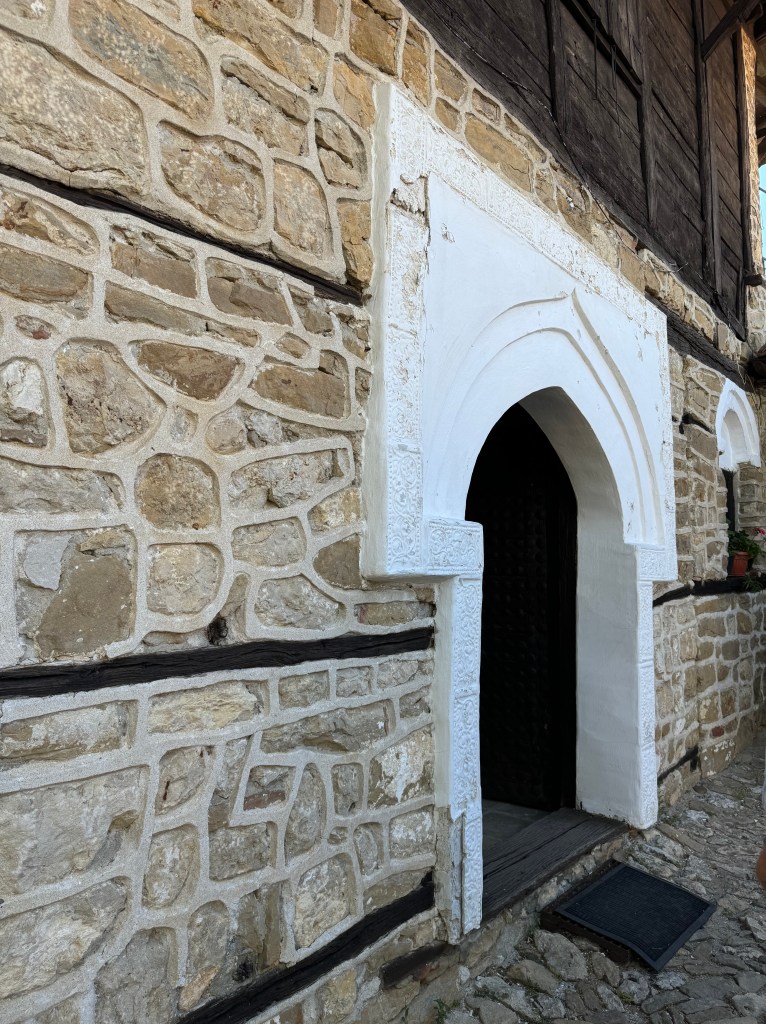
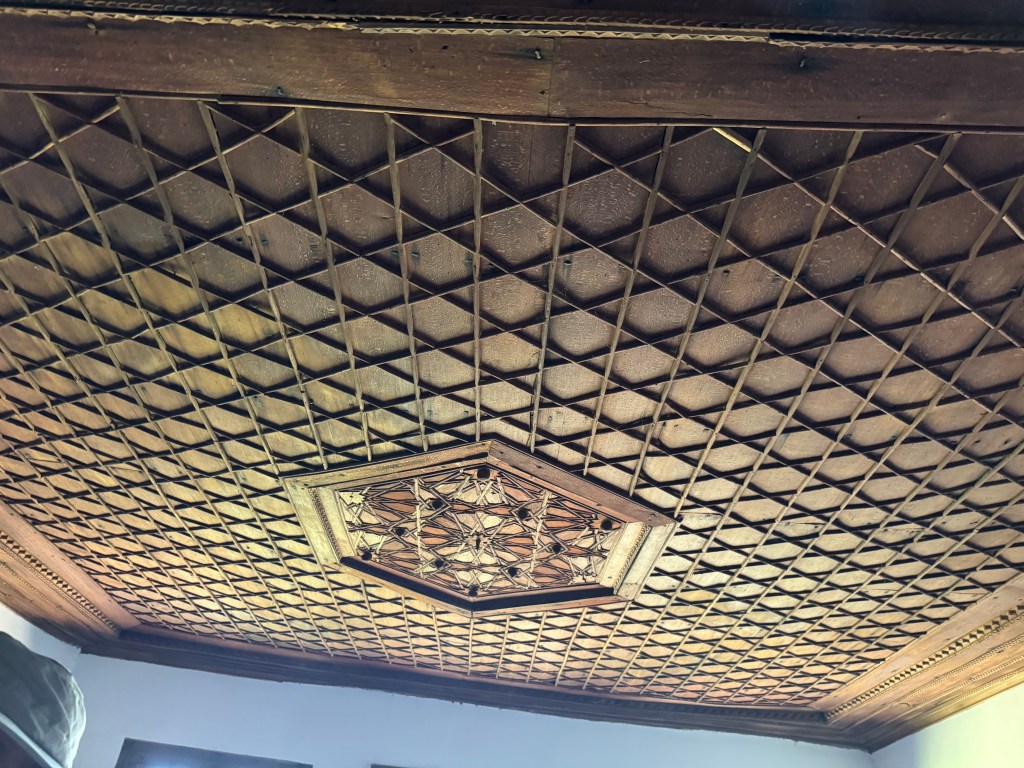
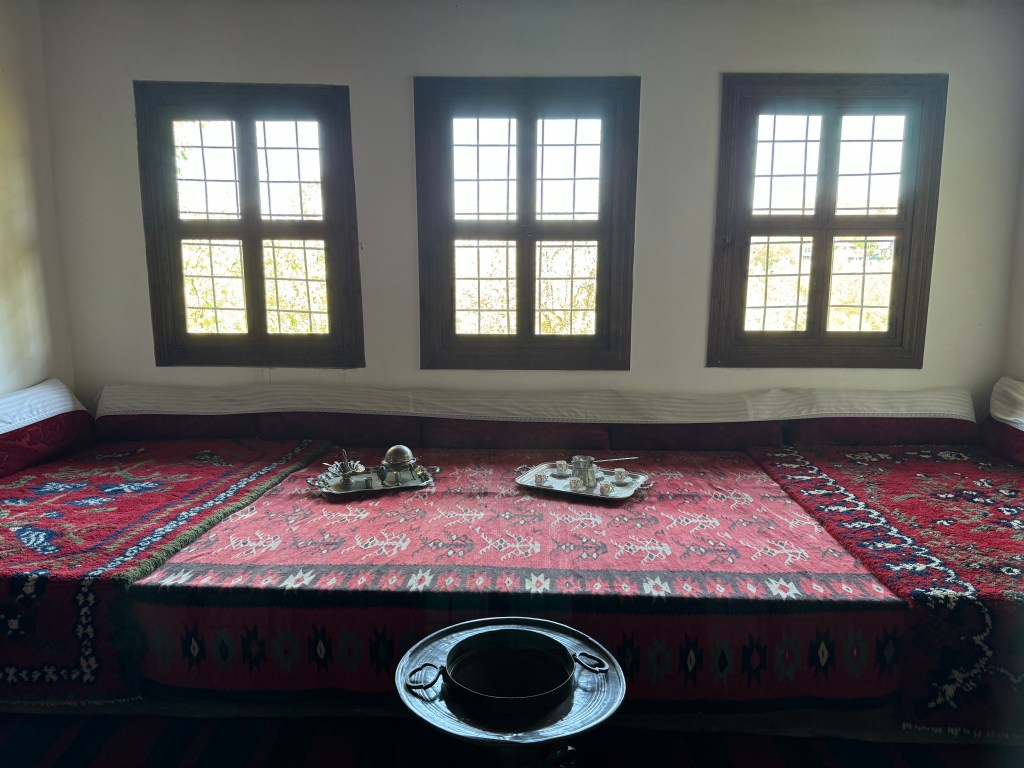
Although it is a Christian house, it is built in the Ottoman style with the entry arch and a geometric ceiling.
In addition, according to the guide, the government could take the Christian children and make them into soldiers. The idea being, that if the Christians rebelled, they would be fighting their own children.
Grills on the window and between rooms were used as protection from the Ottomans.
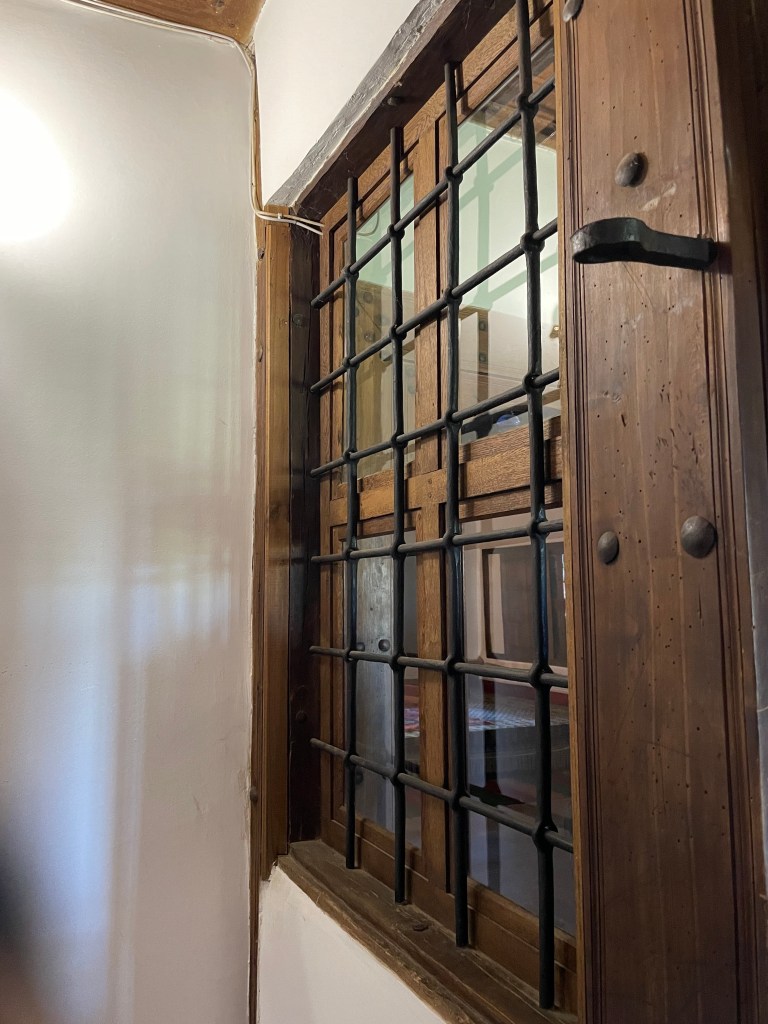
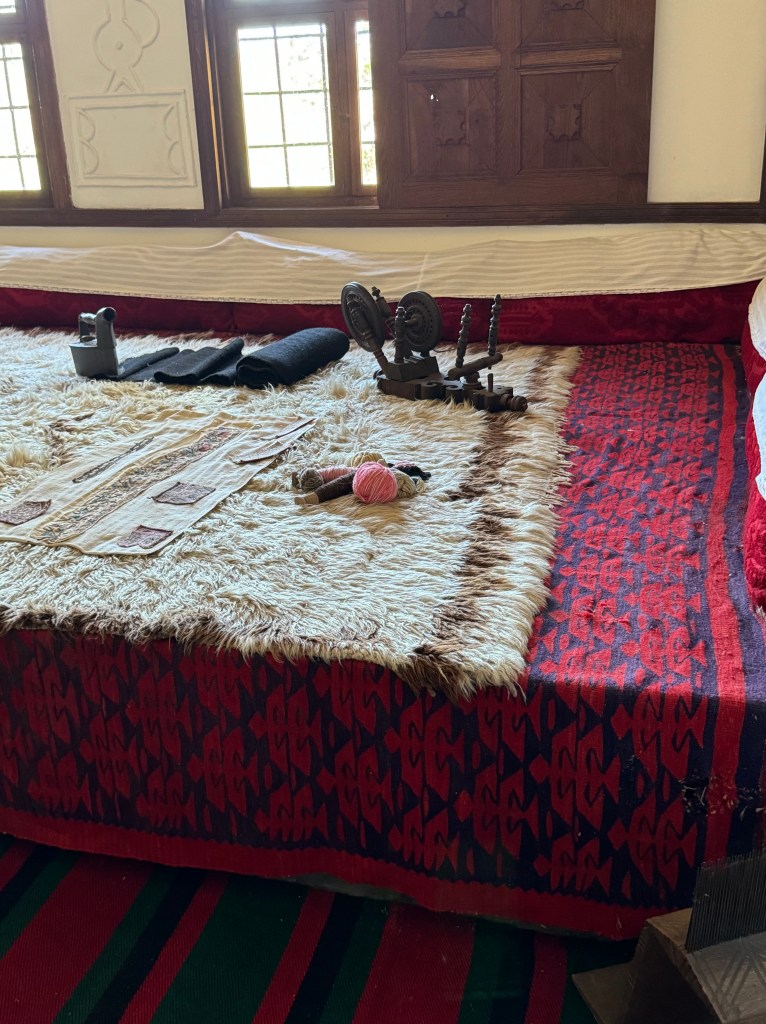
The house is furnished as it was in medieval time.
Nearby was a little Orthodox church, that was the size of a small two room house, with painted icons on all the walls and ceiling.
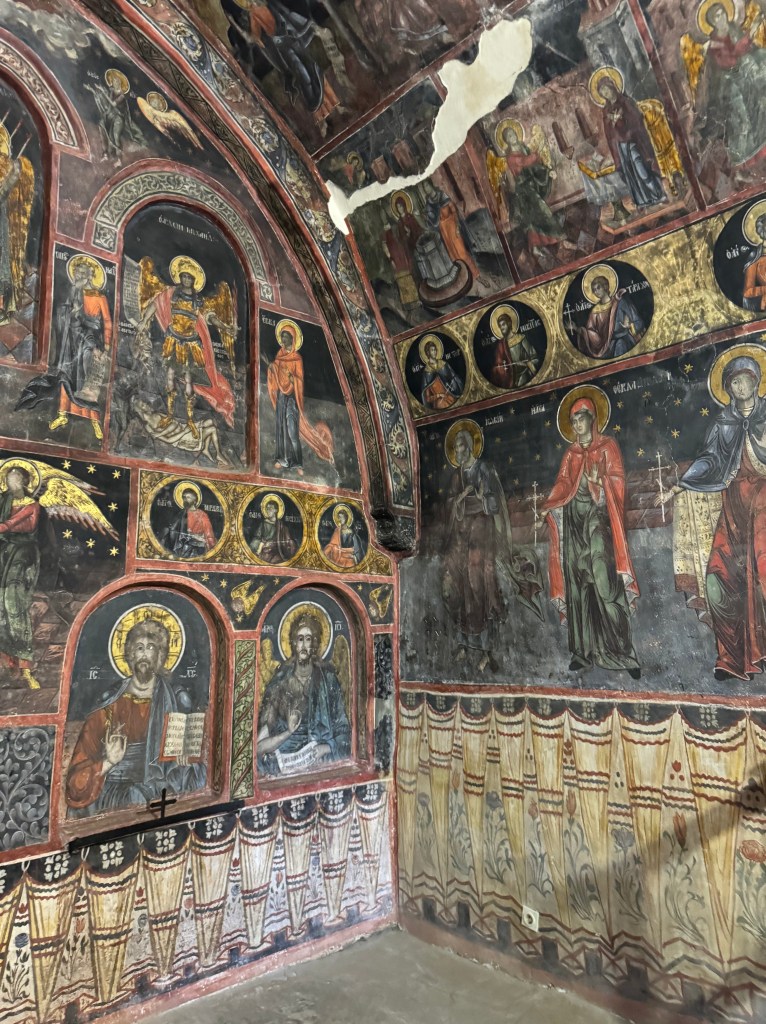
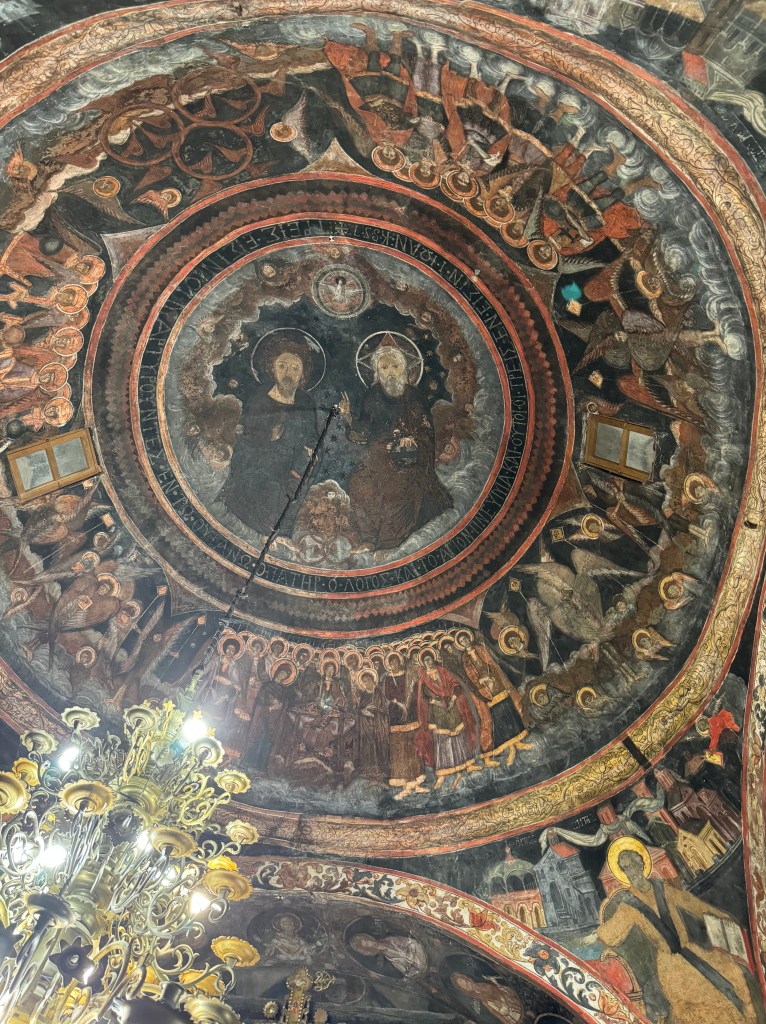
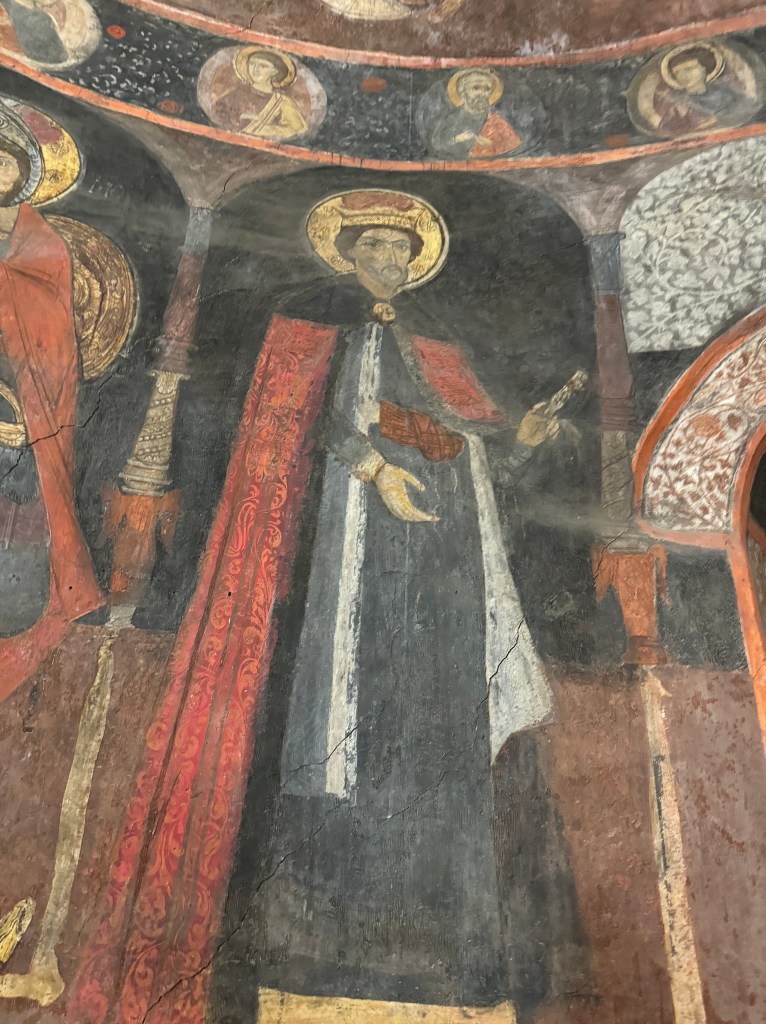
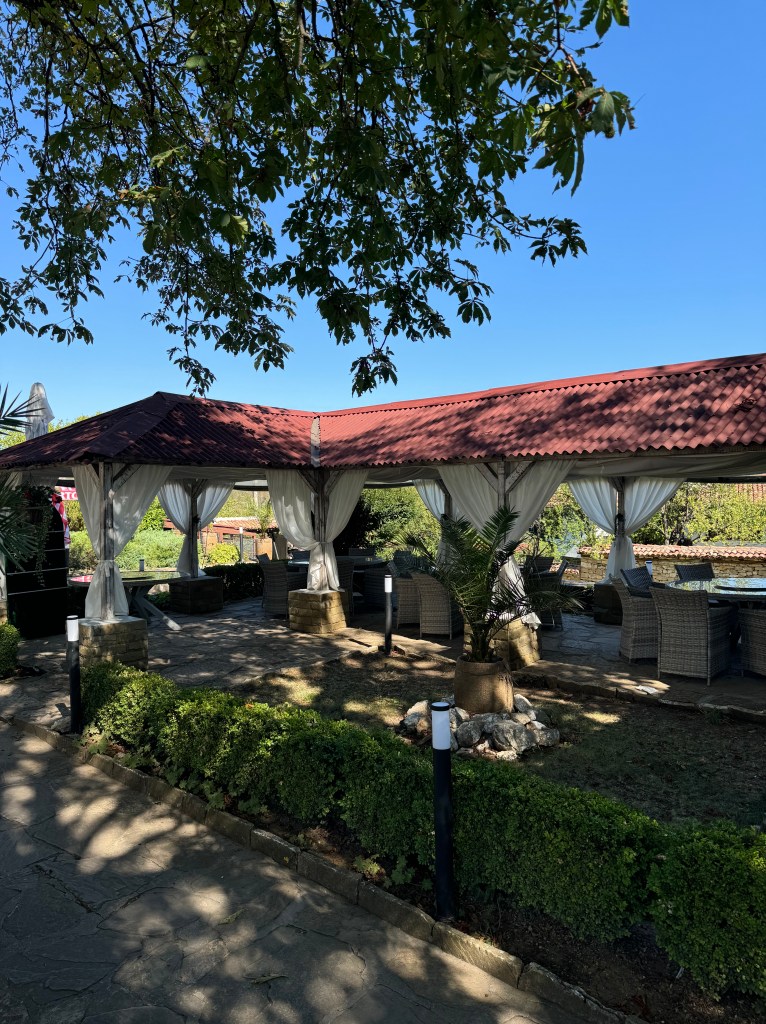
I had lunch in Arbanassi on the patio of the house/museum.
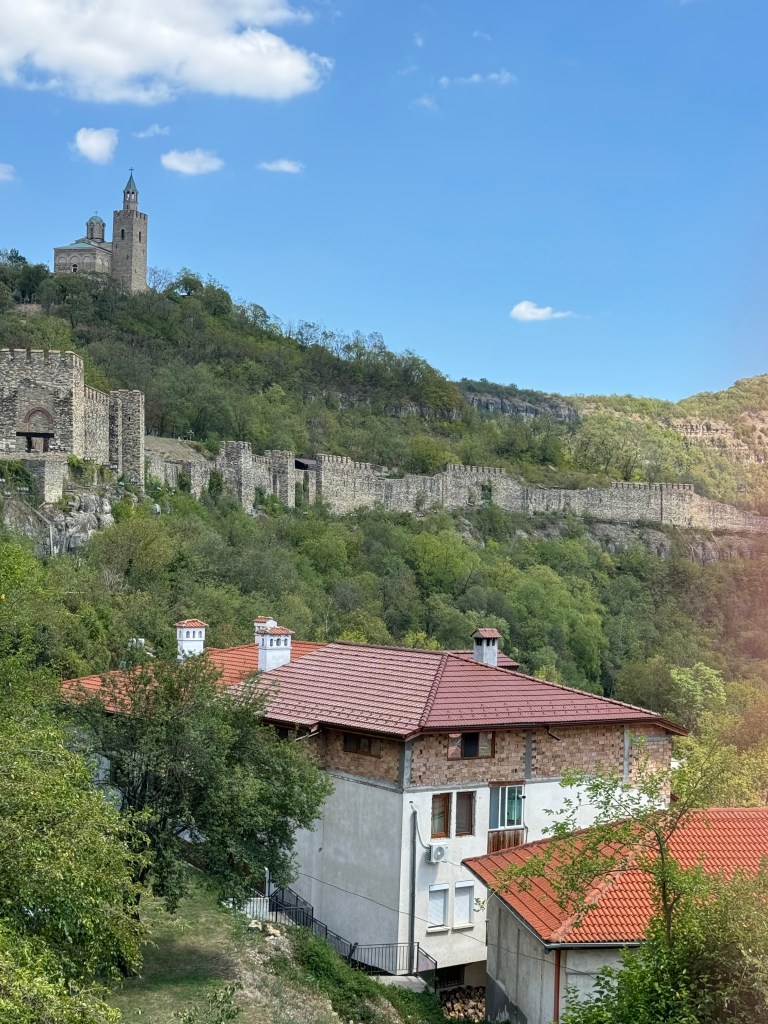
Our second stop was Veliko Tarnovo, one of the oldest settlements in the Balkan Mountains.
We saw, but could not climb the remains of the fortress and walked in the old town, with its narrow streets and tourist shops.
The locks between Bulgaria and Serbia
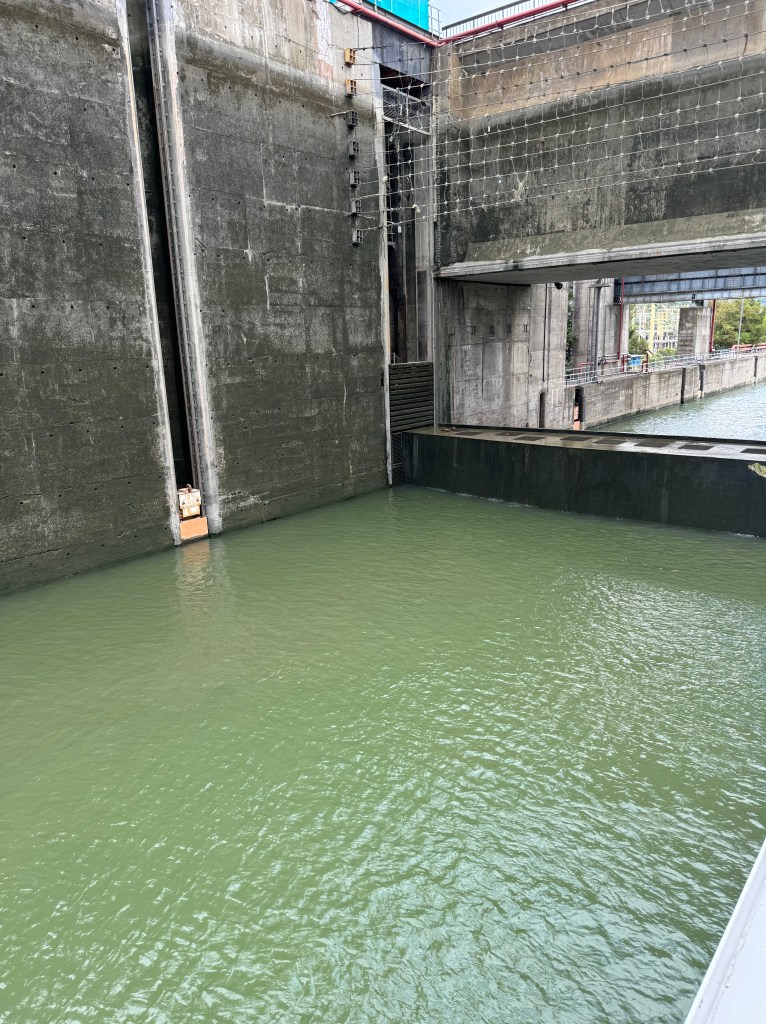
We spent a day on the river going in and out of locks and sailing through the Iron Gates. Although I have gone through locks on other trips, it never ceases to fascinate. I described locks in prior posts and will not do it again here.
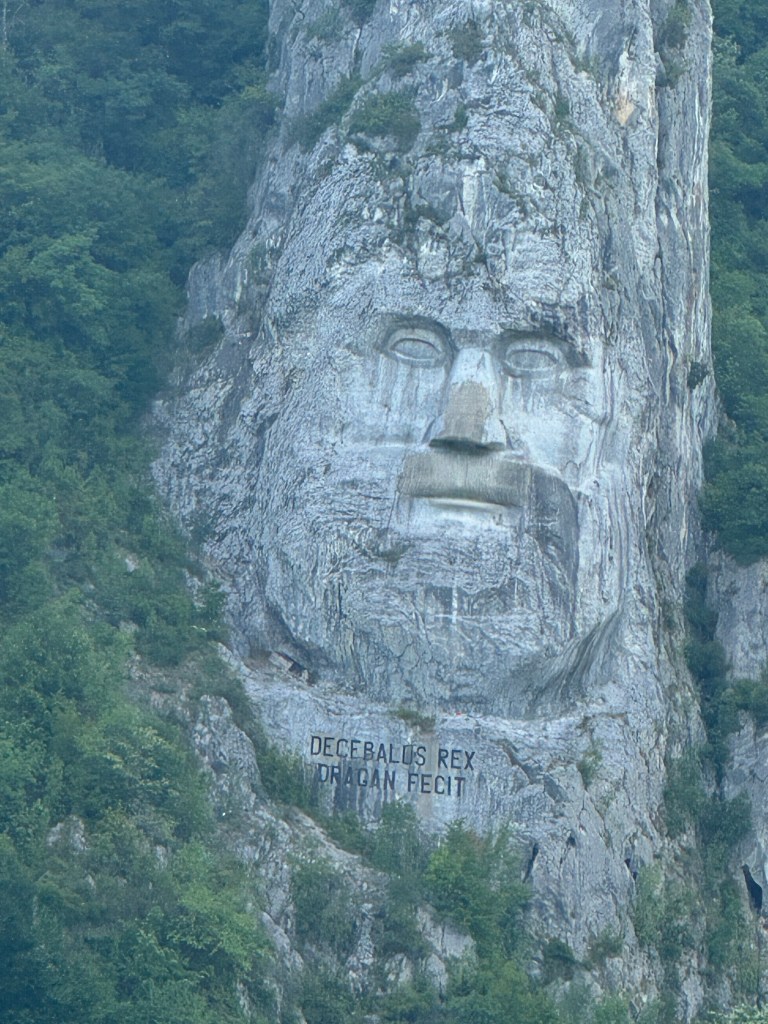
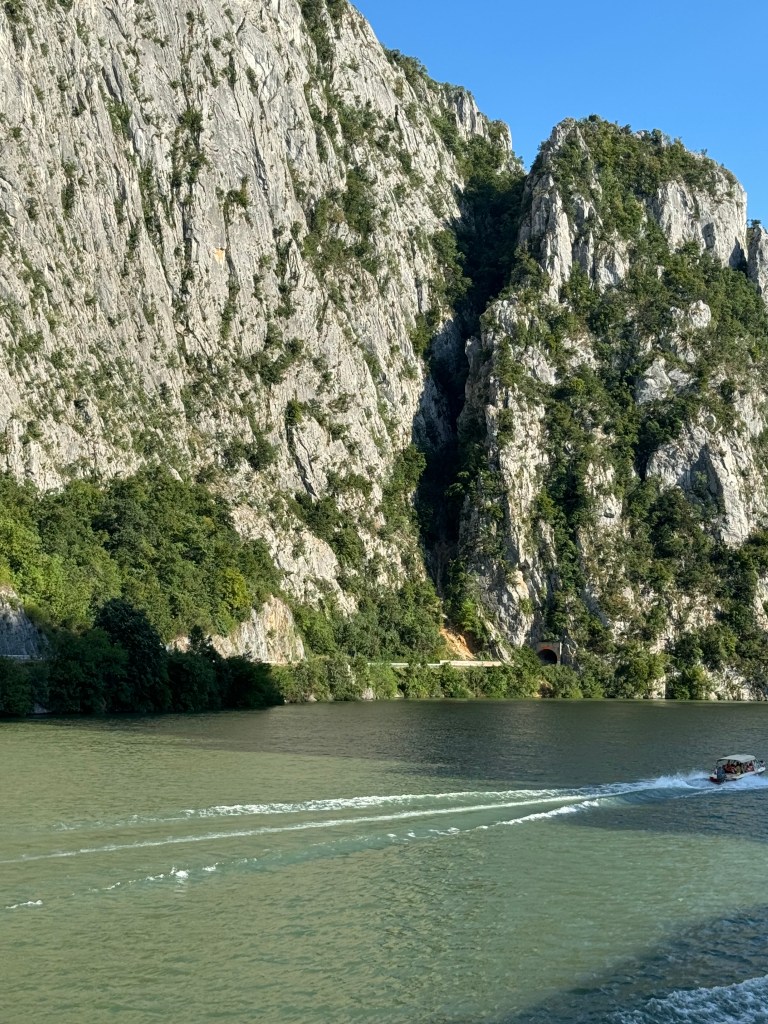
The scenery was spectacular. Especially the colossal sculpture of King Decebalus on the Carpathian Mountains.
Serbia
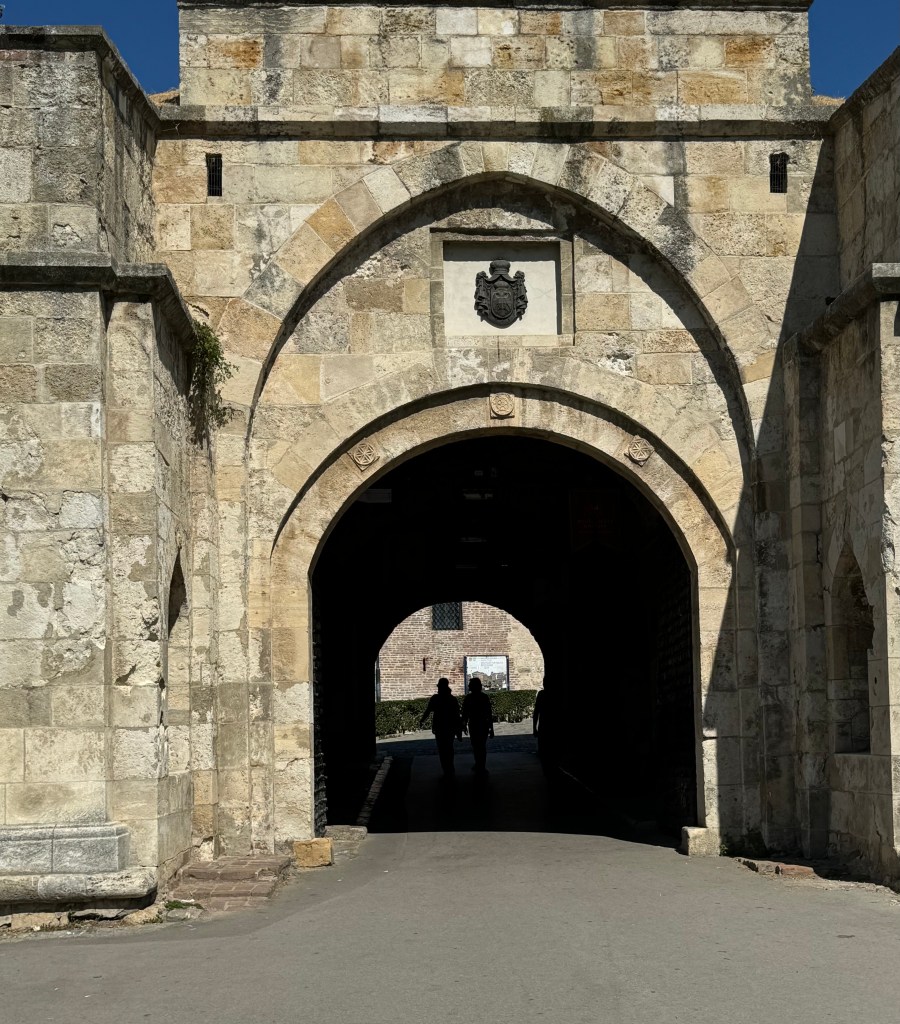
In Belgrade, I walked in the Kalemegdan Fortress that was originally built in the 3rd century BCE, but rebuilt multiple times until the 1700s.
There are many lovely Ottoman arched gates into the Fortress.
Today the Fortress area is a beautiful park, with locals and tourists mingling.
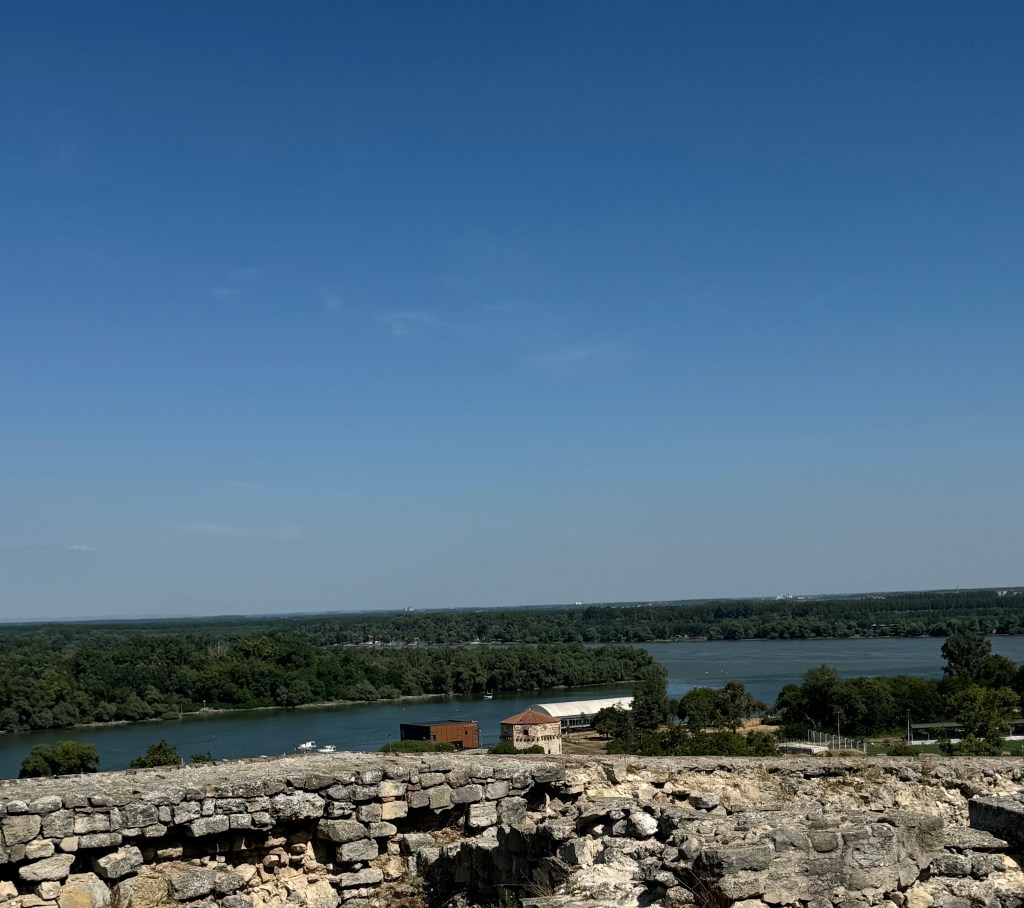
The view from the fortress of the Danube and Sava rivers was lovely.
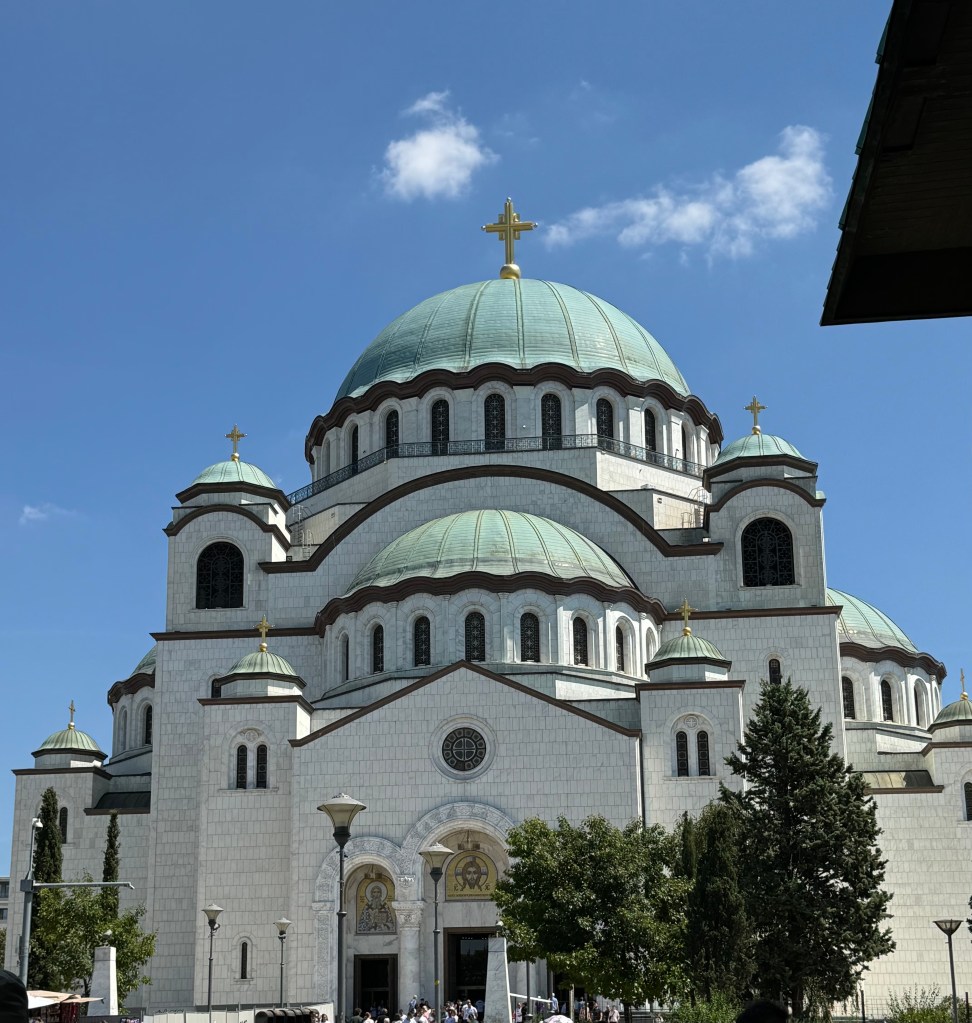
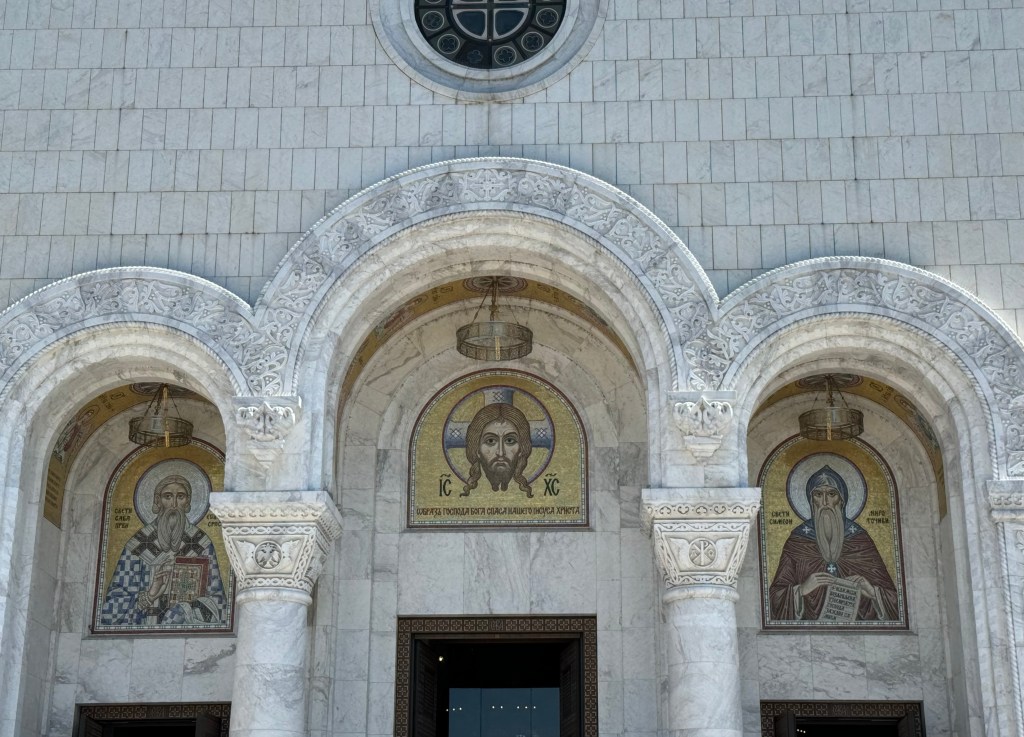
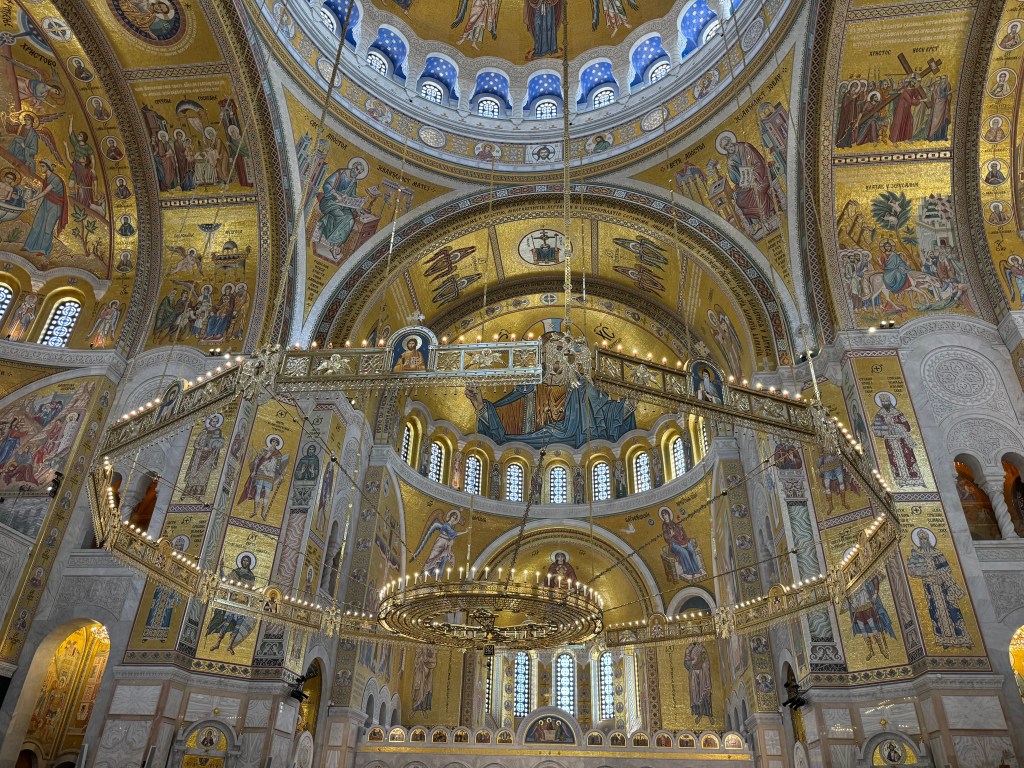
I also visited the Serbian Orthodox Cathedral of Saint Sava, which was completed in 2004. It is a very impressive church with thousands of mosaics. Saint Sava (1175 to 1235), is the patron saint and national hero of Serbia. He converted the country from Catholicism to Serbian Orthodox.
I had time to walk in the pedestrian street in the heart of Belgrade. It was underwhelming.
Hungary
The boat made two stops in Hungary: Kalosca and Budapest.
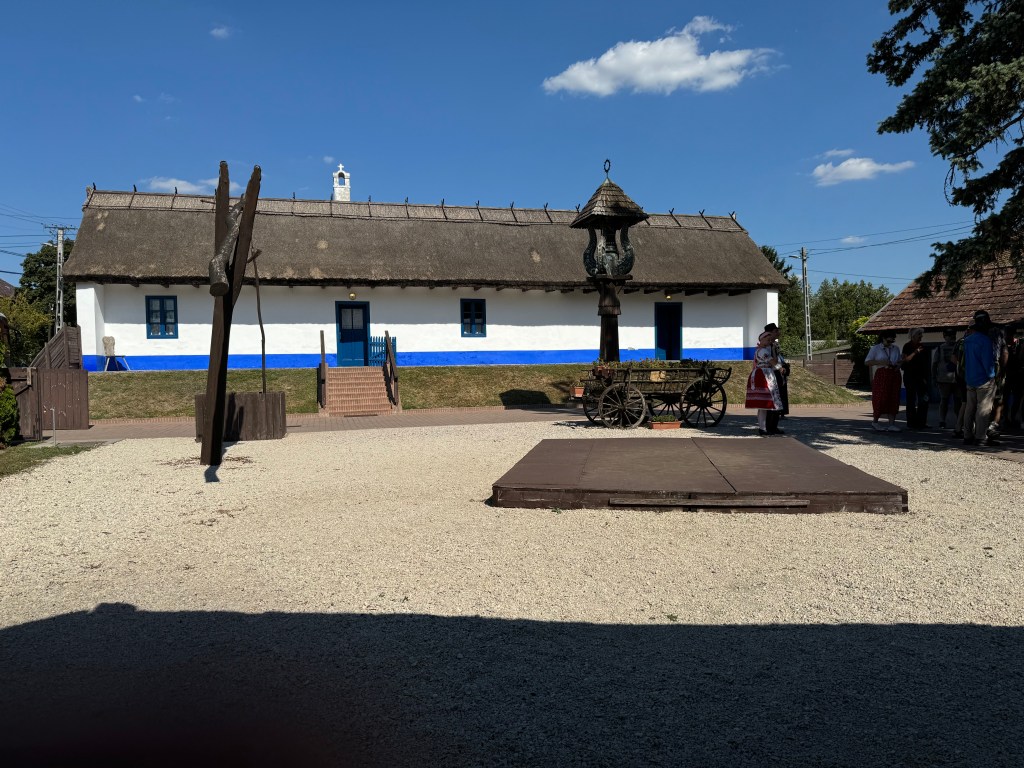
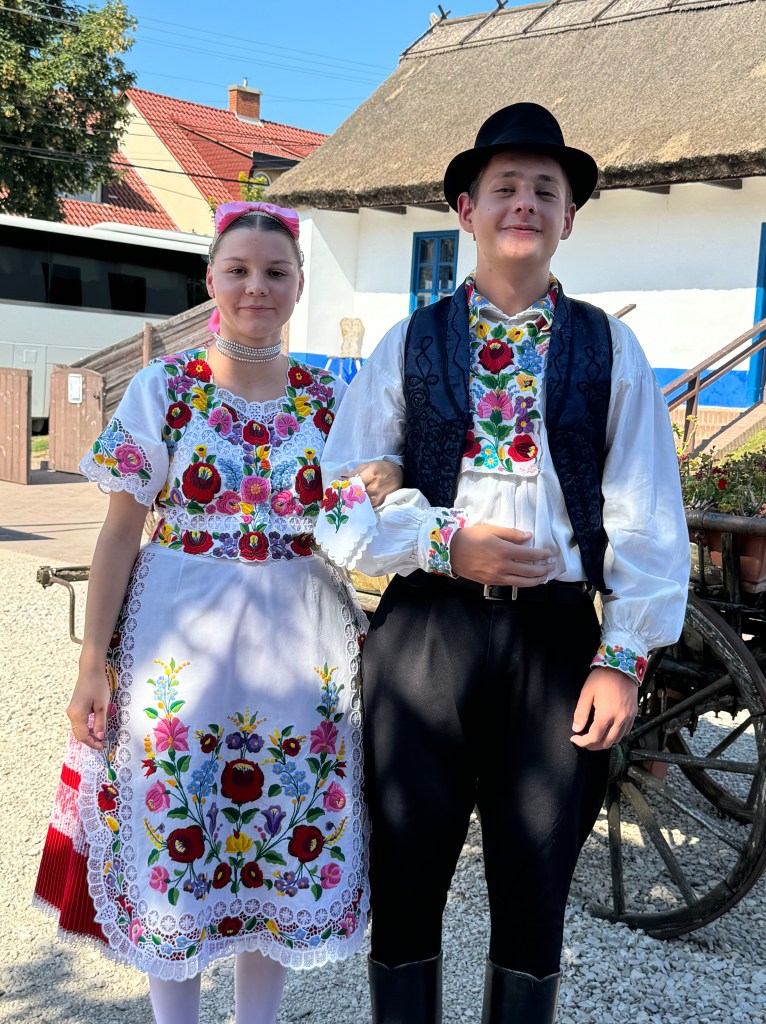
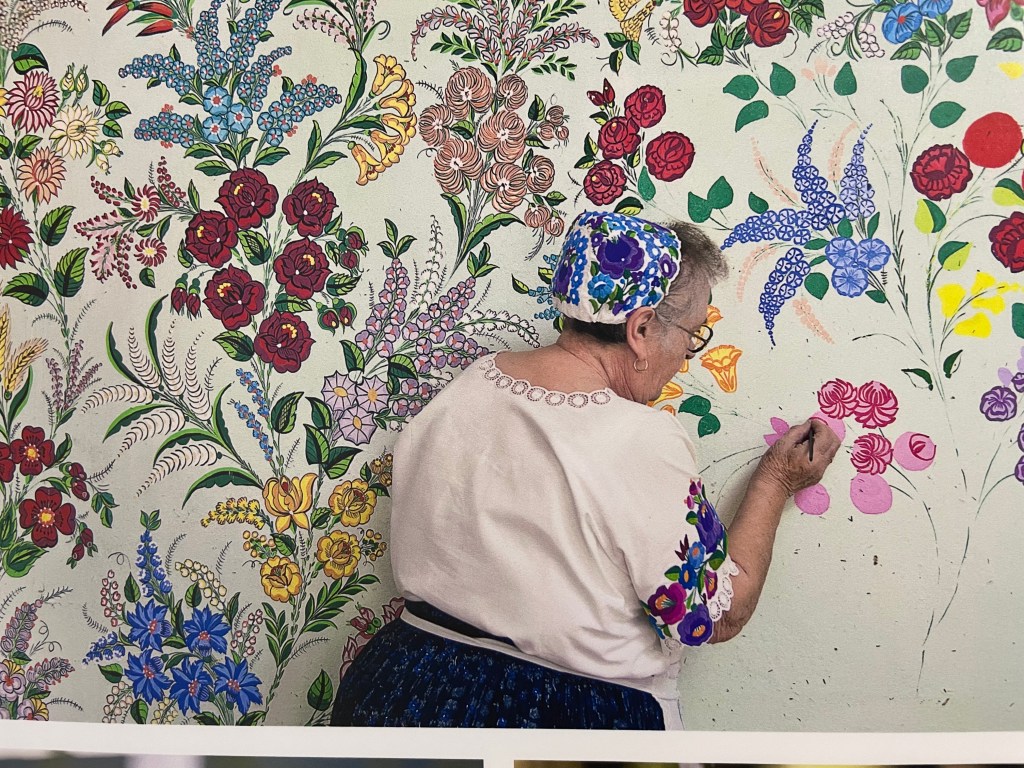
In Kalosca, my tour went to a typical farm house, now a museum. A couple of dancers, dressed in their colorful costumes consisting of flowery embroidery, demonstrated their traditional dance. The same flowers were also painted on the walls of the house, chairs and heaters.
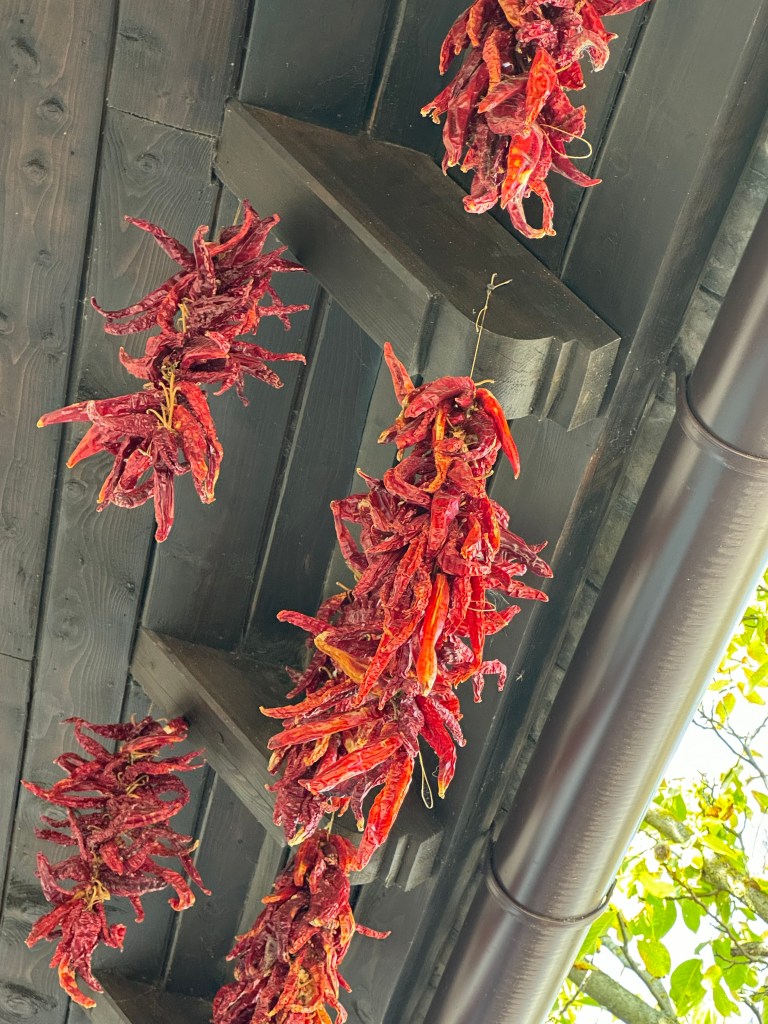
In addition, we went to a paprika and horse farm. We saw the paprika plants, and learned about the process of growing and harvesting them.
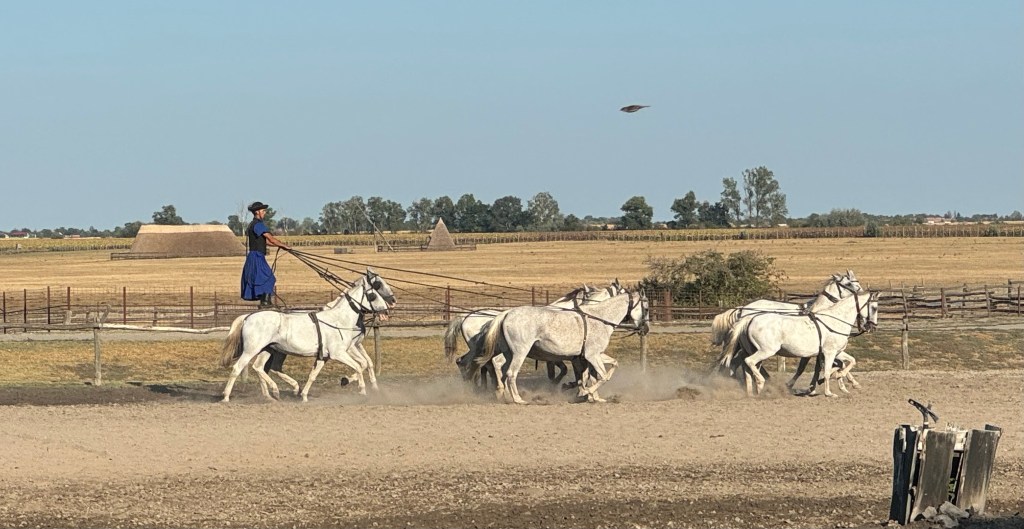
This was followed by a fun horse show including a cowboy riding on the back of 2 horses of a team of 10 white horses.
In Budapest, we had a tour on the Buda castle grounds, which included Fisherman’s Bastion and St. Matthias Church.
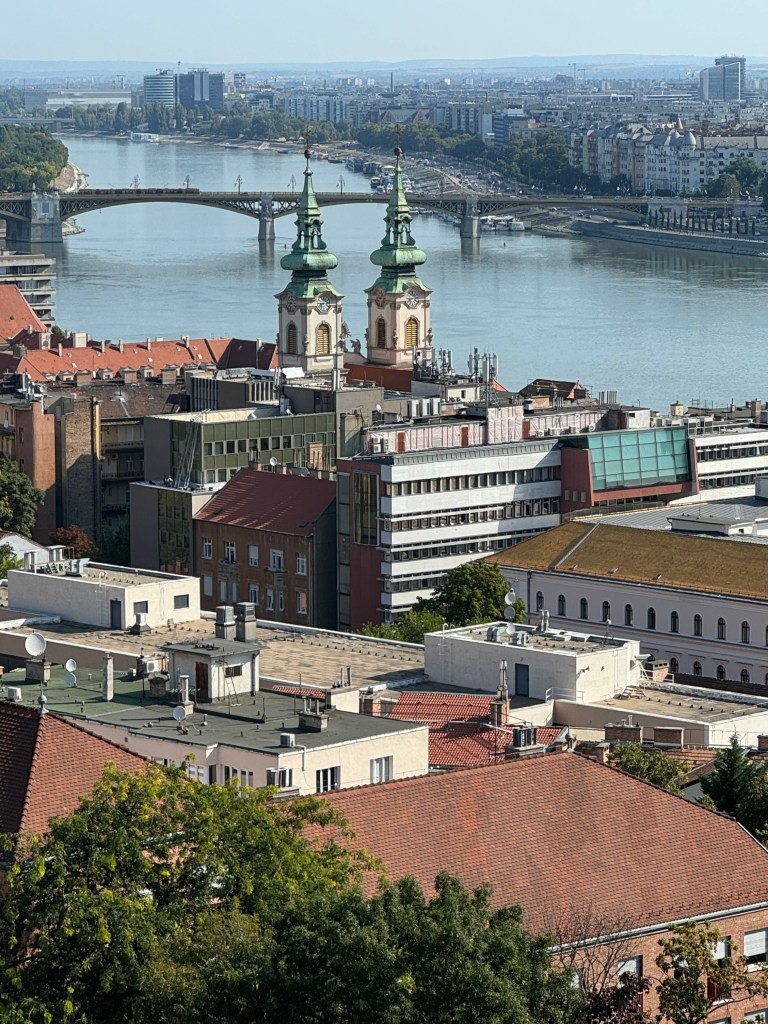
The top of Fisherman’s Bastion provided an incredible view of the Danube and the Pest side of the river.
Fisherman’s Bastion is just beautiful. It was orginally a section of the Buda City Wall entrusted to the guild of fishermen, who lived and sold fish near by. The guild of fishermen not only sold fish, but in wars, its members valiantly defended the city walls.
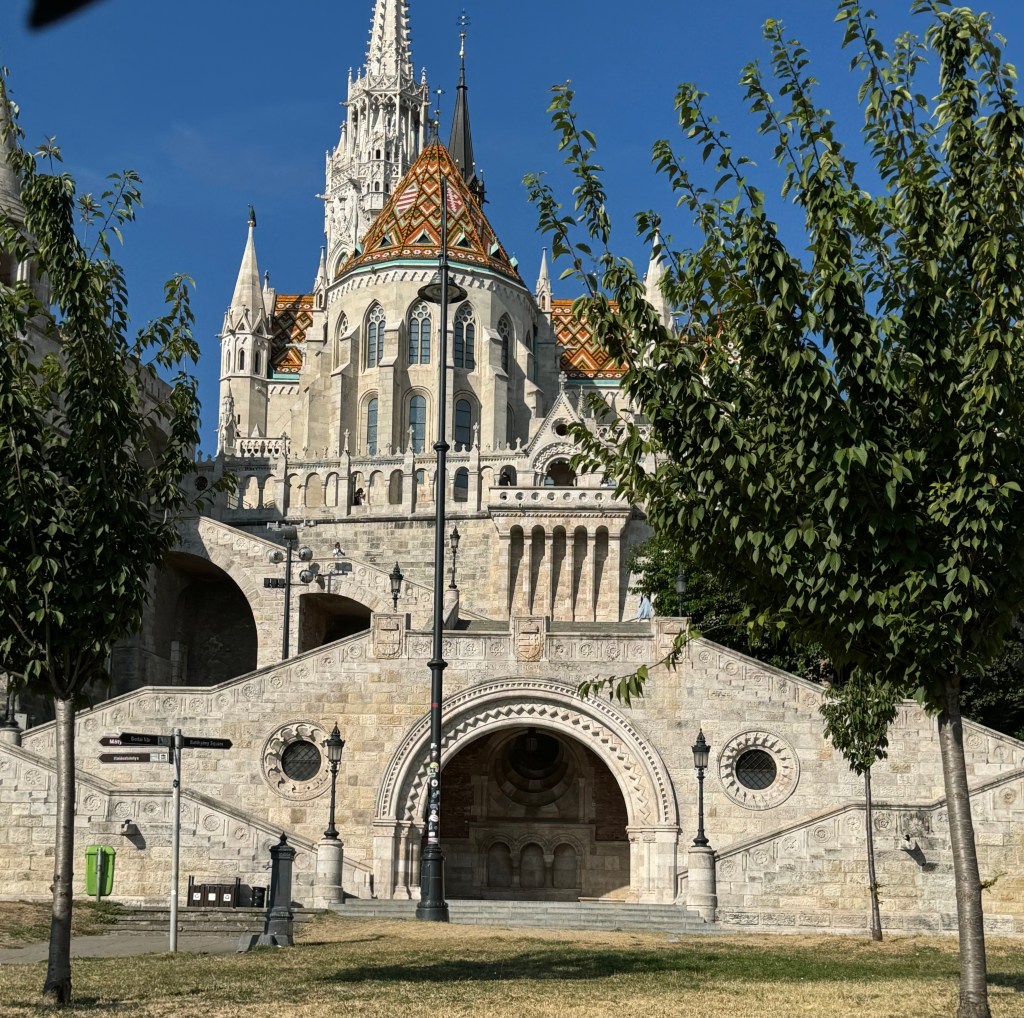
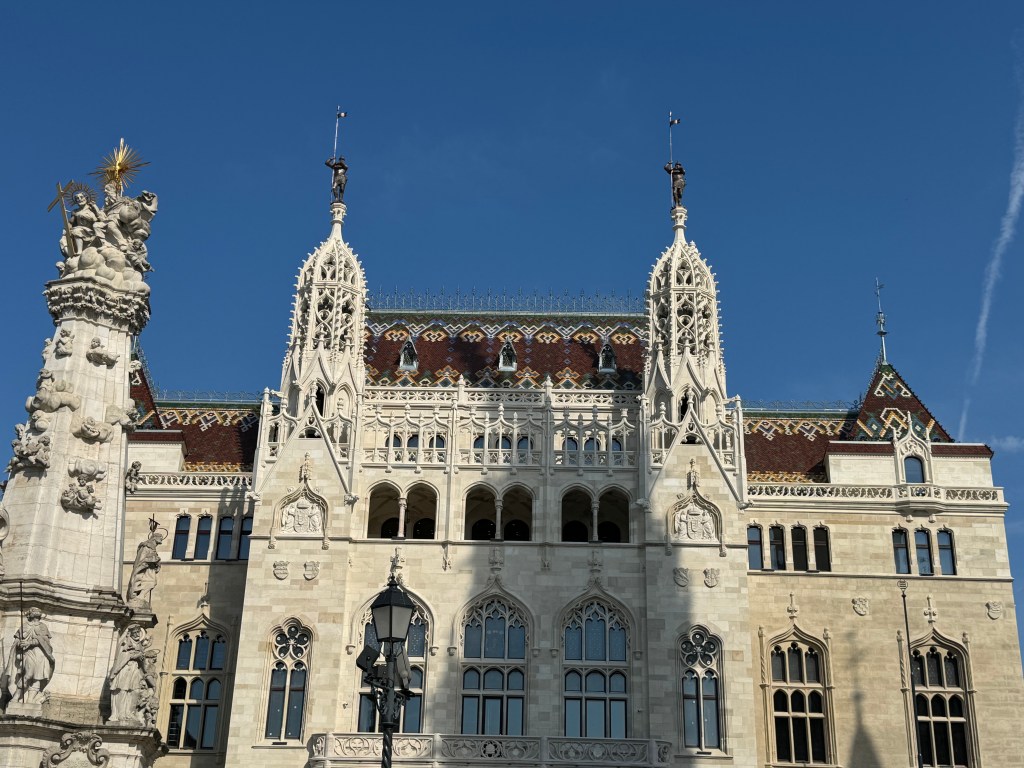
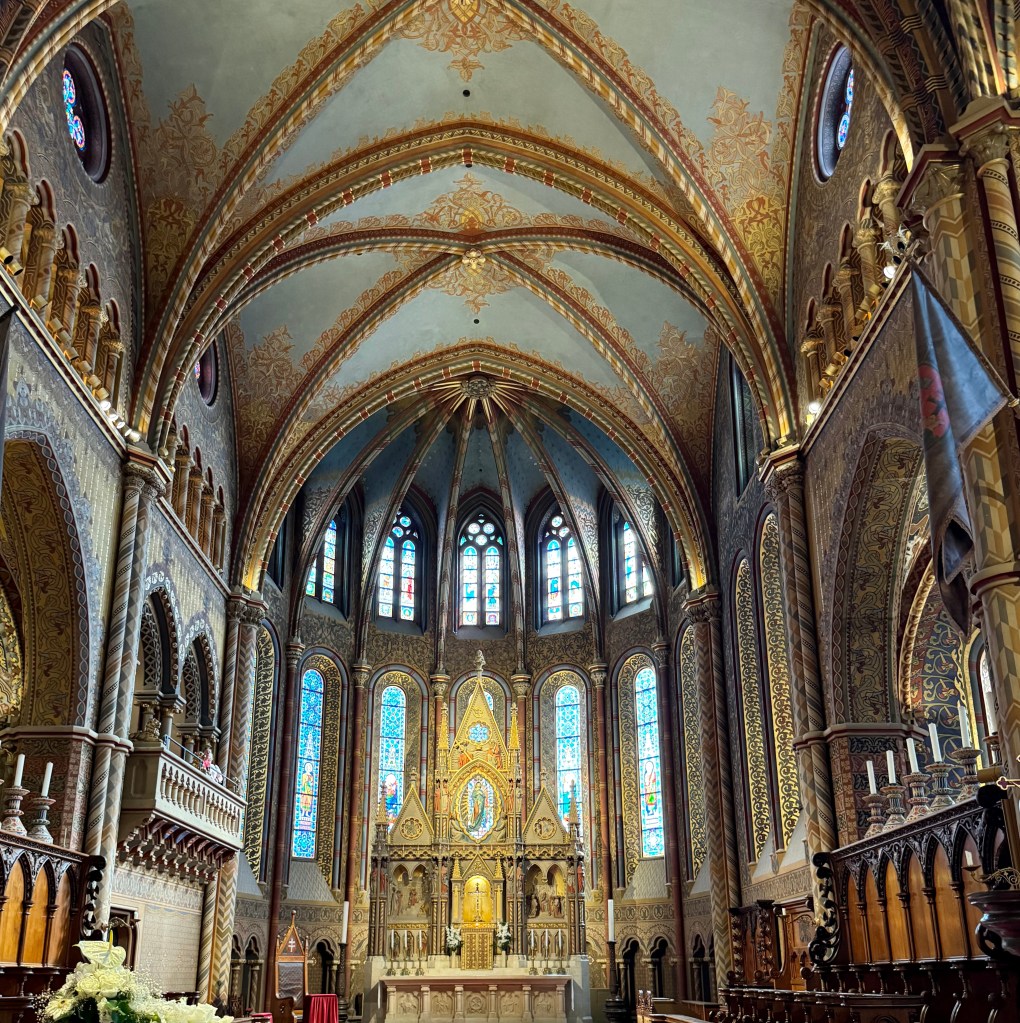
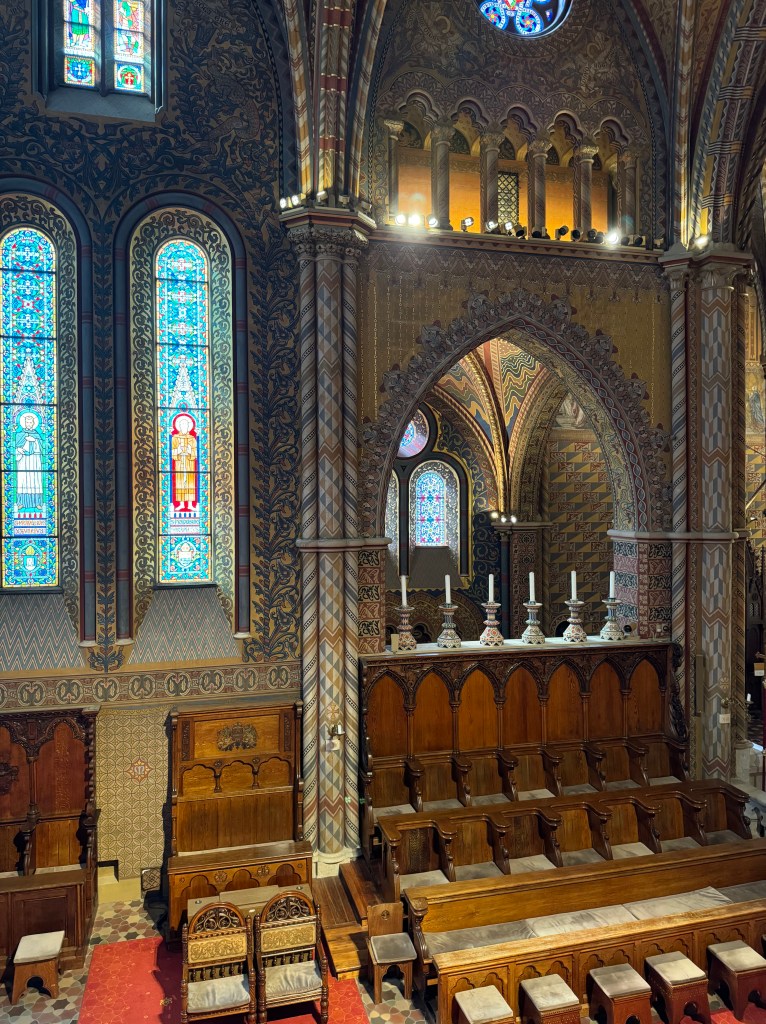
The St. Matthias Church was built in the Romanesque style in 1246, then rebuilt in the 15th century as a Gothic church by King Matthias. Beginning in 1526, it was occupied by the Ottomans for 150 years. They converted it to a mosque rather than destroy it. It is very beautiful and still has an Ottoman feel, especially on the columns. The roof is made out of colorful tiles.
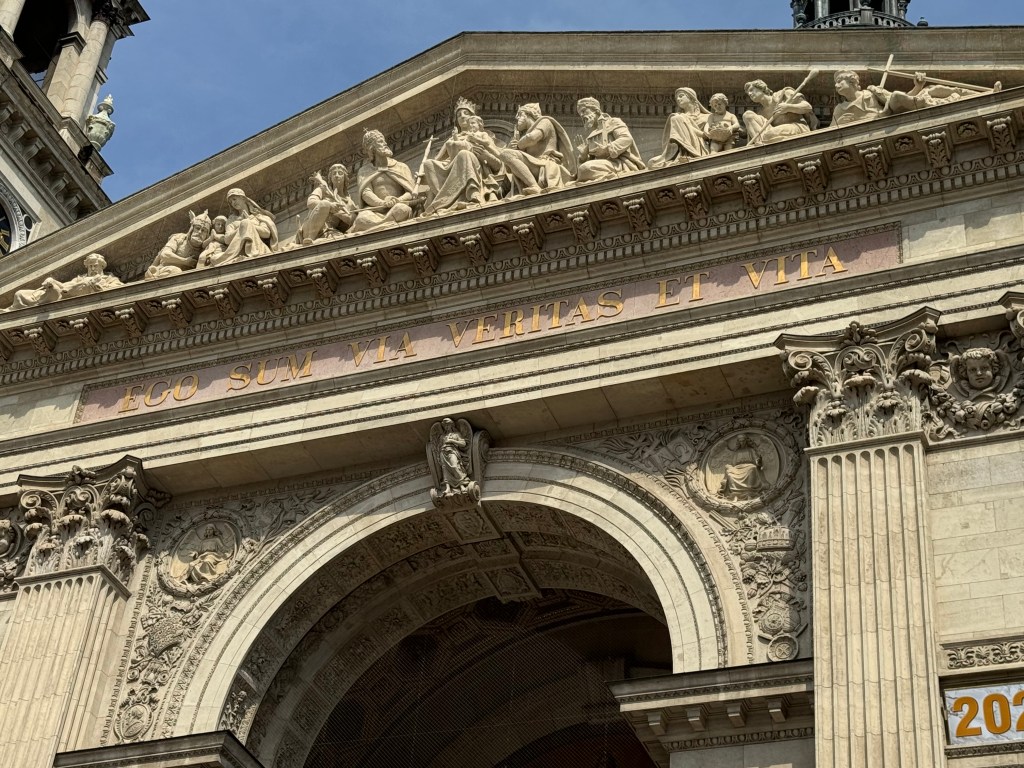
Also striking, is the St. Stephen Basilica, in Pest. It was built in the late 19th century on the site of a theater. It has two bell towers with six bells on one tower and none in the other.
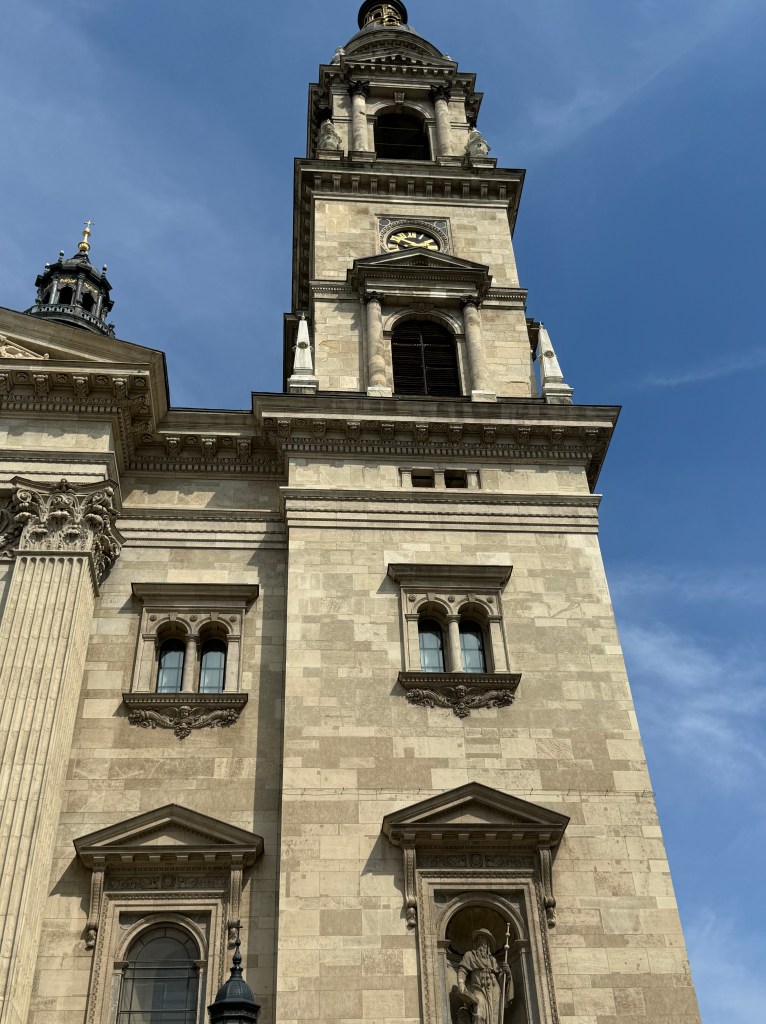
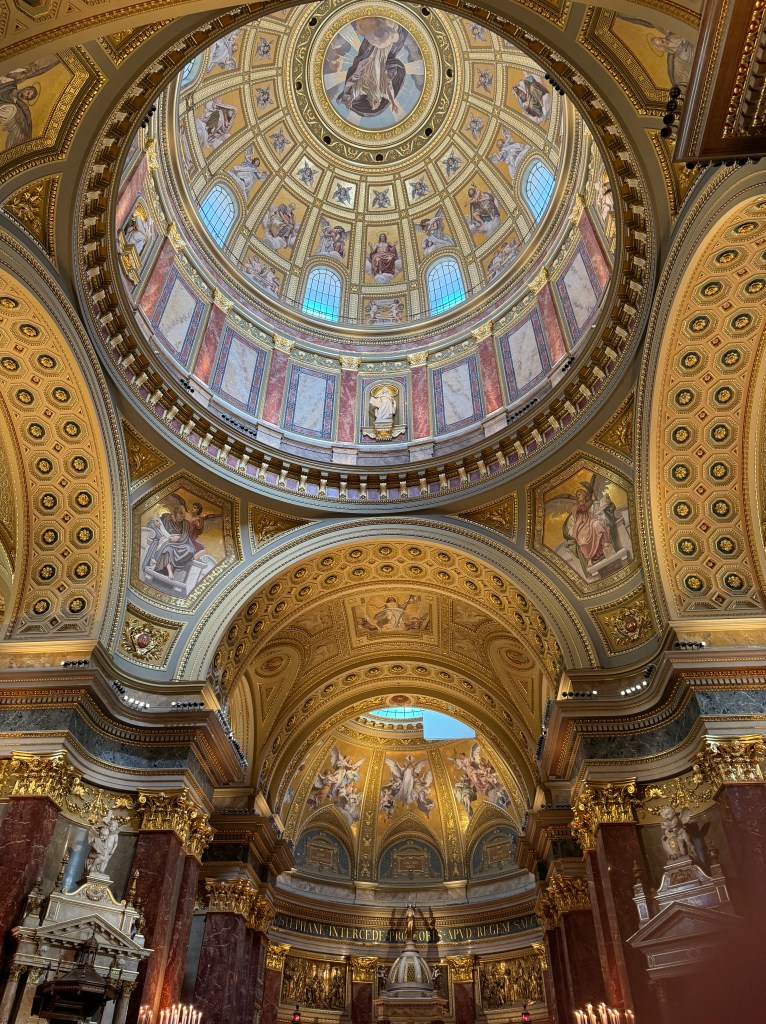
The inside has lots of mosaics interlaced with gold, which makes the interior images shine.
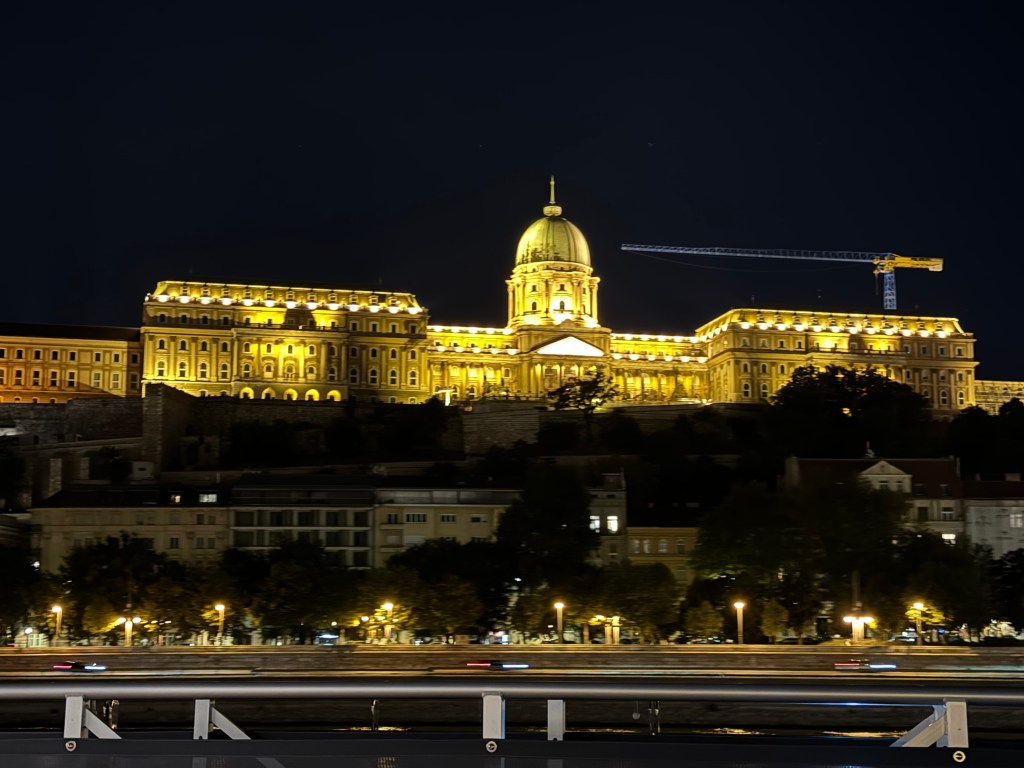
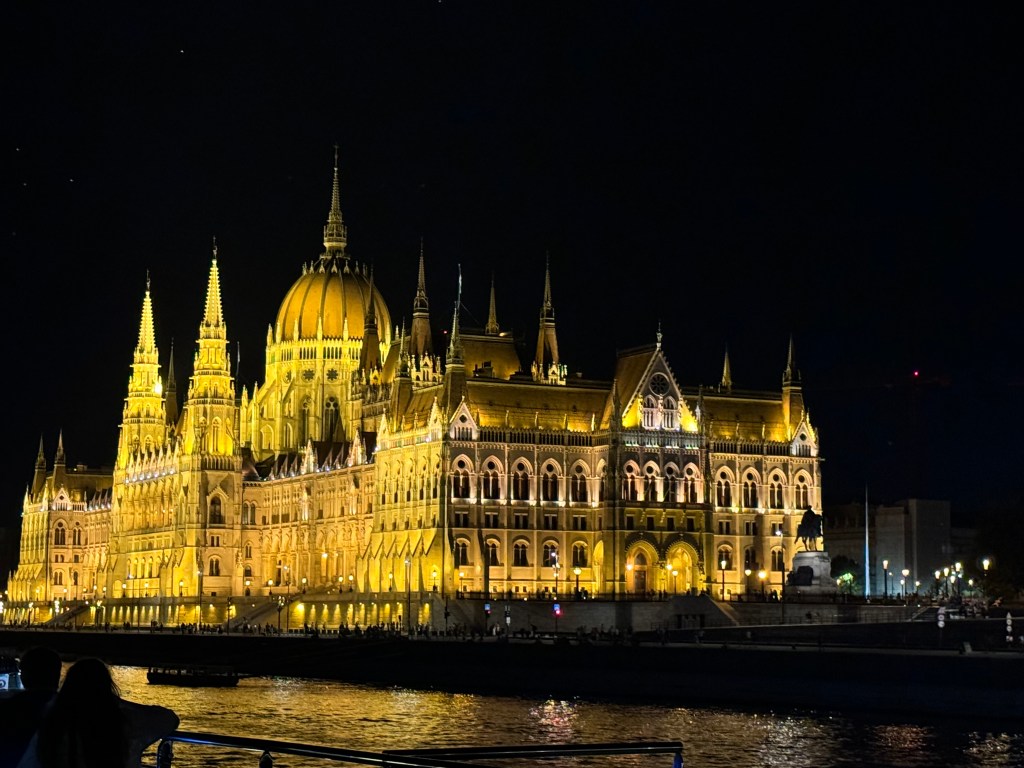
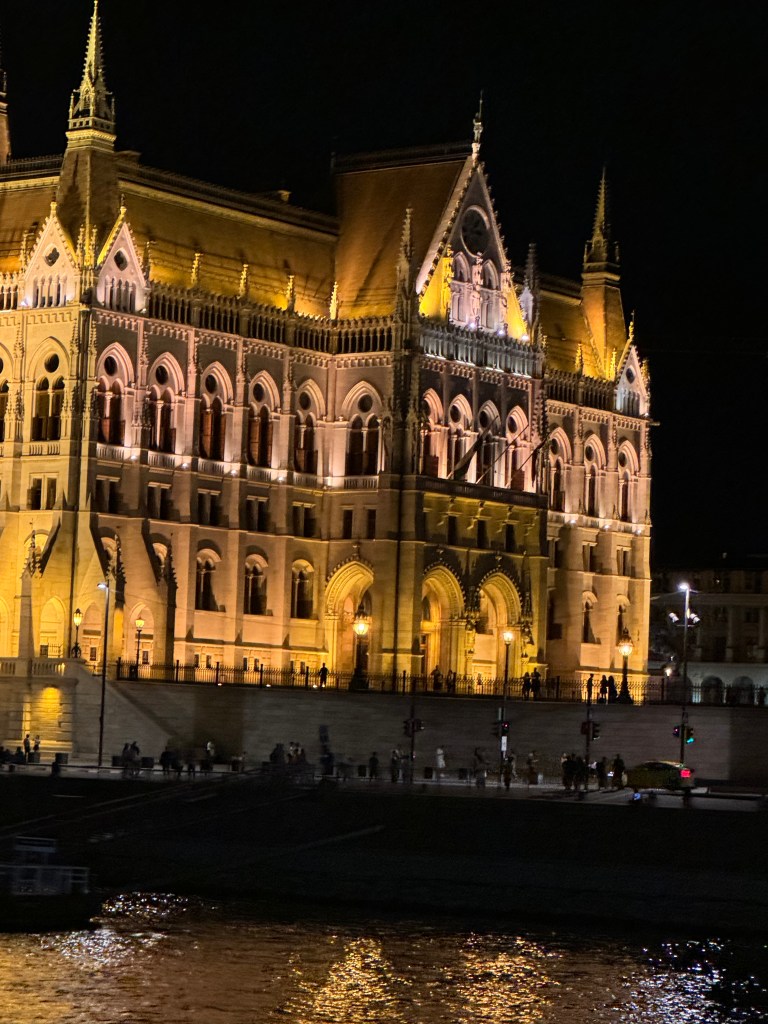
At night we sailed slowly past the city to see the various buildings lit up. Especially beautiful was the parliament building.
Slovakia
We went through another lock and relaxed on the boat all morning. But because of that, we only had a few hours in the afternoon in Bratislava. I visited the castle and then had some free time in the old town.
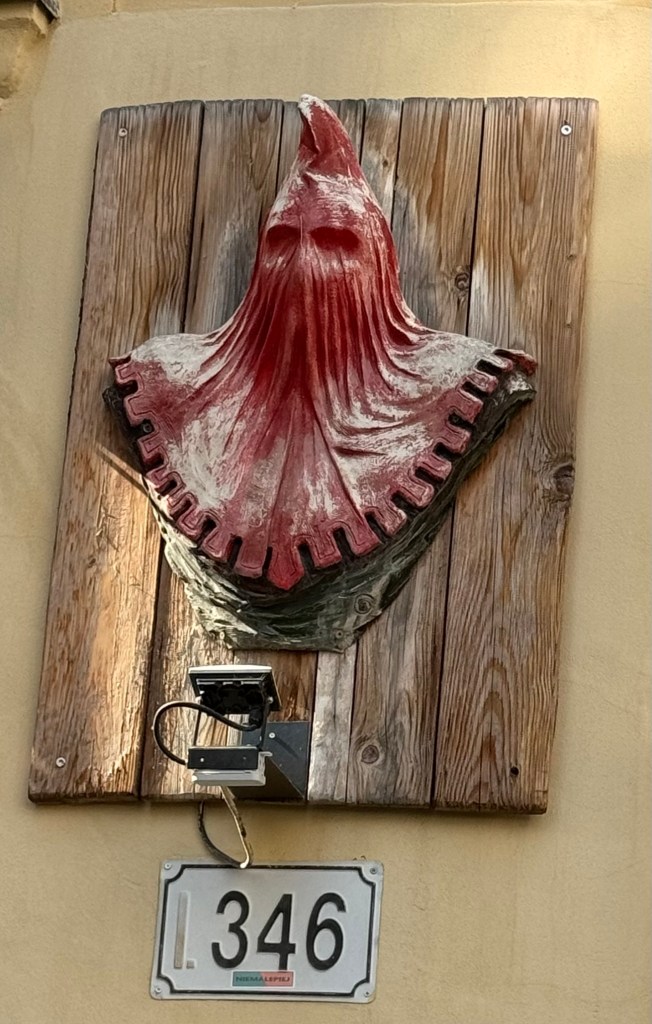
At the entrance of the gates, I saw the sign for the house of the executioner, who was also a policeman.
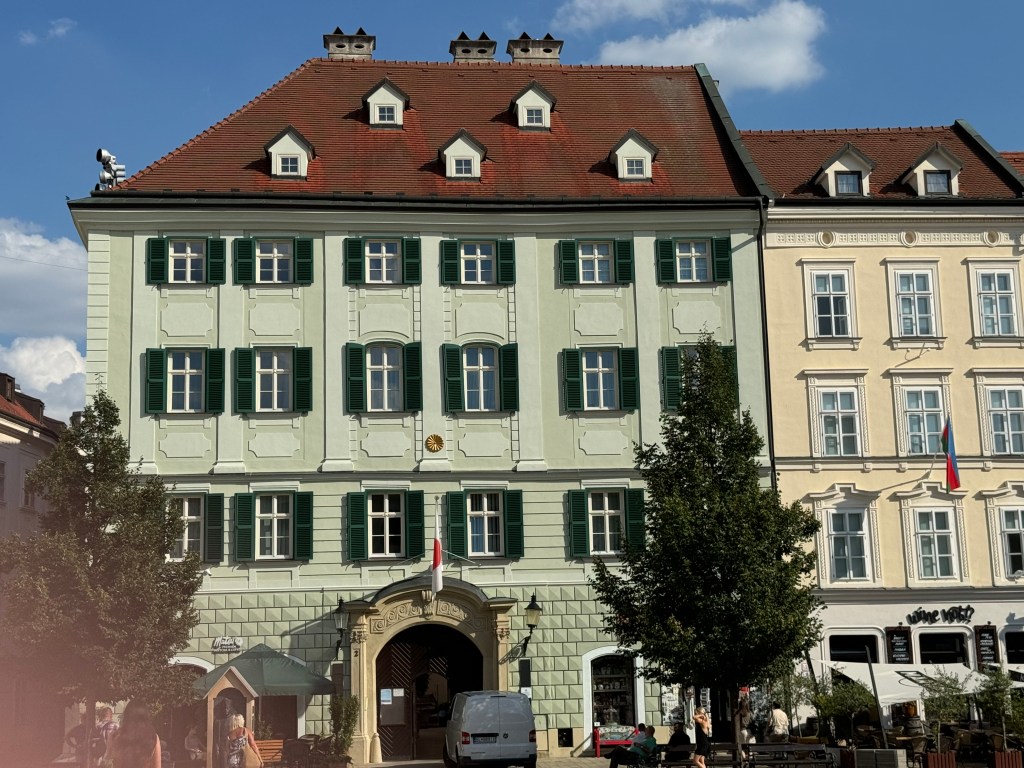
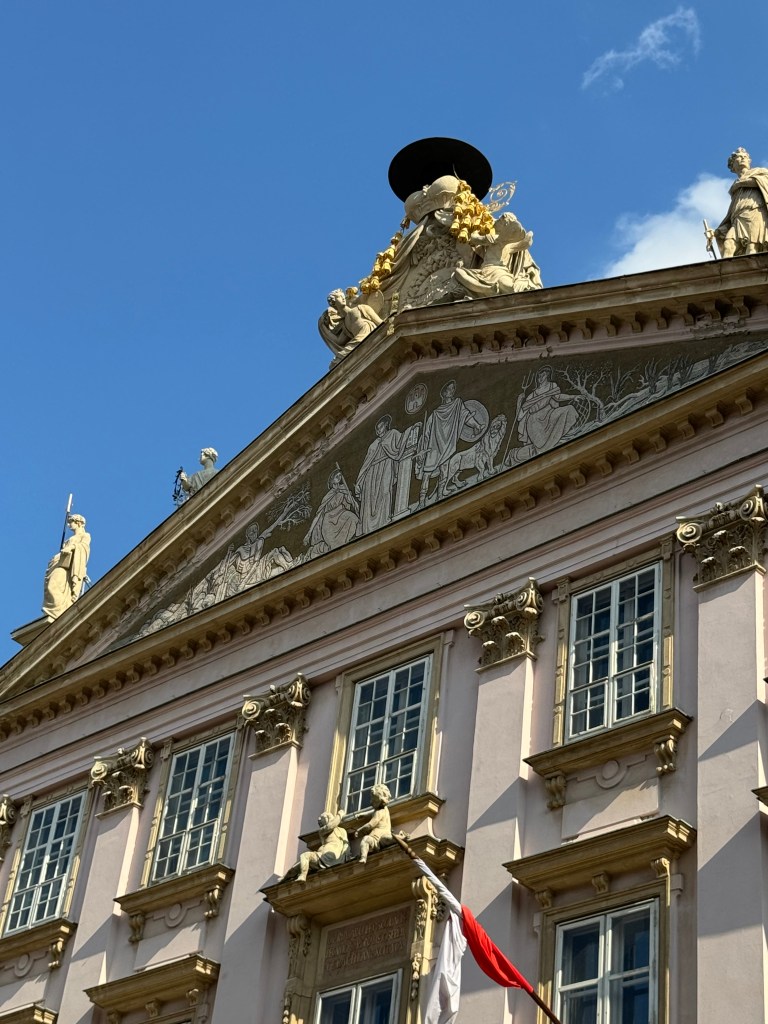
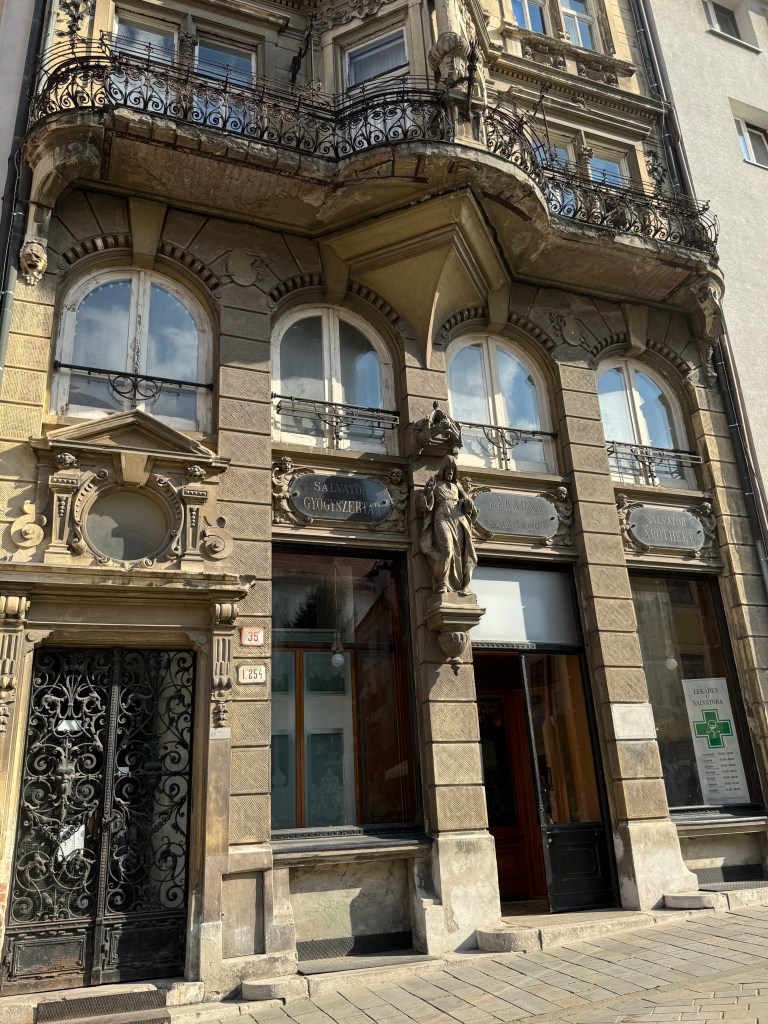
It is a very charming town and it broke my heart not to be able to spend more time just sitting in a café and imbibing the ambiance. Next time.
As I said at the beginning of the post, the cruise ended in Vienna, where I spent one more day before flying back to Florida
Final Comments
Subscribe to get access to the rest of this post and other subscriber-only content.
Subscribe to get access to the rest of this post and other subscriber-only content.
The Tetons
Yellowstone National Park is the oldest National Park and is visited by millions of people. The Grand Teton Park, which lies just south of Yellowstone is often skipped if the visitor has time limitations. It should not be skipped.
Although Yellowstone has amazing attractions such as geysers and boiling mud (see below), the Teton mountains are young, therefore, the are impressively high, and full of sharp edges. They are breathtaking.
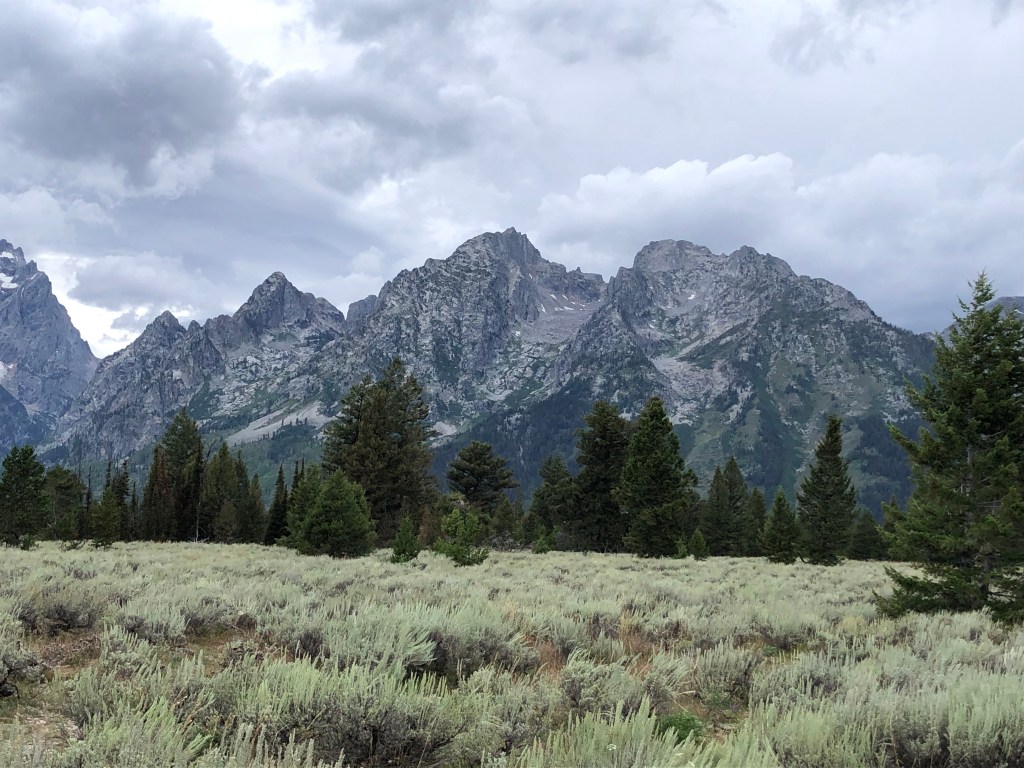
The Teton National Park itself is relatively small with lots of Ranger stations and ranger led walks. This is the electronic age; therefore, the ranger stations no longer print out maps. You are expected to take a picture of their map on the iPhone. On the ranger led walk, I learned about beavers; wolves (who had almost gone extinct but are recovering), and saw bear scratches on trees.
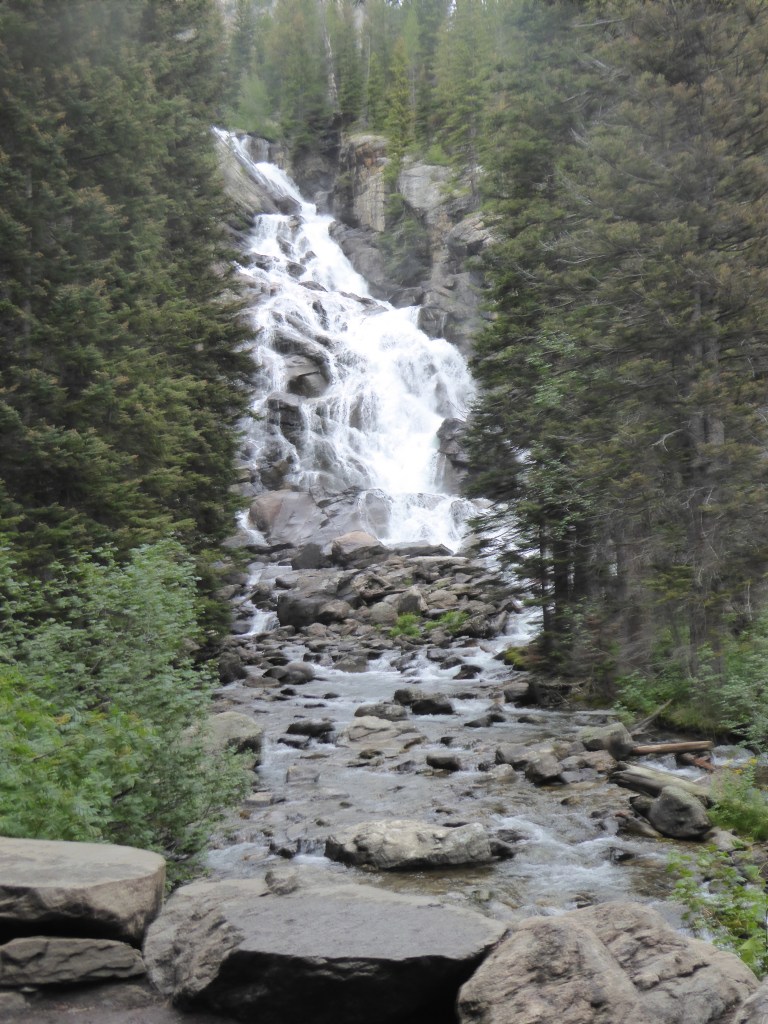
I also took some awesome hikes on my own. One of those hikes was to “Hidden Falls”. To get there I took a boat on Jenny Lake, then hiked 1.2 miles to the Falls. 1.2 miles may not sound like much but the terrain was challenging.
So glad to be in good shape and be able to do so. I love waterfalls and this one was lovely and well worth the climb.
Yellowstone
Yellowstone is huge and really requires 5 or 6 days. I chose to stay 3 nights each in 2 separate areas, which limited the driving. I also took a “Yellowstone in a Day” tour, which in 10 hours, covered all the principal sites, obviously not in depth, but it gave me an idea of where I wanted to focus.
My favorite Yellowstone attractions were the Geysers, Bubbling/boiling pools and Grand Canyon waterfalls.
When one thinks of Yellowstone, one immediately thinks of geysers. The most well-known one is Old Faithful. The reason it is well known is that most visitors to the park actually get to see it in action.
It spews a number of times a day and best of all, rangers can predict the next eruption (but only the next one) to within a 20-minute window. This means that if the rangers predict the next eruption at 12:30 PM, it is most likely that you can see the show sometime between 12:20 and 12:40 PM.

However, keep in mind, that it could be a bit early or a bit late as well. The actual eruptions may vary in size, but all are exciting.
Grand Geyser (also on the grounds of Old Faithful (OF) basin) blows a couple of times a day with a 90-minute window in each direction, meaning that it is likely to go off anytime over a 3-hour period.
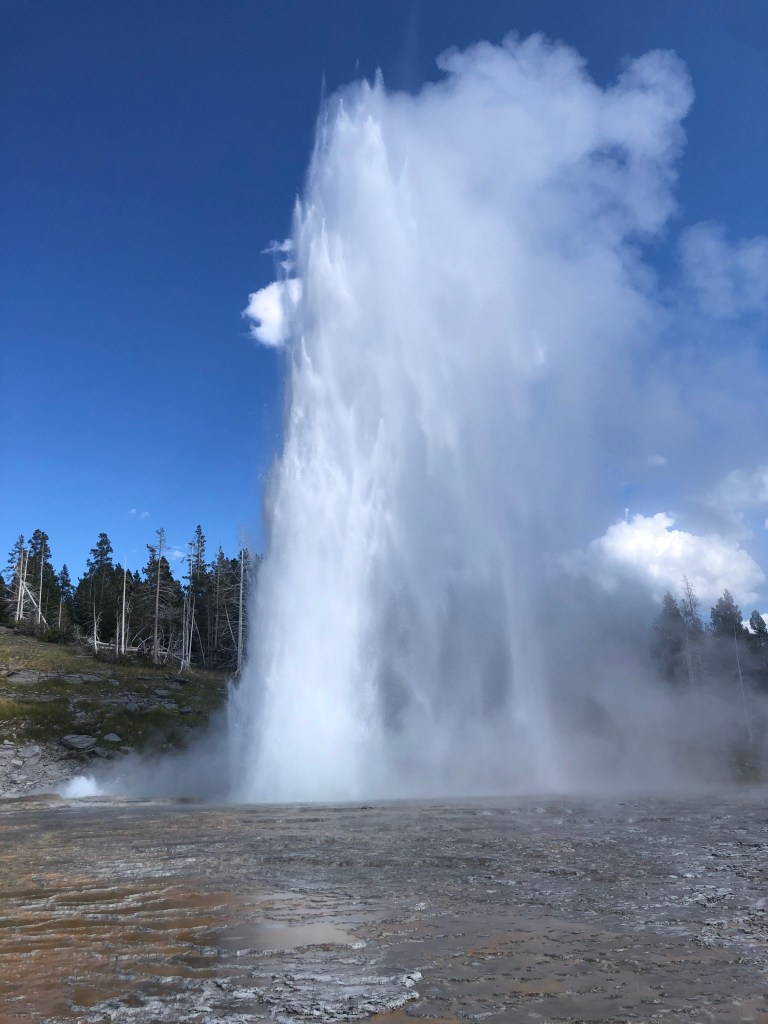
I was at the OF basin, at 1 PM one day, and the board said that Grand Geyser was due to go off at 1:10 PM. I walked over to see if I had missed it, since it could have gone off as much as an hour earlier. But there were many people sitting on the benches, which meant that I hadn’t missed it; therefore, I sat down to wait. The eruption was 2 hours later. The wait was worth it for when the Geyser exploded, it spewed for a full 10 mins and 42 seconds. What a show! Most Geysers have one column of water exploding. The Grand erupts with powerful multiple very high bursts. It was magnificent!
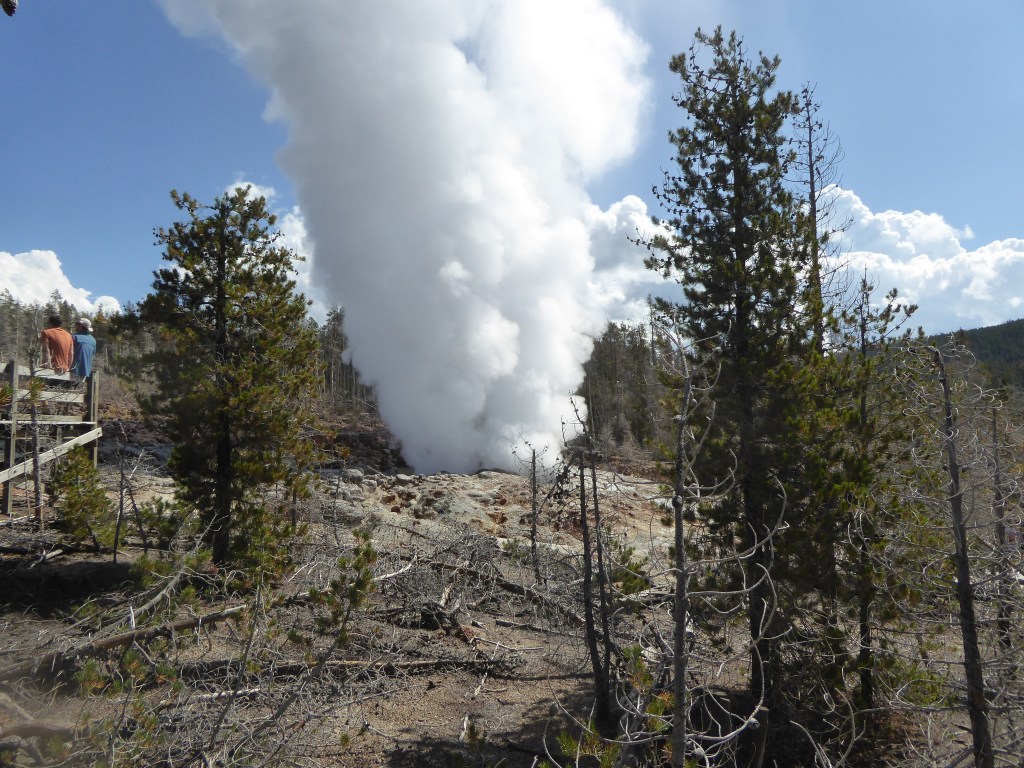
Steam Boat Geyser eruptions are not predictable. When they occur, they are supposed to be more than 300 feet in the air. The geyser has been dormant for years, but right now it is somewhat active.
After not erupting for 66 days, it erupted at 6 PM the evening before my visit. Yes, I missed the eruption, but because it erupted, it was still blowing huge amounts of steam and would continue for another 24 hours. I was very lucky to see the after effect.
Bubbling Hot Pools. There were many boiling pool types.
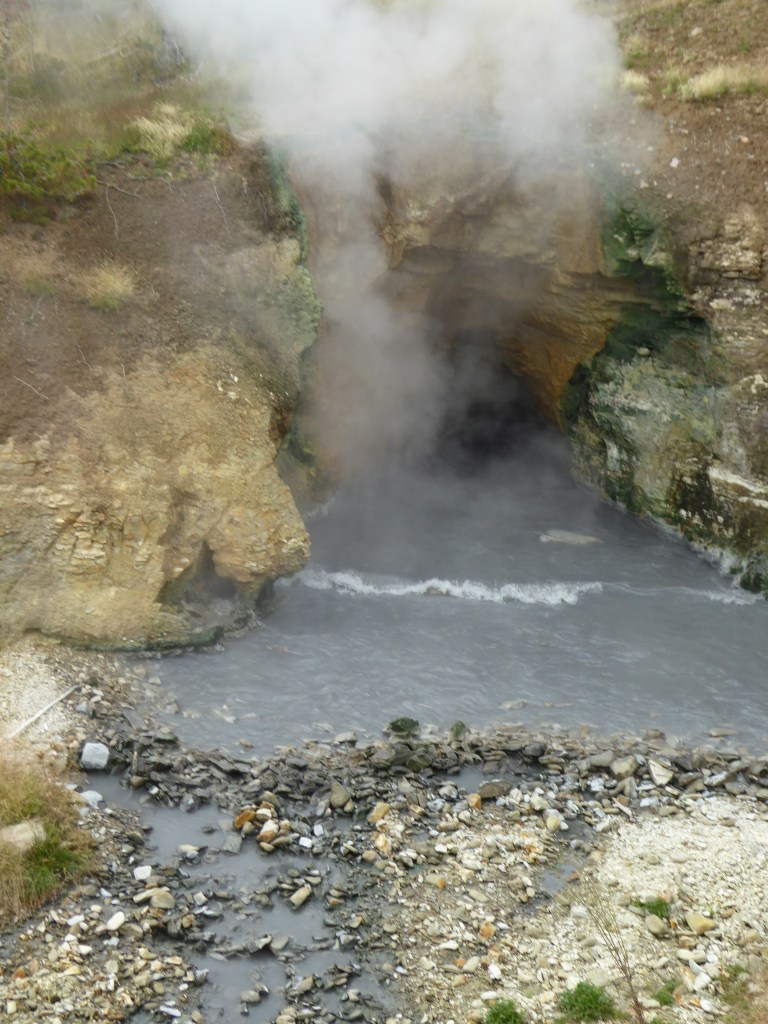
One fun type is the bubbling mud pools, some with the sulphury smell. At one such site, I heard a ranger talk, and I learnt that the pools change in direction and strength of the output over time.
Usually earth-quacks cause the topography to change. The pools and small geysers are named fun names like Black Pit Spring, Echinus Geyser, Arch Steam Vent and my favorite, Puff ‘n Stuff.
Other basins had beautifully colored hot pools. Norris’ Porcelain Basin is magnificent.
Imagine the most beautiful counter tops with blue, green, yellow, brown, copper and colors in between. And that counter top is slick and shining in the sun. On top of that, it bubbles in the middle. The colors are due to the algae.

To see the pools, everyone has to walk on board walks for the protection of the visitors and the landscape. The meadow in front of me was full of smoke from the various geysers.
Yellowstone Grand Canyonwith its water falls and colorful canyons is an amazing place to visit.
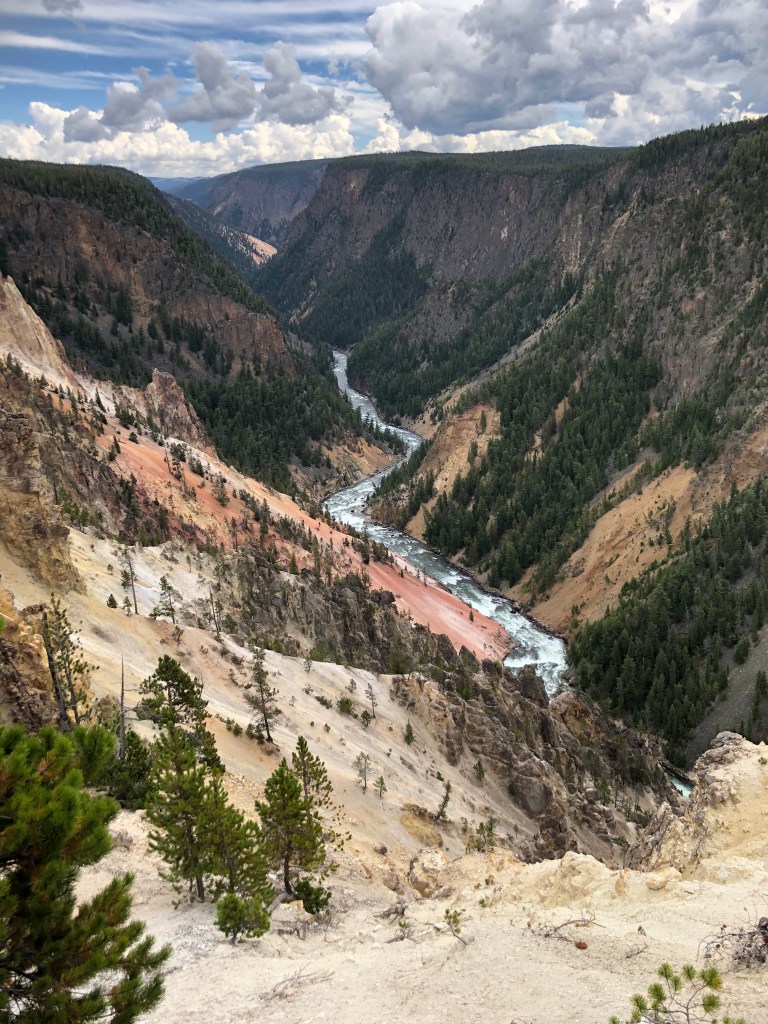
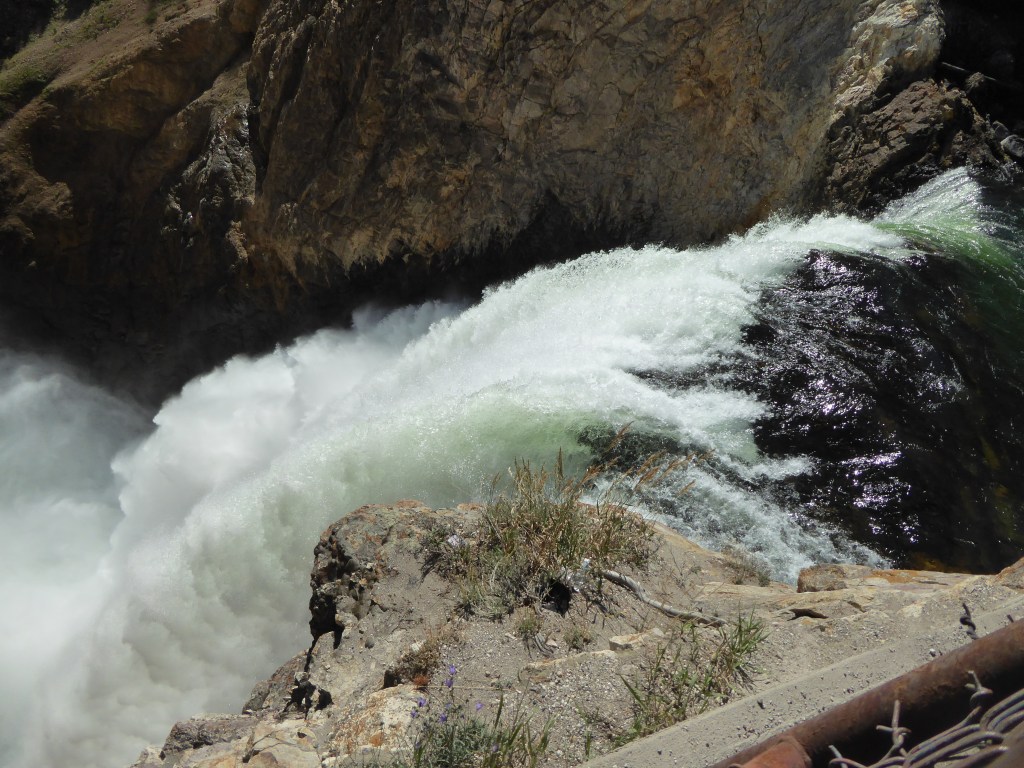
The ranger suggested the Brink of Lower Falls to see where the magnificent falls begin their drop, (which I erroneously thought was an easy 1/4 mile each way). Actually, this hike was a level “difficult” some 600 feet down then up for 1/2 mile each way. I am glad I didn’t know how difficult it would be because being at the brink was worth every inch of the walk.
The falls drop some 30,000 gallons per second and plunges 308 feet, with the expected roar and excitement. The canyon is magnificent as well. I was very proud for doing this hike without a problem.
The animals:
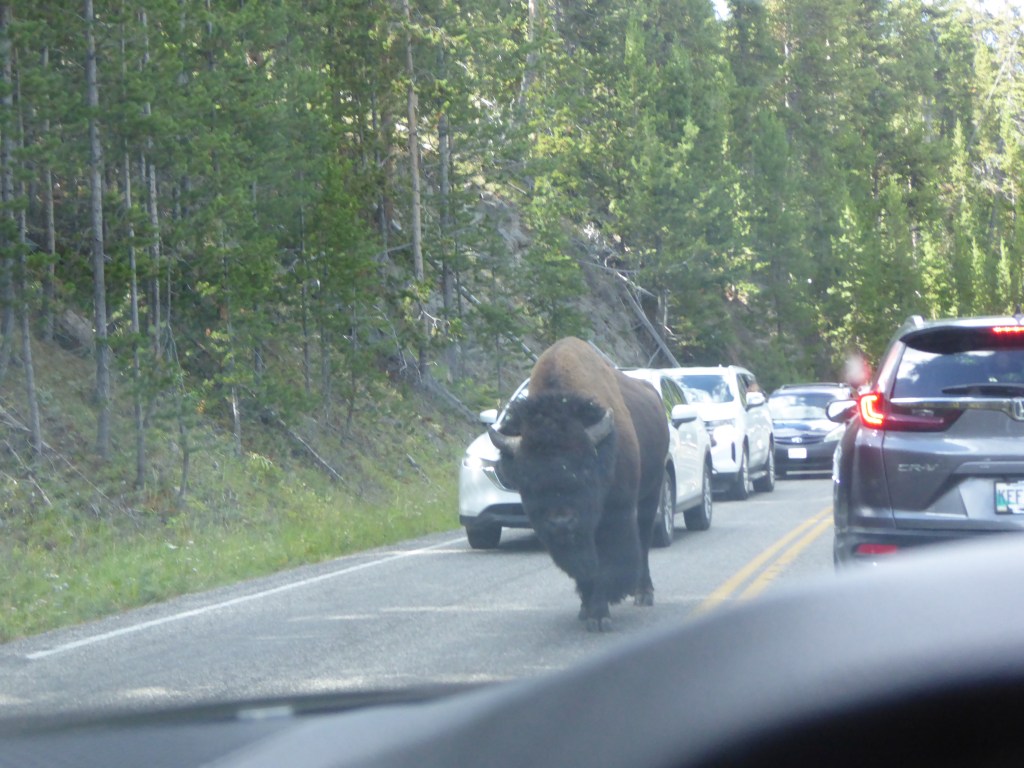
Bison Jams: (left picture) Bison tend to walk in the middle of the road and cause fun jams. Everyone stops to give him/her space and, of-course, to take a picture. If you are driving in the opposite direction than the bison is walking, you will be past the “jam” pretty quickly, but if you are traveling in the same direction as the bison, it will take a while.
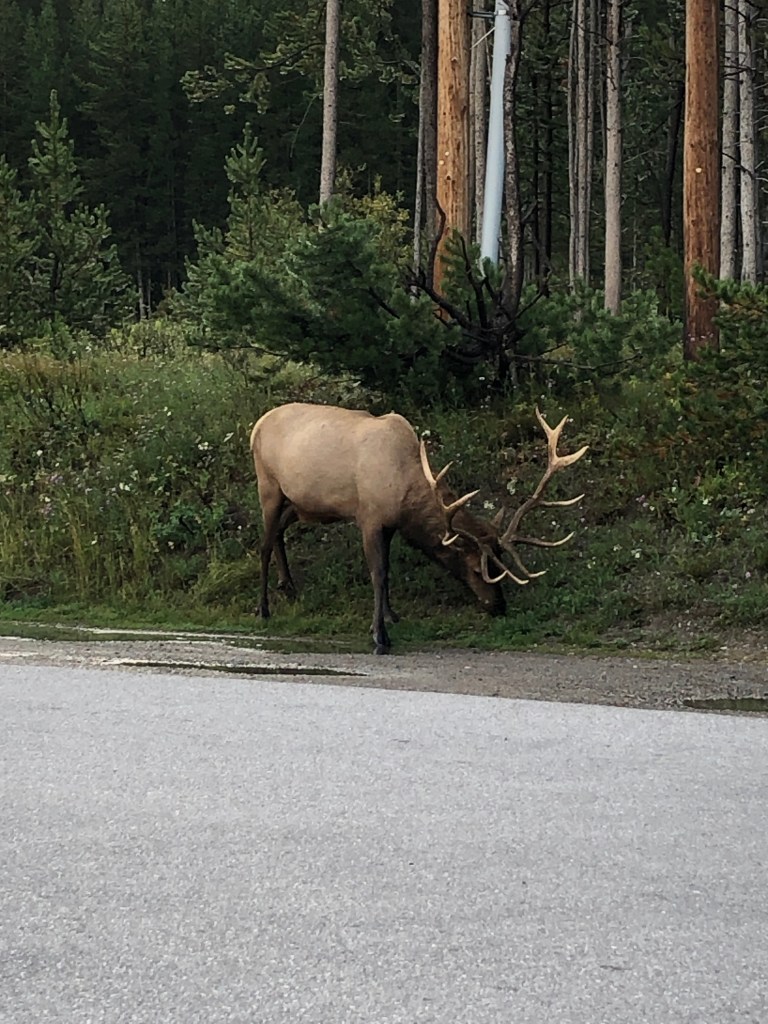
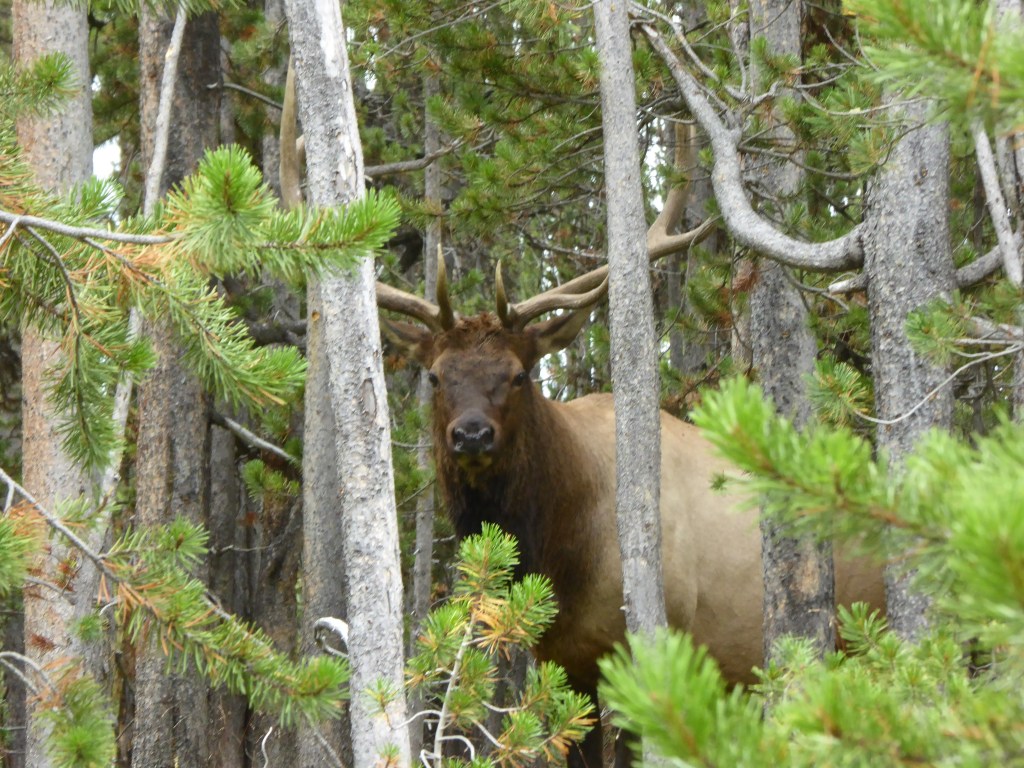
Elks: In the Tetons I saw a bull (male) elk at the lodge (middle). In Yellowstone, I saw a group of them, including babies, in front of the Mammoth hotel. Some dumb parents had their kids pose near the elks. As soon as the front desk was alerted, the ranger told the parents to stay away from the elks. The problem is that if the elk gets spooked and charges, the elk must be killed.
Moose: I did see a bull moose along the road (right picture). Since the cars were all stopped, I was able to get its picture.
Fox: On my drive out of the park on my last morning, I saw a fox on the road.
Lodges and Inns:
In both the Yellowstone and Tetons I stayed inside the parks. It is more expensive but saves lots of time – the lines to get into the park can be very long.
In the Tetons, we stayed at Signal Mountain Lodge. It was rustic but comfortable. The main lodge had large picture windows overlooking the lake and the mountains. The actual sleeping cabin was just down the road from the main lodge and had a microwave and refrigerator. There is a grocery store, therefore, we were able to pick up cereal, oatmeal and start the day with a healthy meal. Also at the grocery store, we picked up bear spray. We never needed it, but it was the safe thing to do.
The Mammoth hotel in Yellowstone was nice but nothing special.
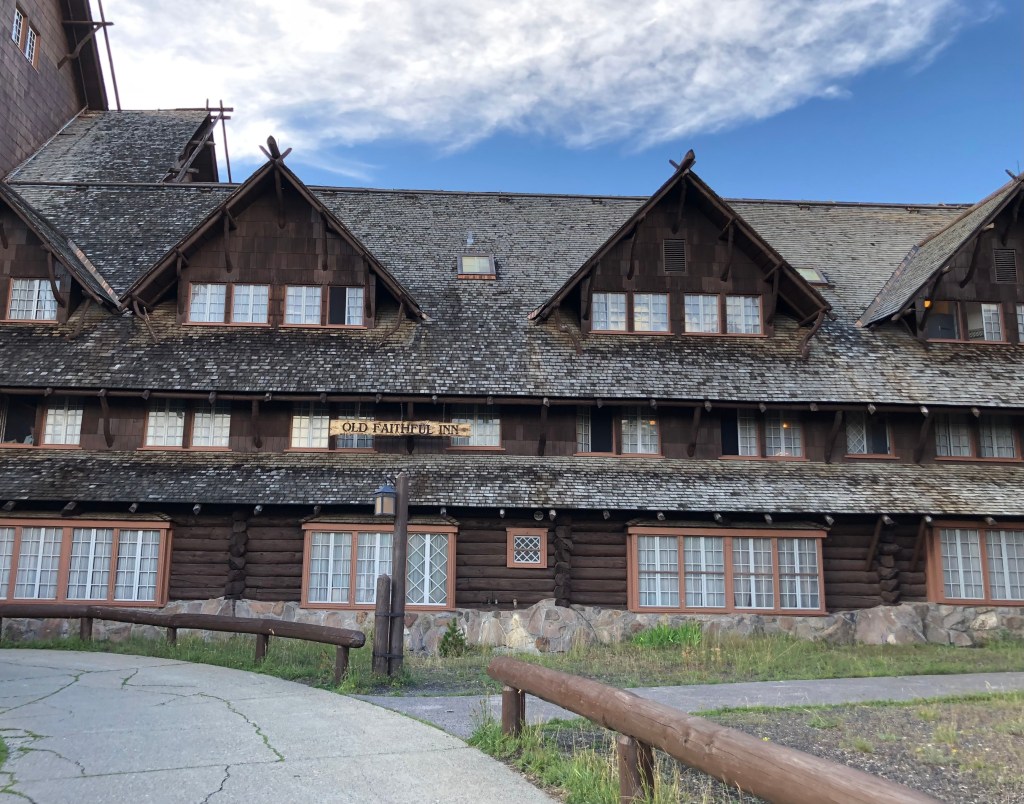
However, the Old Faithful Inn, built in the early 1900s, is charming with lots of wood and lovely sitting areas around 2 decks opening up into the lobby.
But being charming has its draw backs: no internet and lots of day tourists. On the plus side, I was a 2-minute walk from Old Faithful Geyser. The next eruption is always posted on the board by registration, which made it easy to plan. If I was to do it again, I would stay at Lake Lodge instead of Mammoth.
I learned lots of interesting tid bits from the guides:
Final Comments:
Subscribe to get access to the rest of this post and other subscriber-only content.
Subscribe to get access to the rest of this post and other subscriber-only content.

